
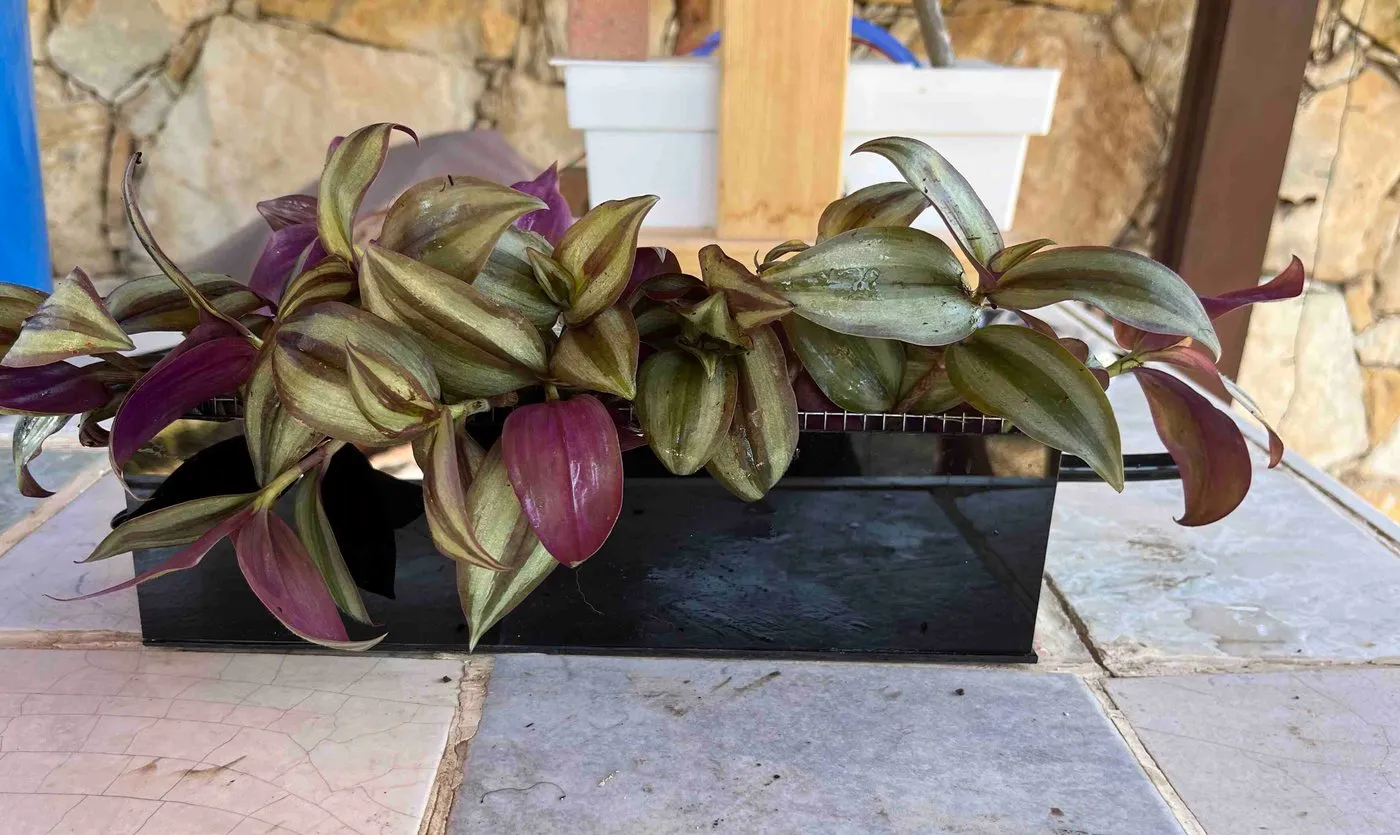
What is LECA?
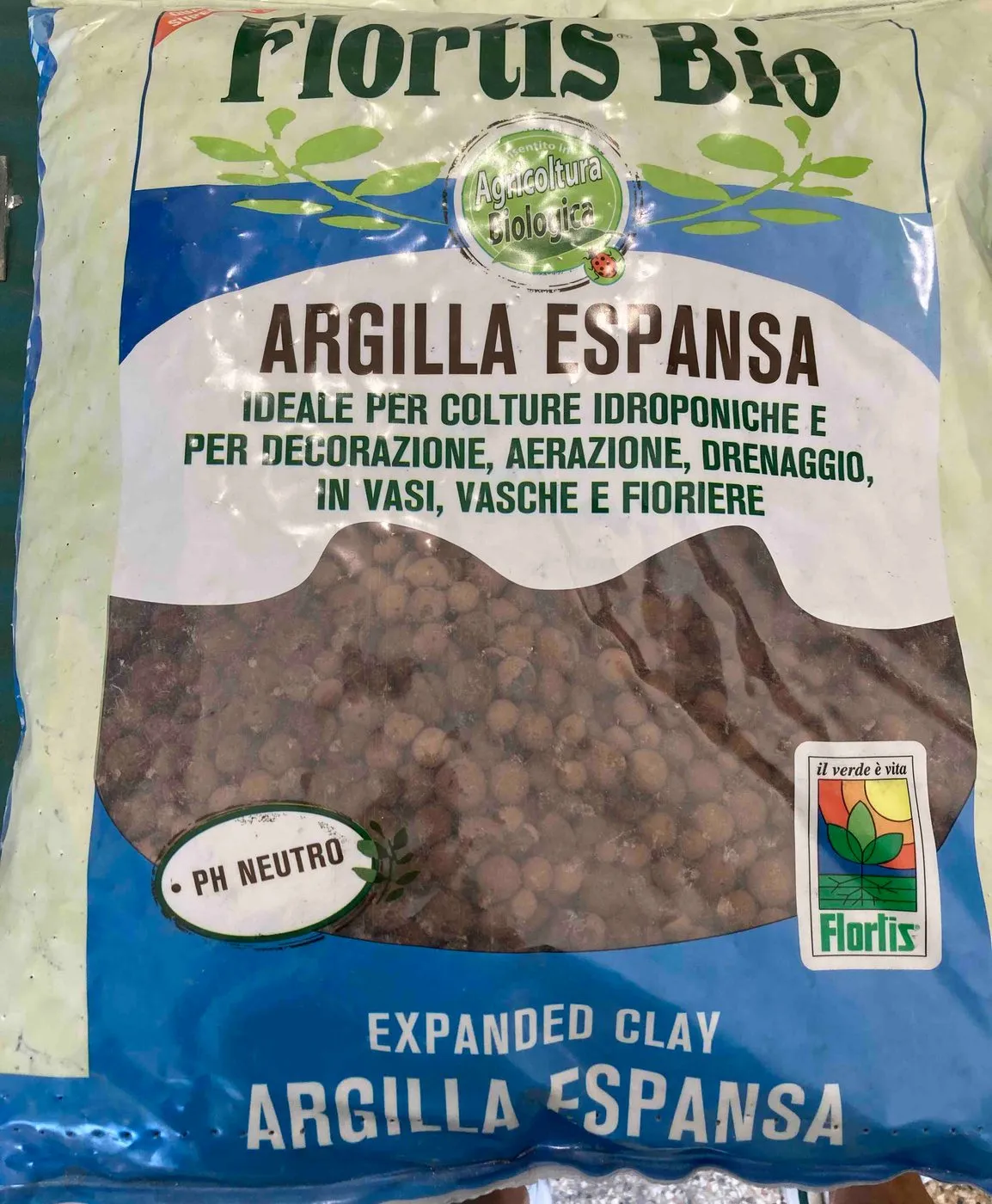
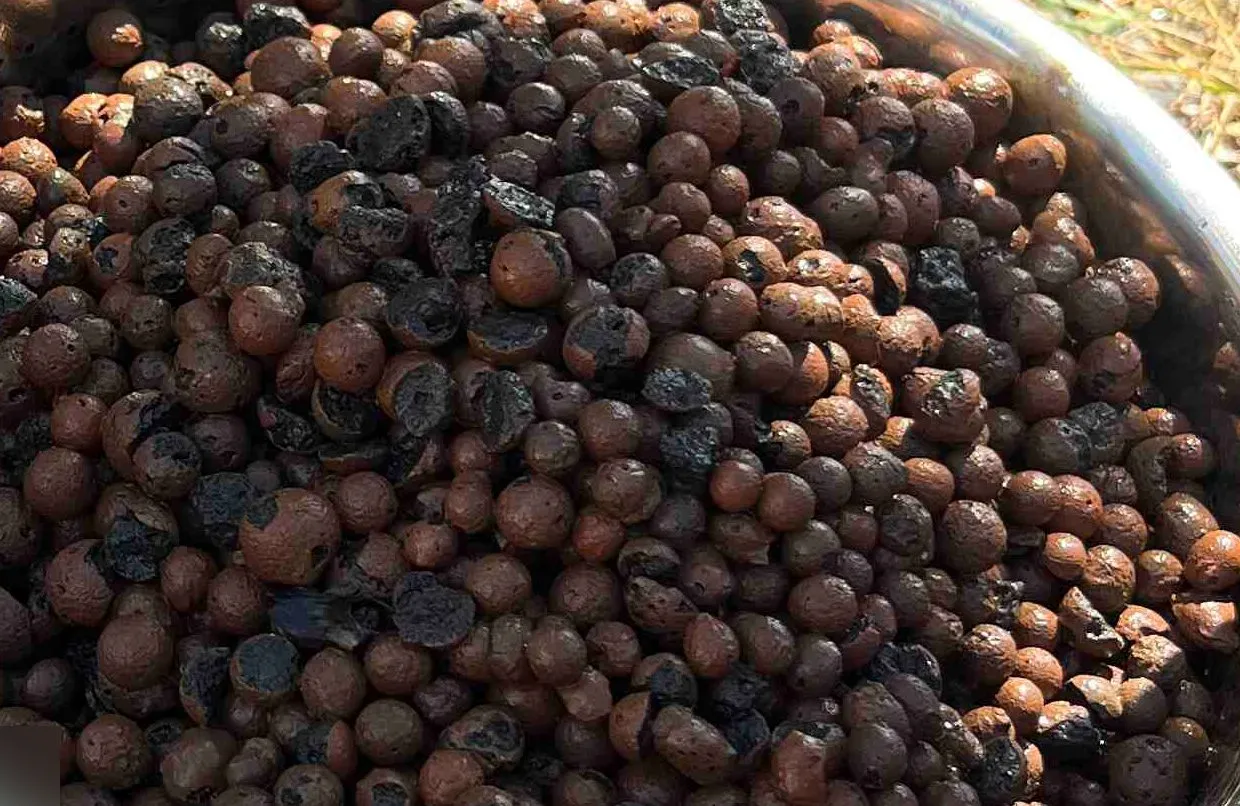
LECA stands for lightweight expanded clay aggregate. Clay is rolled into small pellets and fired in a rotary kiln at around 1,200 °C. Gases trapped inside expand and leave each pebble full of tiny pores, a little like a hard, round sponge.
The result is inert and close to pH neutral. It has no nutrients of its own, it doesn’t break down, and it can be washed and reused for years. It’s sold as expanded clay, clay pebbles or hydroton, and the same material is used in construction and in hydroponics.
Pebbles come in different sizes. We use medium LECA, about 8–15 mm across, which wicks water well and still leaves room for roots and air.
Why we think LECA is great for indoor gardening
In our opinion, LECA is the best way to grow plants indoors, mainly because it’s so much cleaner than soil.
- No dirt. There’s no soil to spill, stain or track across the floor. Once your plants are in, the surface is just clean clay.
- Nothing to rot. LECA is inorganic, so there’s far less for mold and fungus gnats to live on, and it doesn’t smell.
- Water and air together. Each pebble holds water in its pores while the gaps between pebbles stay open to air. Roots get both, which is what makes semi-hydro growing work.
- Easy to read. You can see the water level and, in a clear container, the roots themselves.
- Reusable. Wash it, and it’s ready for the next plant.
There are honest trade-offs too. LECA has no nutrients, so you need to feed your plants with a liquid hydroponic nutrient. Minerals and nutrient salts build up over time, so it needs an occasional flush. And plants moved from soil need a few weeks to settle in.
Lightweight enough for a wall
A living wall has to be carried by a wall. LECA is light to begin with, and even fully soaked it keeps a planted Meadori comfortably within what a wall mount can hold. That matters more than you might think: wet soil gets heavy fast, and it’s the weight that holds water that counts, not the weight in the bag.
Why LECA is the only substrate we use
In a Meadori, each planter holds a set level of water, and anything above it drains through narrow outlets to the planter below and back to the reservoir. If an outlet clogs, the planter floods and the ones below it go dry. So for us, not clogging isn’t a nice-to-have. It’s the whole requirement.
We also tried orchid bark, perlite and pumice, alone and mixed. Each one clogged the drains in our planter models: fine particles and fragments wash down and settle exactly where the water needs to get out. LECA was the only substrate that kept the drains clear and still wicked enough water up to the plants.
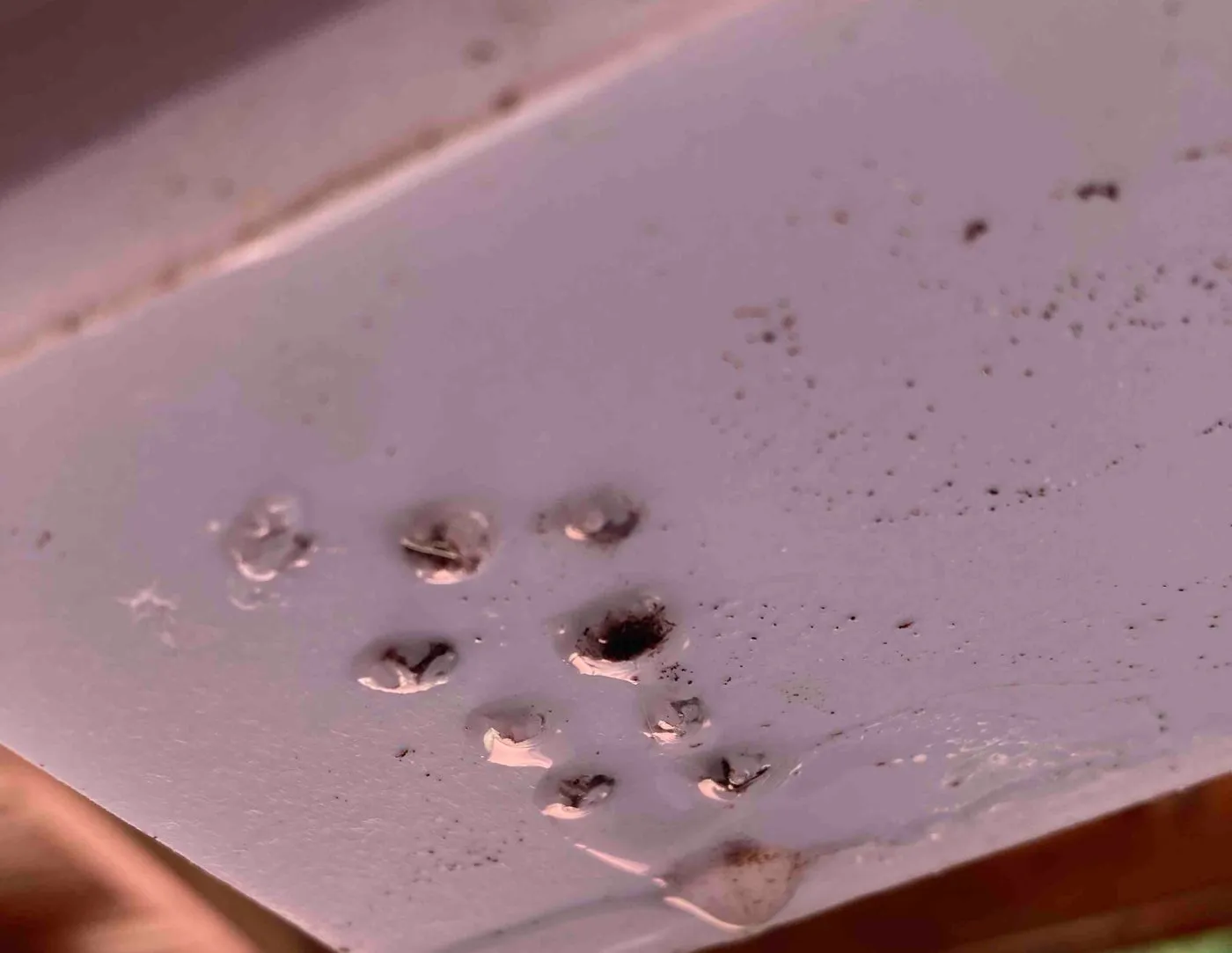
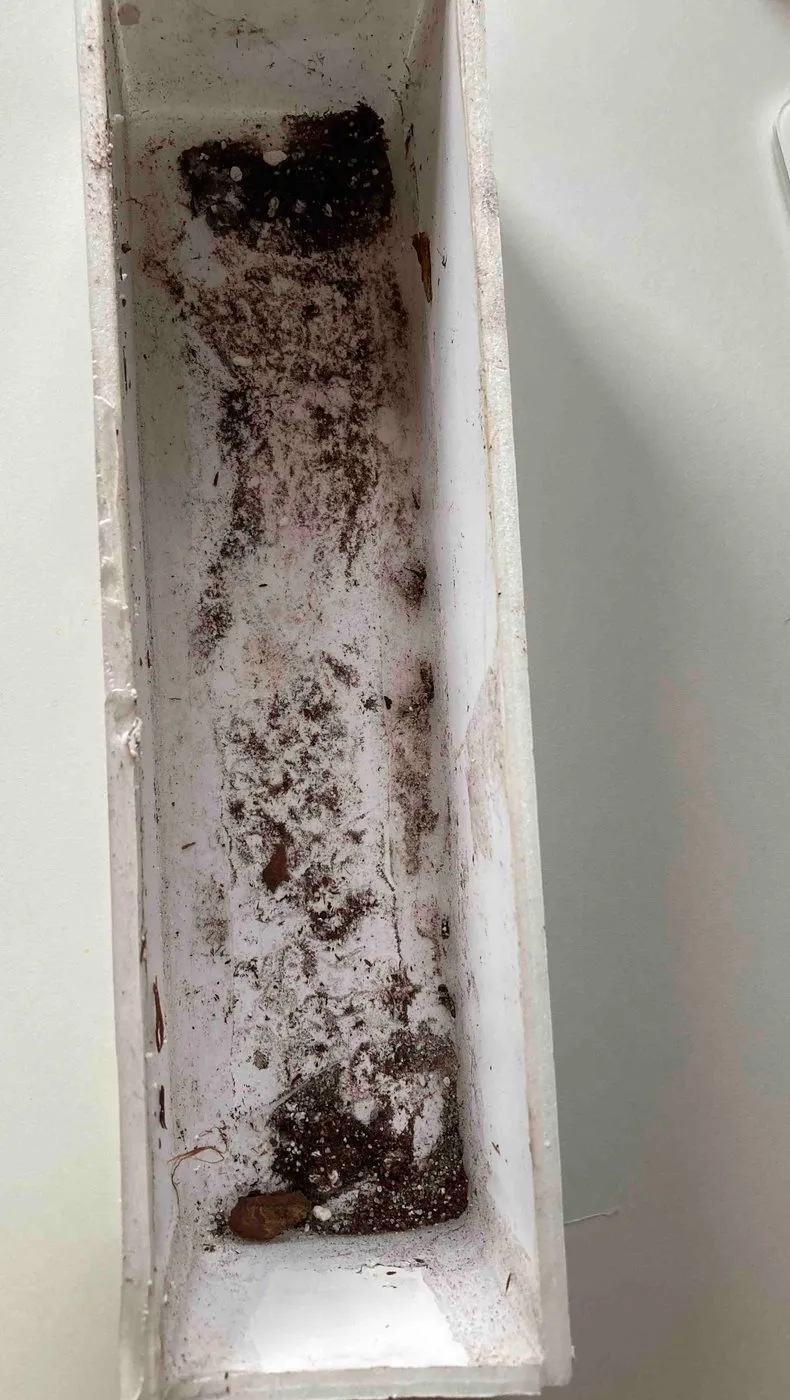
LECA has one catch of its own: new pebbles come covered in clay dust and small chips. That dust is exactly the kind of fine material that clogs drains, which is why washing comes first.
Before you start: set up so you don’t wreck the apartment
Most LECA mess happens in the first ten minutes, while the pebbles are dry and dusty. A little setup avoids it.
Pick your spot
- Best: a balcony, a terrace or anywhere outside.
- Indoors: a shower tray or bathtub, or a hard floor covered with an old sheet or a tarp. Avoid carpet and rugs: pebbles roll a long way, and wet clay dust stains.
- A large, shallow plastic storage box makes a good self-contained workstation on a table.
Keep clay dust out of your drains
Clay dust and water make fine mud that settles in pipes. Rinse into a bucket, not straight into a sink or bathtub. Let the bucket stand for a few minutes, pour the clear water away (onto the garden, if you have one), and put the sludge at the bottom in the trash.
Handle it wet
Dry LECA is dusty and loud, and it bounces. Pour it low and slowly, close to the bucket. Once it’s soaked, it’s quieter, it doesn’t raise dust and it rolls much less.
What you’ll need
- Medium LECA, 8–15 mm
- Two buckets, one with a lid
- A colander or a mesh laundry bag
- A cup or small scoop
- A tray with a rim
- Old towels or a sheet
- Scissors for trimming roots
- A vacuum for the strays
Keep pets out of the room while you work. Loose pebbles look a lot like toys.
How to wash and soak LECA
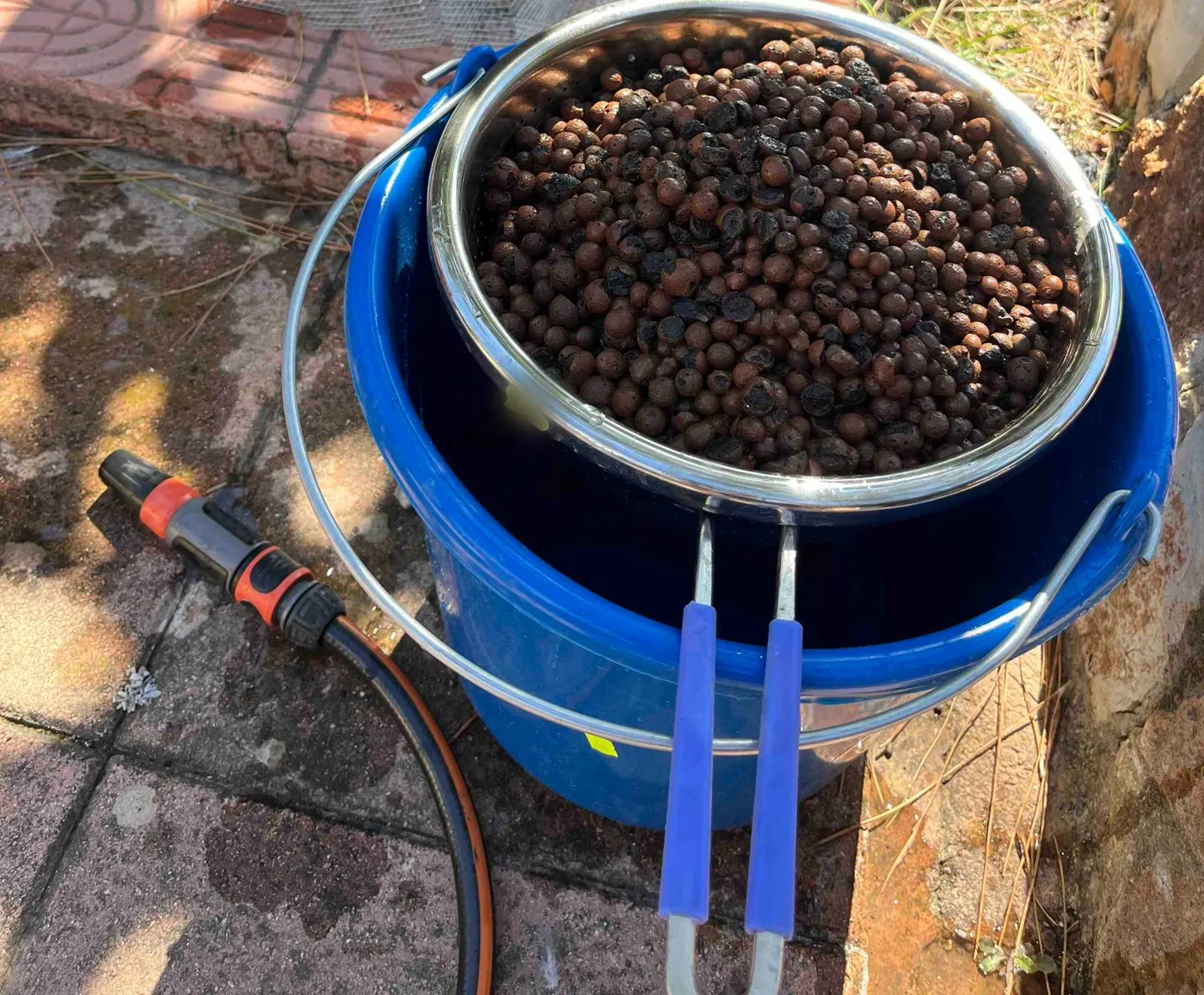
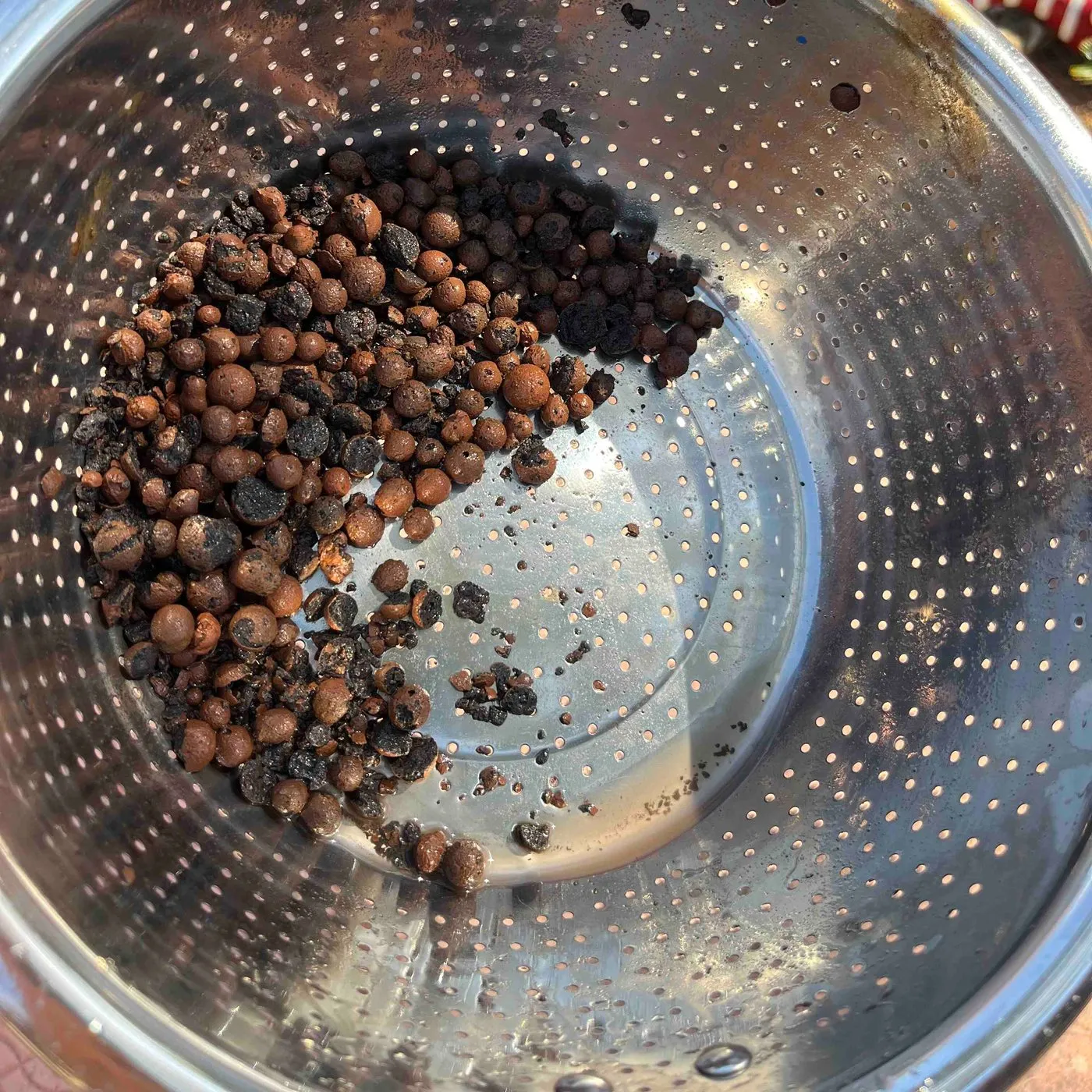
- Rinse. Put a few liters of LECA in a colander over a bucket, or in a mesh laundry bag, and run water through it. Stir with your hand. Keep going until the water runs mostly clear. This usually takes several rounds.
- Soak. Tip the rinsed pebbles into a bucket, cover them with water and leave them for 12–24 hours. A lid keeps dust and curious pets out. Soaked pebbles wick water from the start, instead of drying out your plant’s roots while they fill up.
- Drain and plant while damp. Use the LECA straight from the soak. If you won’t use some of it, spread it out and let it dry completely for a couple of days before you bag it, or algae can grow.
How to prepare plants for LECA
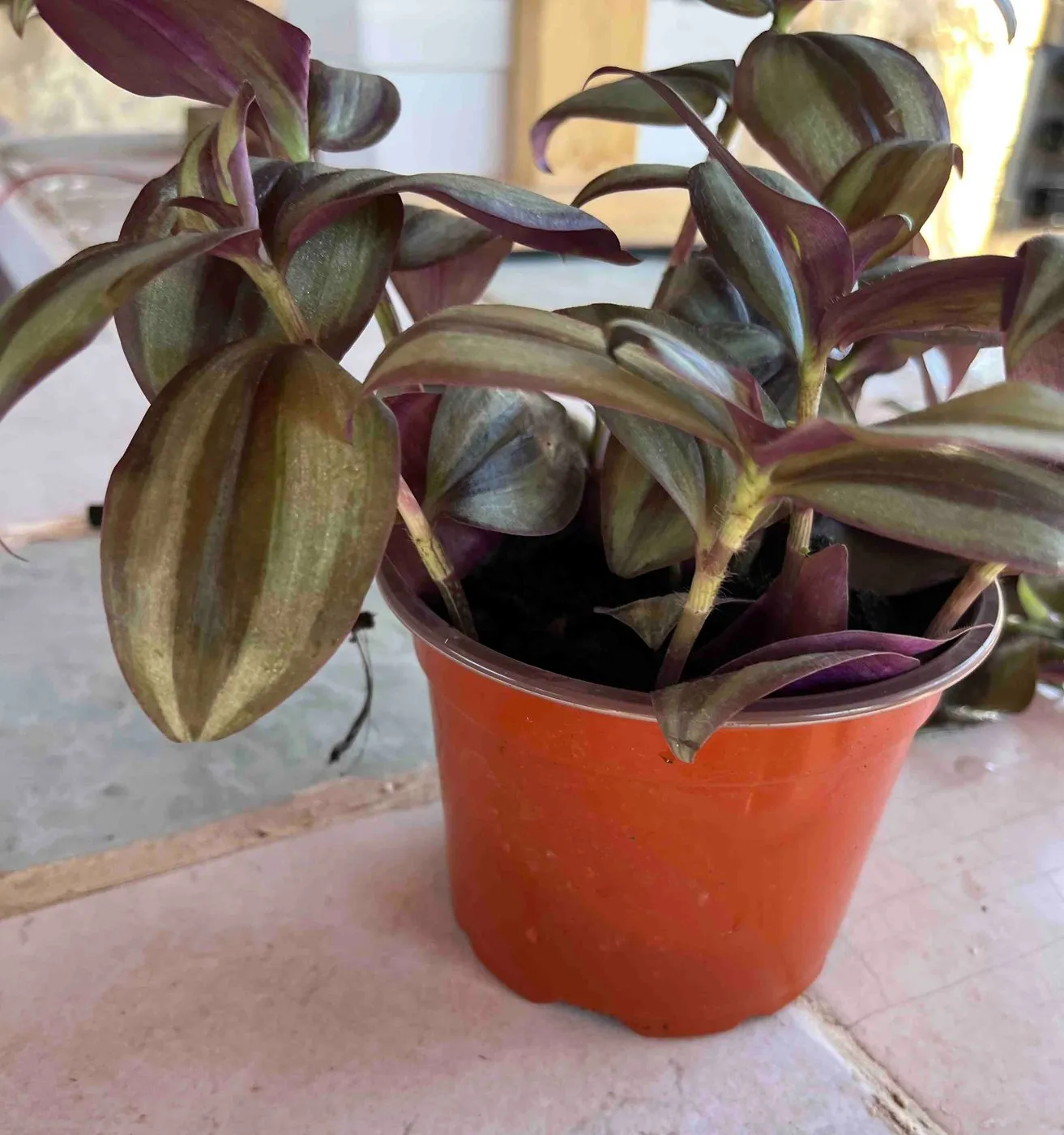
Most plants come from the nursery in soil, and that soil has to go. Left in LECA, it turns to mud, holds too much water and rots.
Choose the right plants
Smaller, younger plants adapt faster than big ones. Where you’d use one large plant, try two smaller ones side by side. It’s one of the first lessons we learned on Frankie, our first prototype.
Wash the roots
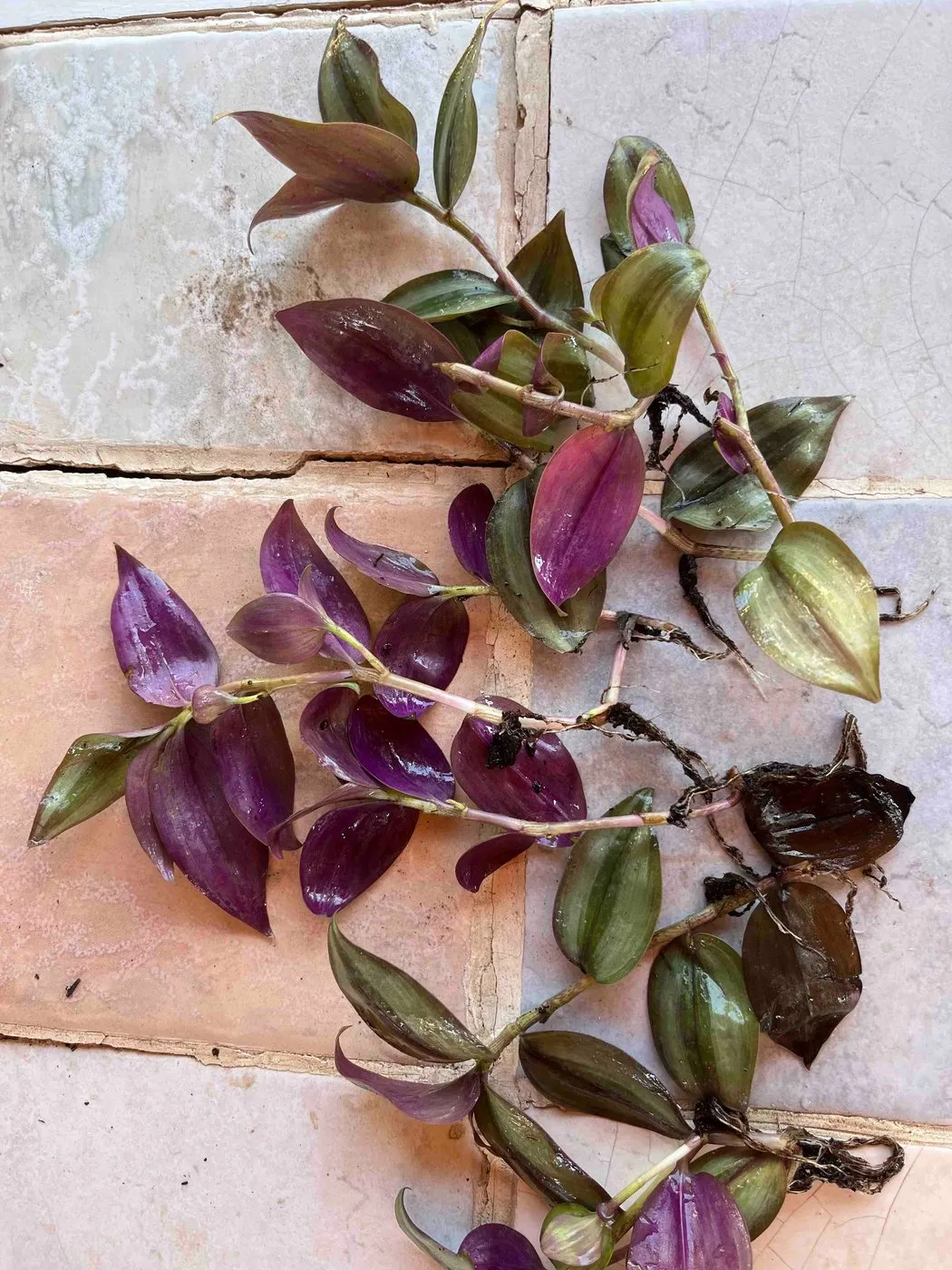
- Unpot. Ease the plant out of its pot. It’s easier if the soil is fairly dry.
- Loosen. Gently crumble away the loose soil with your fingers, over a bucket or the trash.
- Soak and rinse. Dunk the root ball in a bucket of room-temperature water and swish it around, or rinse it gently with a soft spray. Change the water and repeat a few times.
- Stop at almost clean. Wash until almost no soil is left. Don’t try to remove every last speck: picking at the fine roots to get it all out will damage them and can kill the plant. A little soil left deep in the roots is fine. But don’t leave a solid core. If the middle of the root ball is still a dense lump of potting soil, ease it open and rinse it through. On Sam, a soil core left in one root ball washed out as silt, and that plant didn’t make it.
- Trim. Cut off any roots that are brown and mushy. Firm, pale roots stay.
Don’t worry if a root ball comes apart into several pieces. Nursery pots often hold several plants grown together, and each piece will grow on its own.
How to plant in LECA and cover gently
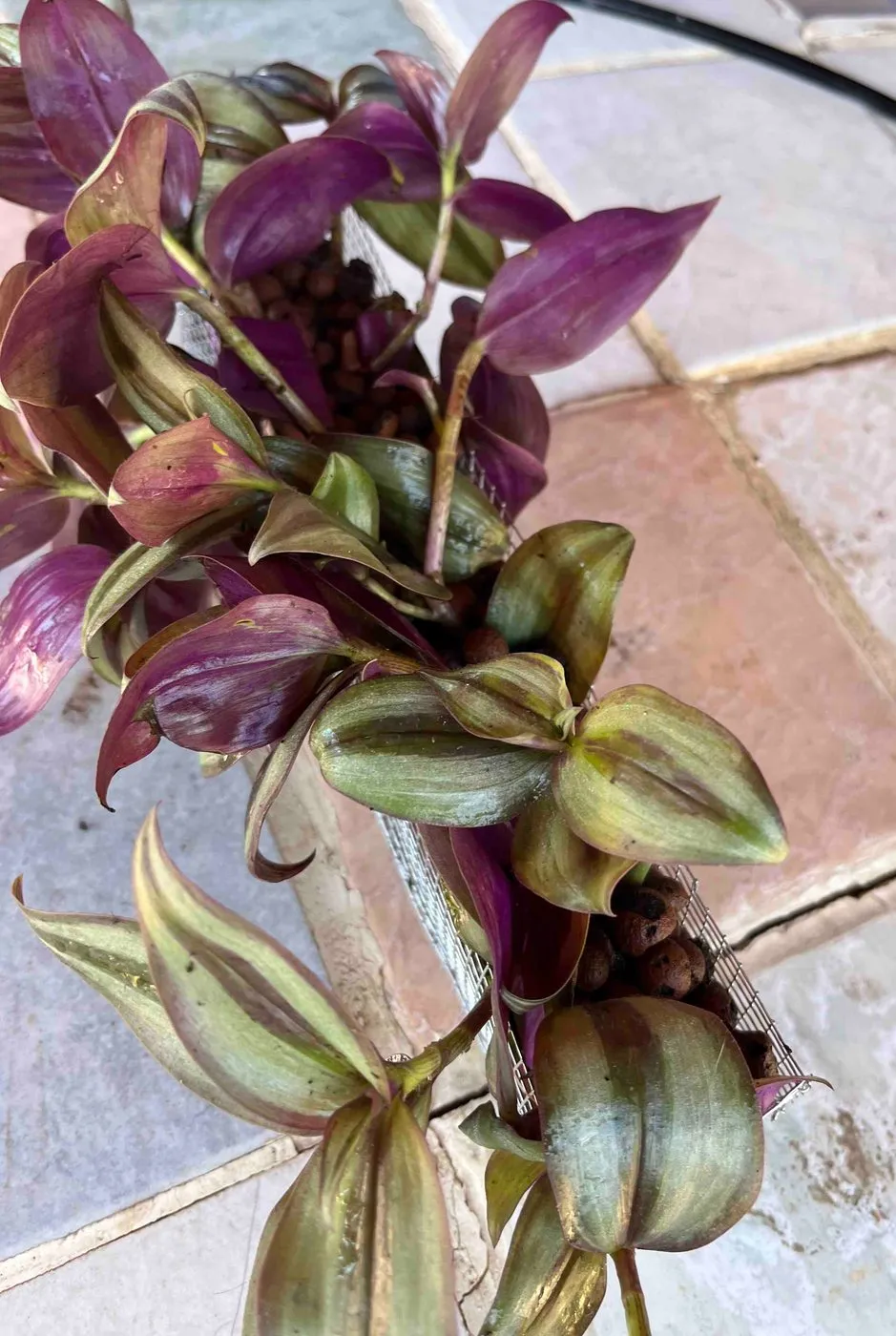
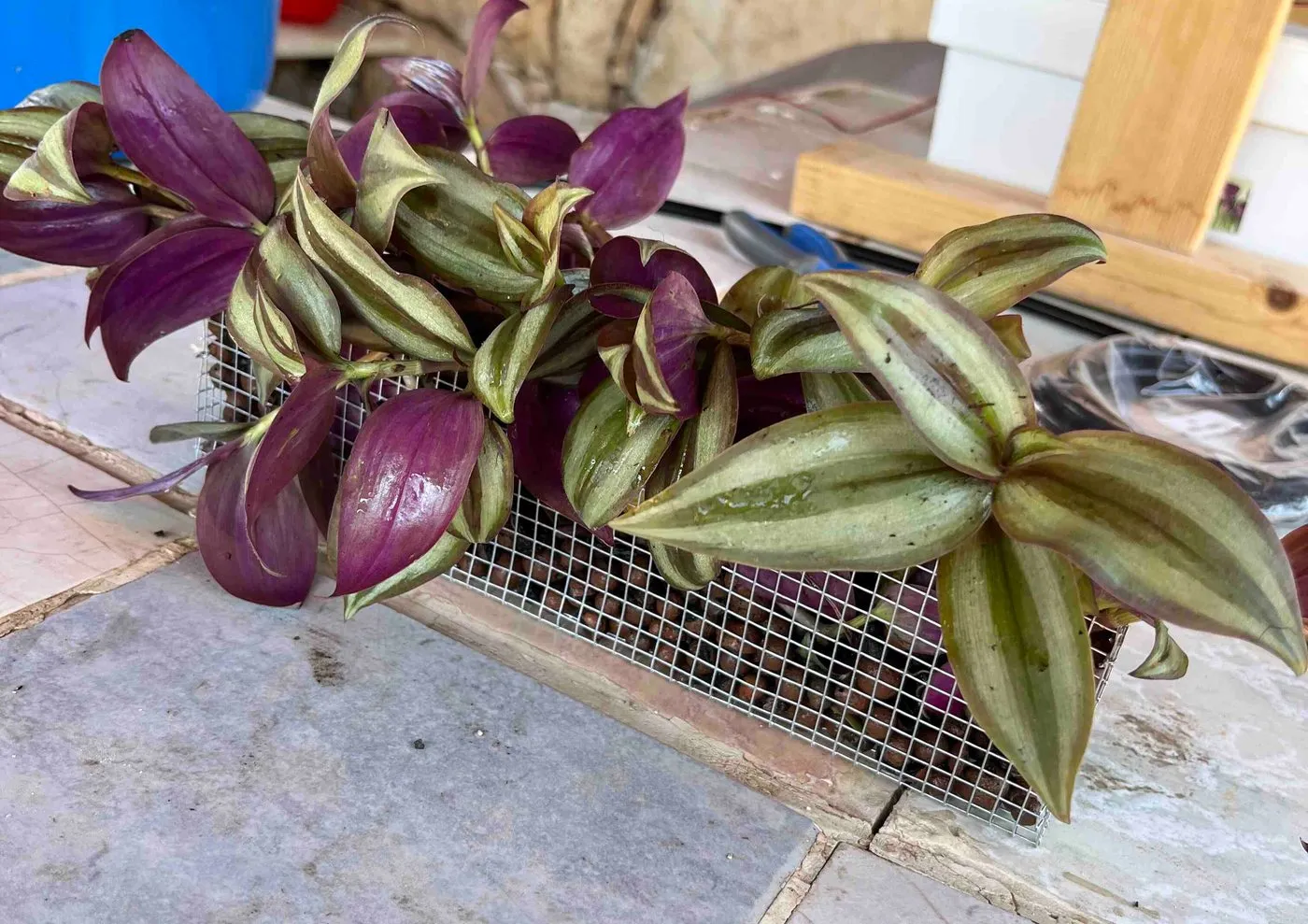
- Lay a base. Put a layer of damp LECA in the net cup, deep enough that the roots will sit above the water line.
- Place the plant. Hold it at the height you want, with the roots spread out rather than bunched.
- Fill around it. Add LECA a cup at a time around and over the roots, until the base of the stems is just covered. Keep the crown, where the stems meet the roots, at or just below the surface.
- Settle it. Shake the planter lightly from side to side, and the pebbles settle into the gaps on their own. If the plant still feels loose, press gently with your hand. Usually you won’t need to.
- Clean up. Rinse any clay dust off the leaves, and give the planter its first water.
How a Meadori keeps the top layer moist
A Meadori planter holds about 8 cm of LECA, but only the bottom 15 mm or so sits in water. The outlet sets that level: anything above it flows on to the next planter down.
The rest is wicking. Each pebble draws water up from the one below it, so moisture climbs through the bed and keeps even the top layers moist, where the roots are. A small pump tops each planter up for a few seconds every hour, so the water at the bottom is regularly refreshed rather than left standing.
Keeping that water level low is what lets the roots breathe. Most of the bed is damp pebbles with air between them, not water, so the roots get oxygen as well as moisture. That’s the balance that keeps roots healthy and helps prevent rot.
You can read more about how we arrived at this setup in the stories of our prototypes, Frankie and Sam, and in our evaporation measurements.
The first few weeks
- Expect a little leaf loss. The roots that grew in soil slowly give way to new roots adapted to water. A few yellow or dropped leaves along the way are normal.
- Keep it out of direct sun while it settles. Bright, indirect light is best.
- Feed from the first week. LECA has no nutrients, so use a liquid hydroponic nutrient at the dose on the label. Most come in two parts, A and B.
- Flush about once a month. Replace the water, and rinse the pebbles if you see white crust. It clears out the mineral and nutrient salts that build up over time.
Tips and common questions
Do I need to soak LECA before planting?
Yes. Dry pebbles pull water away from the roots until they fill up. Soaking them for 12–24 hours means they start wicking right away.
Why is my LECA water cloudy?
That’s usually clay dust that wasn’t fully rinsed out. Rinse the pebbles again until the water runs clear. If the water is cloudy and smells bad, check the roots for rot.
What’s the white crust on my LECA?
Minerals from tap water and salts left by nutrients. It’s harmless in small amounts. Rinse the pebbles and change the water, and it goes away.
Can I mix LECA with soil?
We don’t recommend it. Soil fines wash down between the pebbles, hold too much water and clog drains, which takes away most of what makes LECA work.
Can I reuse LECA?
Yes. Remove the old roots, wash the pebbles thoroughly, let them dry completely, and soak them again before the next planting.
Can I put cuttings straight into LECA?
Yes, many cuttings root well in damp LECA. Some people find it easier to root them in a glass of water first and move them over once the roots are a few centimeters long.
How do I know if the roots are rotting?
Healthy roots are firm and pale. Rotting roots turn brown, mushy and smelly. Trim them off, rinse the rest, and make sure the roots sit above the water line, not in it.