
Syngonium care basics
If you’re here for the quick version, this is what arrowhead plants generally want, along with what we saw in LECA.
| Light | Bright, indirect light. Strong direct sun can scorch the leaves. Ours did best with only 1–2 hours of direct sun a day. |
|---|---|
| Water | Evenly moist, never waterlogged. In semi-hydro, the LECA wicks water up from a shallow reservoir so the roots get both water and air. |
| Temperature | Roughly 18–29 °C (65–85 °F). It doesn’t like cold drafts or temperatures below about 10 °C (50 °F). |
| Growing medium | Soil, or LECA in semi-hydro. Ours went into LECA straight from soil (see below). |
| Feeding | LECA has no nutrients of its own, so in semi-hydro the plant relies entirely on what’s in the water. We waited too long, and that’s covered below. |
| Pets | Toxic to cats and dogs if chewed: it contains calcium oxalate crystals. Keep it out of nibbling reach. |
The setup: Frankie
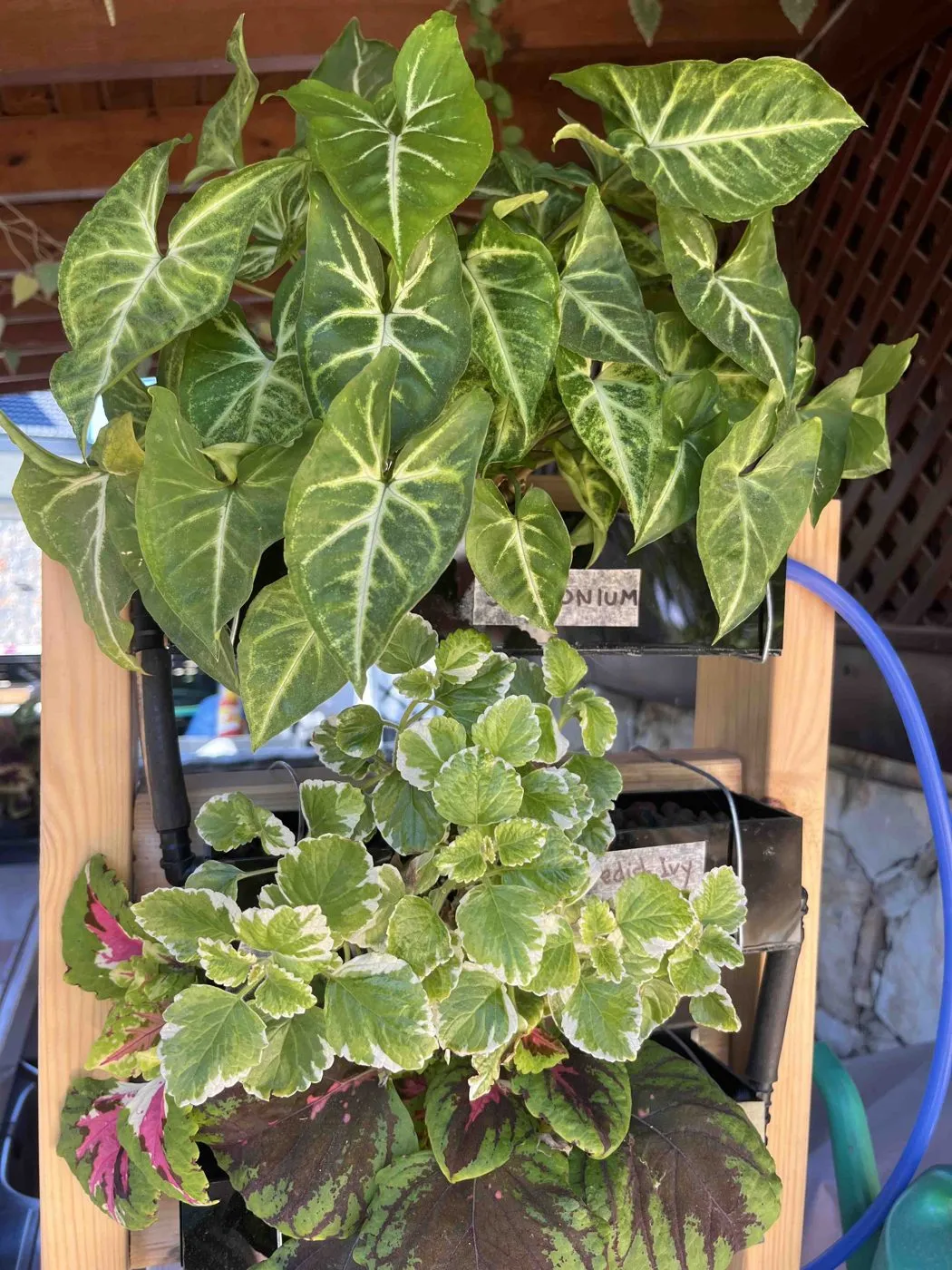
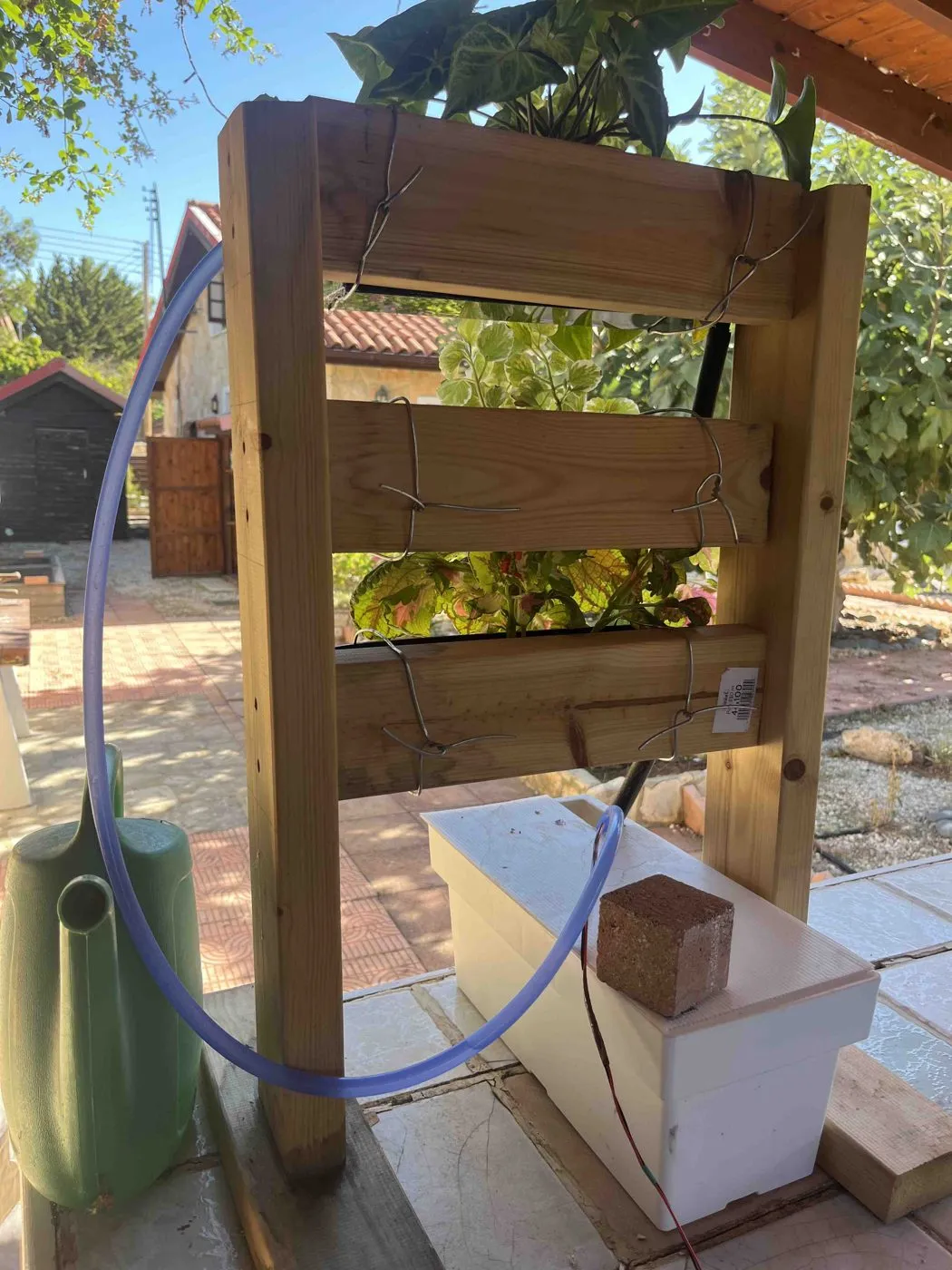
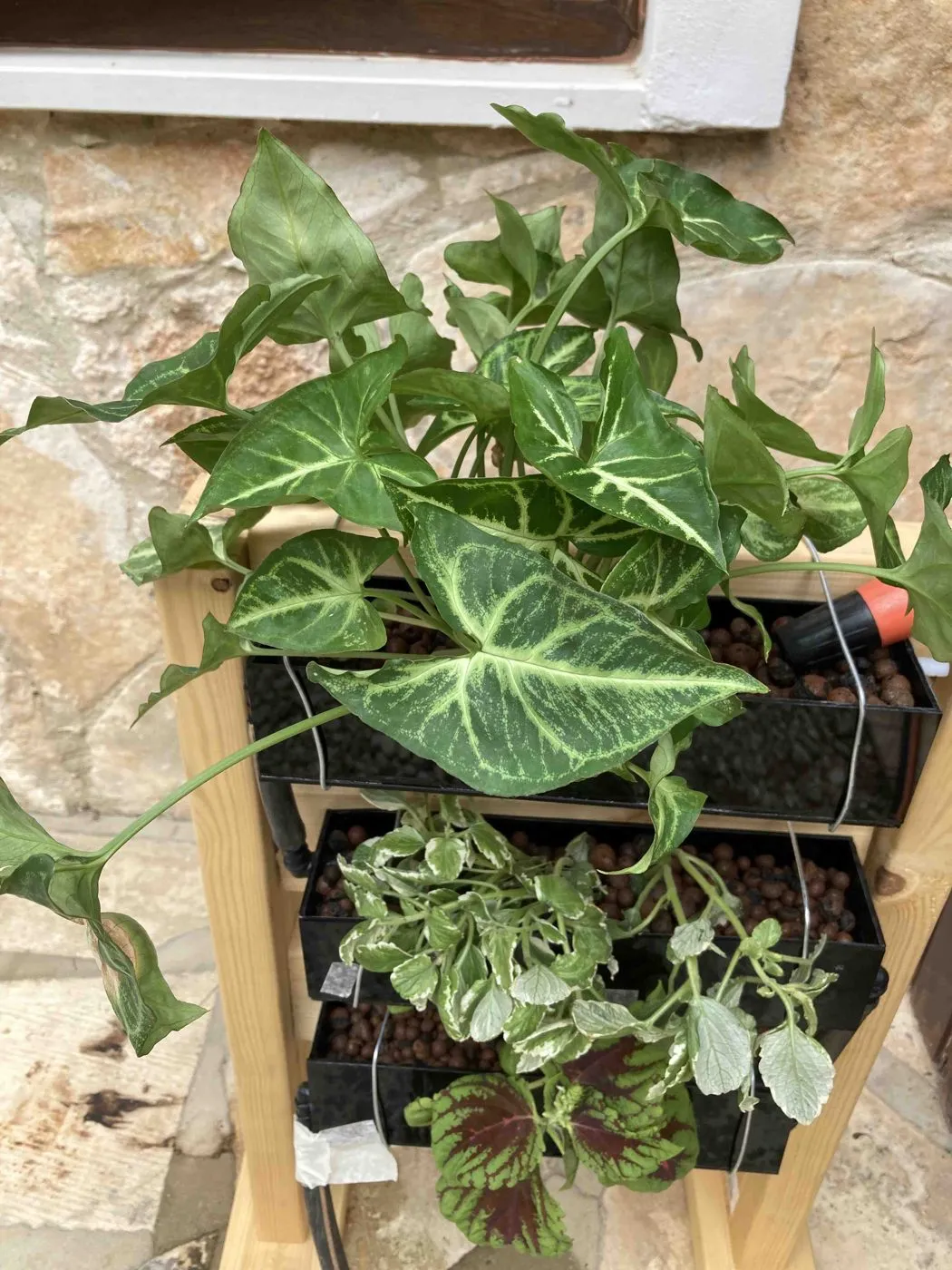
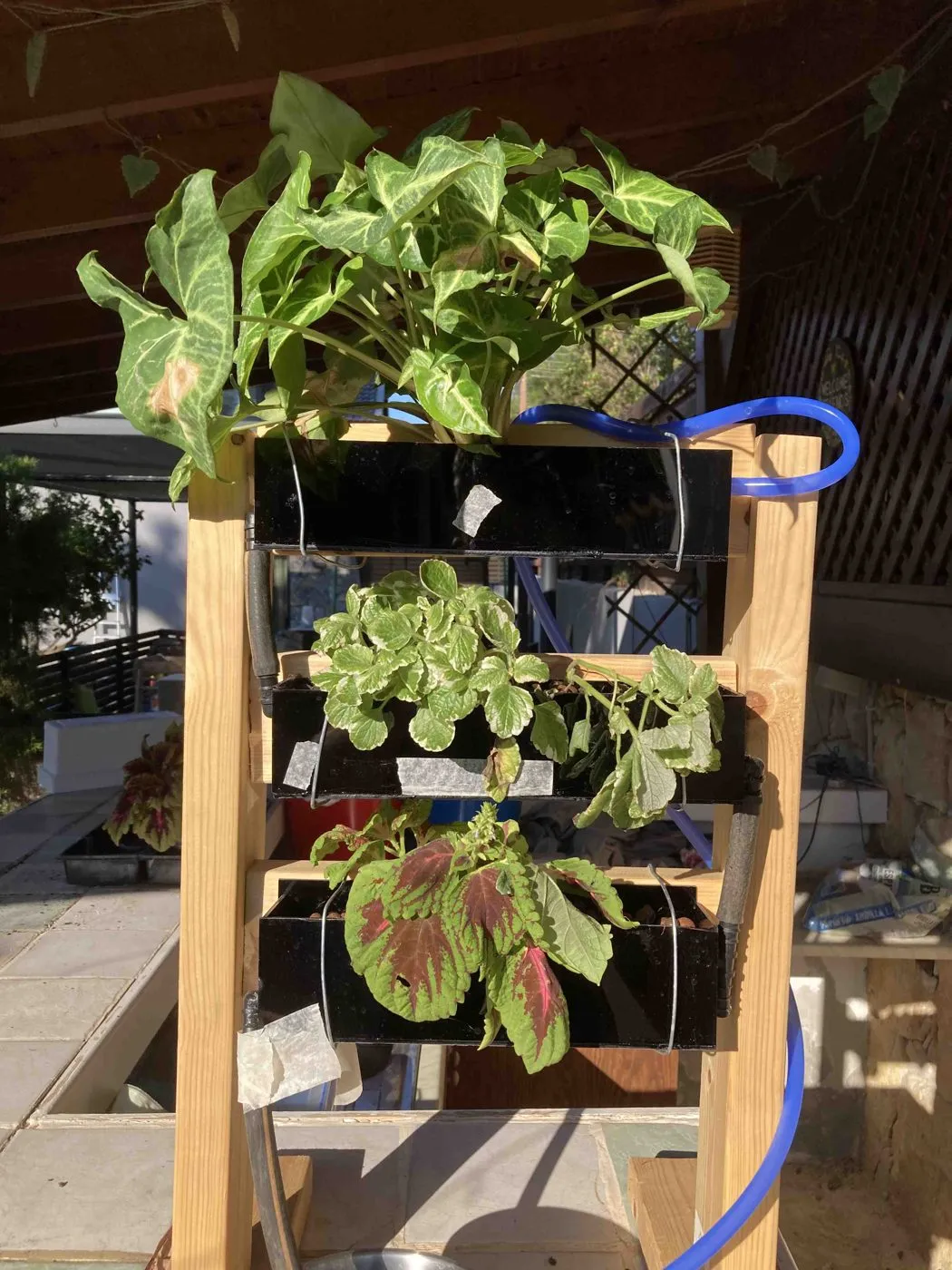
Frankie is our first prototype. It’s a wooden stand holding three black planters stacked one above the other, each with a different plant. The Syngonium has the top planter. A variegated Swedish ivy and a coleus sit below it.
How the water works
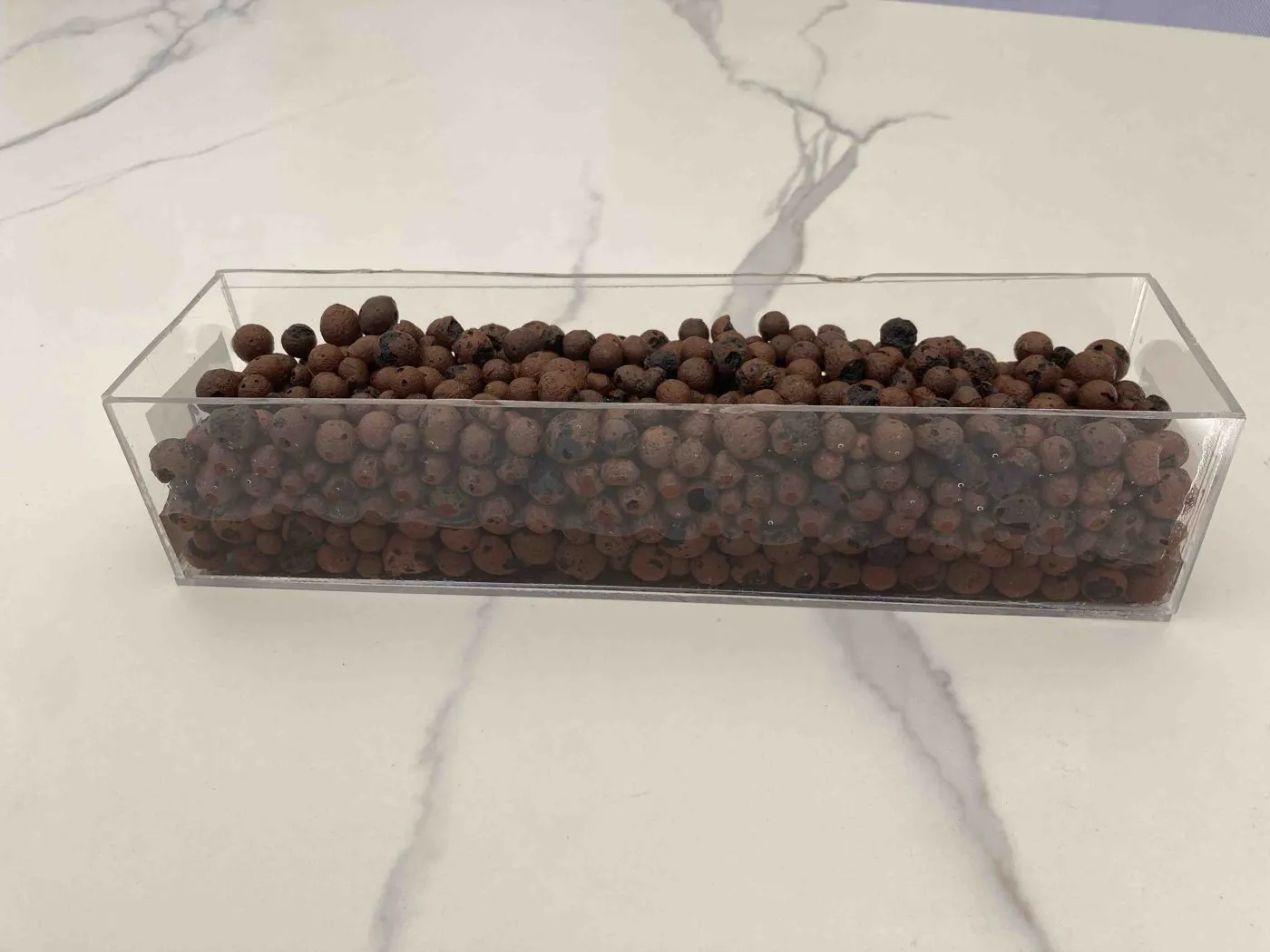
The usual LECA advice is to keep a quarter to a third of the pot full of water. Ours keeps less: about 15 mm in an 8 cm bed, roughly a fifth. That depth is set by the height of the outlet in each planter. Any water above it overflows into the planter below.
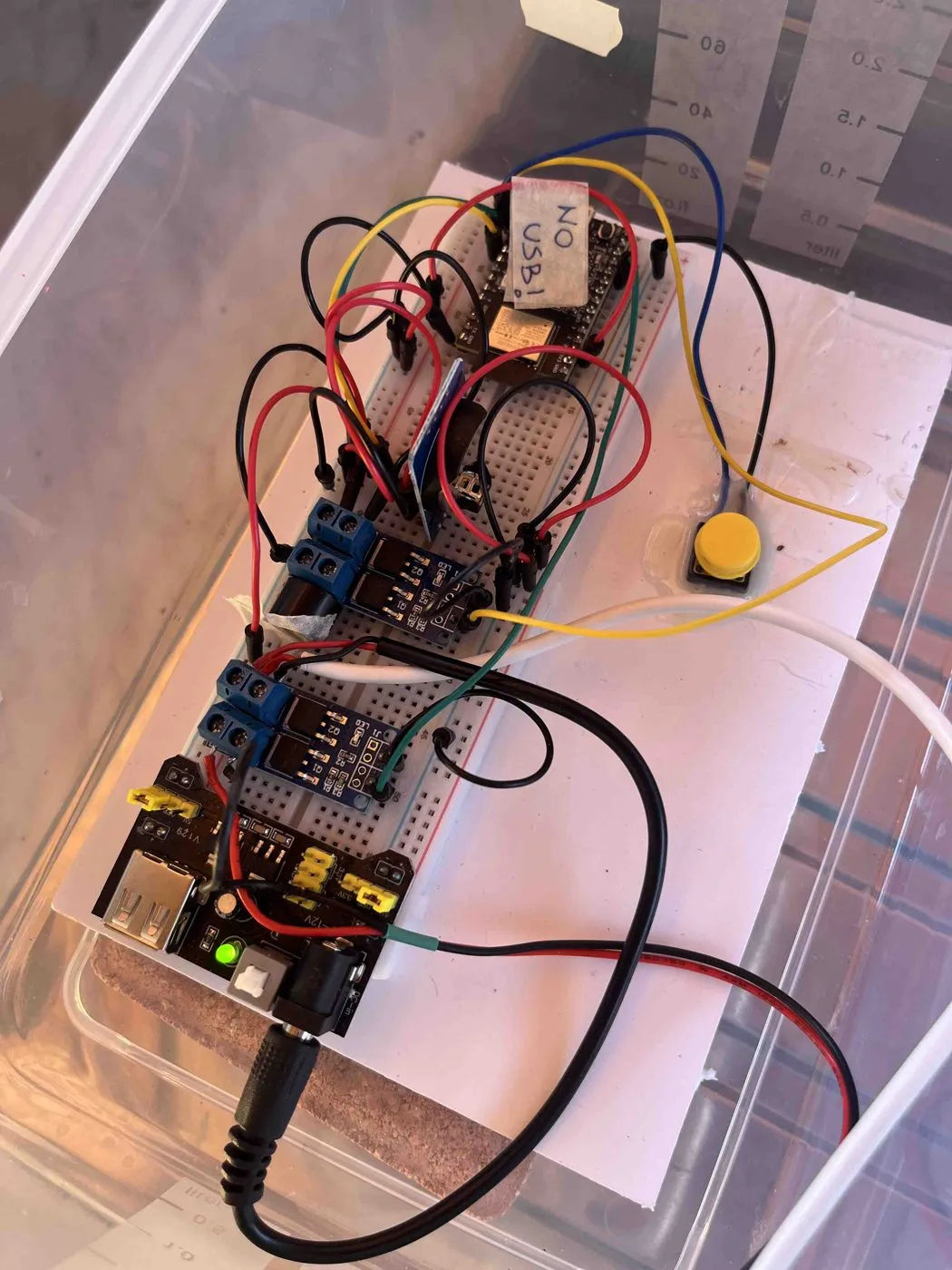
What makes up for the shallow reservoir is frequency. Once an hour, a small pump runs for about 10 seconds and trickles water onto the top of the LECA. That keeps the upper pebbles damp, and capillary action does the rest. The roots never sit in deep water, and the top of the bed never dries out.
The whole loop
The water goes round in a circle. A reservoir sits on the ground behind the stand. Once an hour the pump sends water up a silicone hose to the top planter. Each planter fills to its outlet, then overflows into the one below, and the bottom planter drains back into the reservoir. The same water keeps cycling, so the only thing we top up is what the plants drink and the air takes.
The log
Before planting · Aug 16
A big plant with a few marks already
We bought the Syngonium at about 25 cm tall. In hindsight, that was bigger than this planter could comfortably take. It already had some brown blotches on a few leaves when it came home.
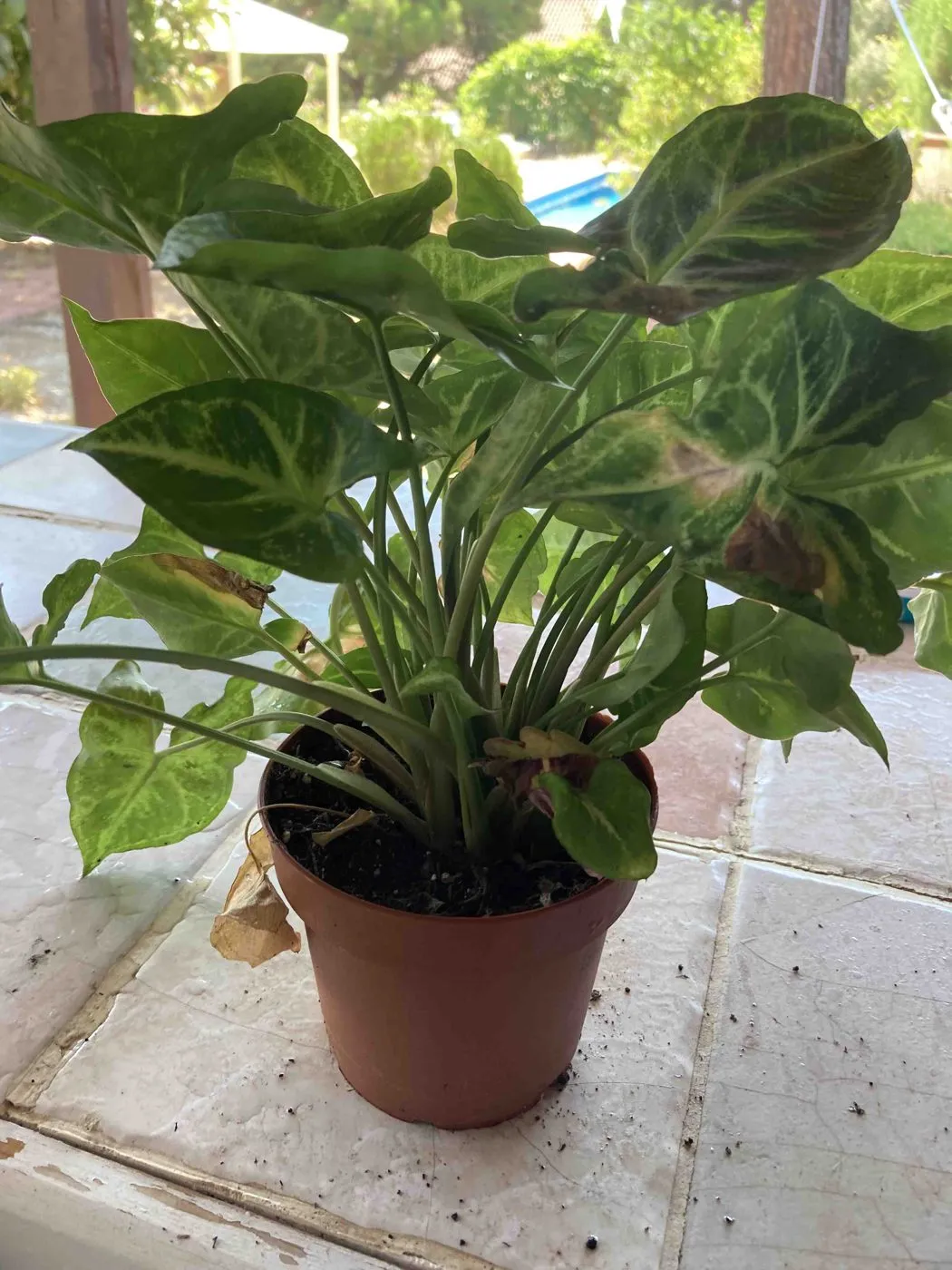
Out of the pot, the problem was obvious. The plant was a dense crown of thick, semi-hard stems sitting on a big root ball. That base made it stable, but it also took up much of the 8 cm of depth we had.
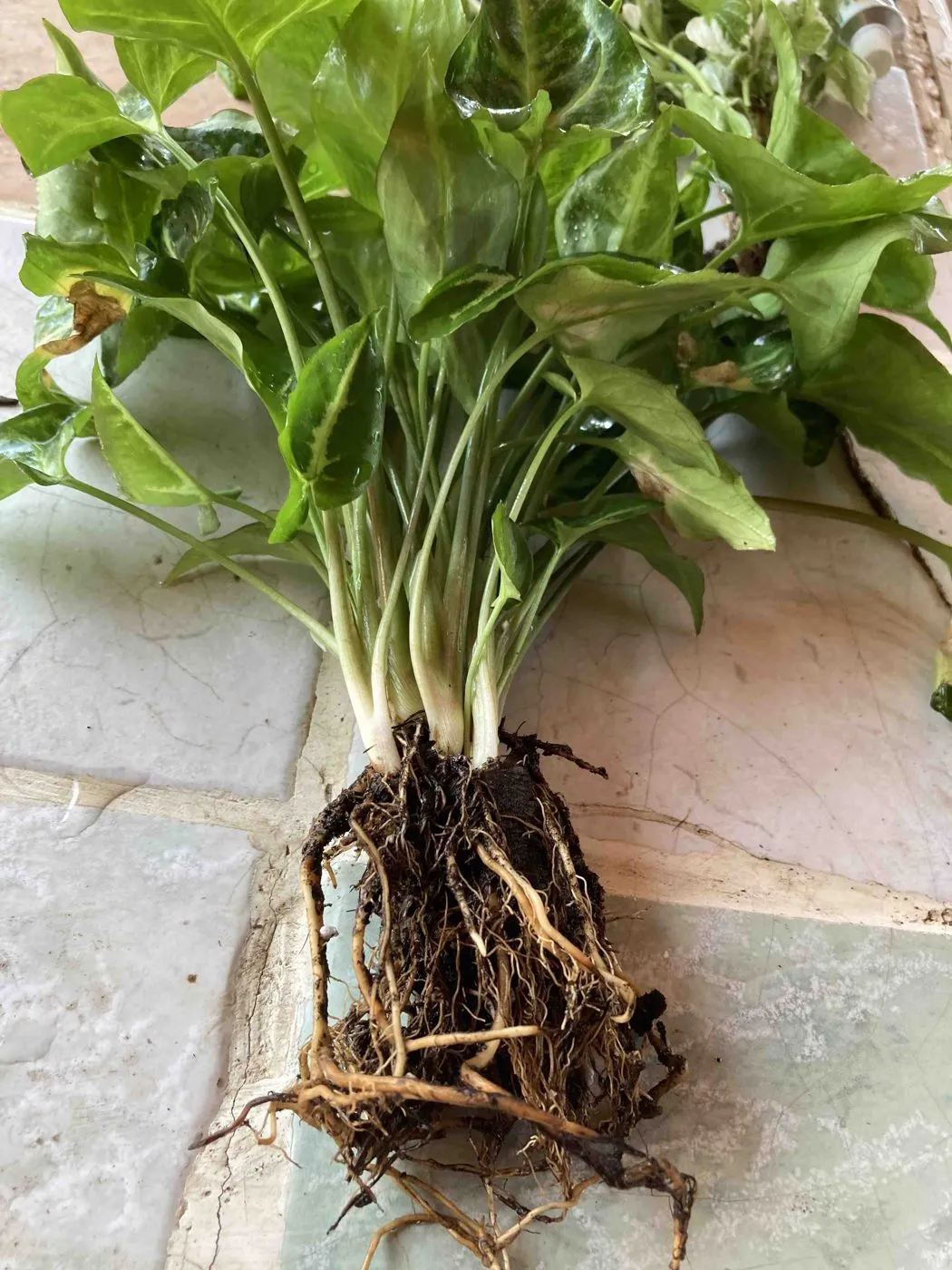
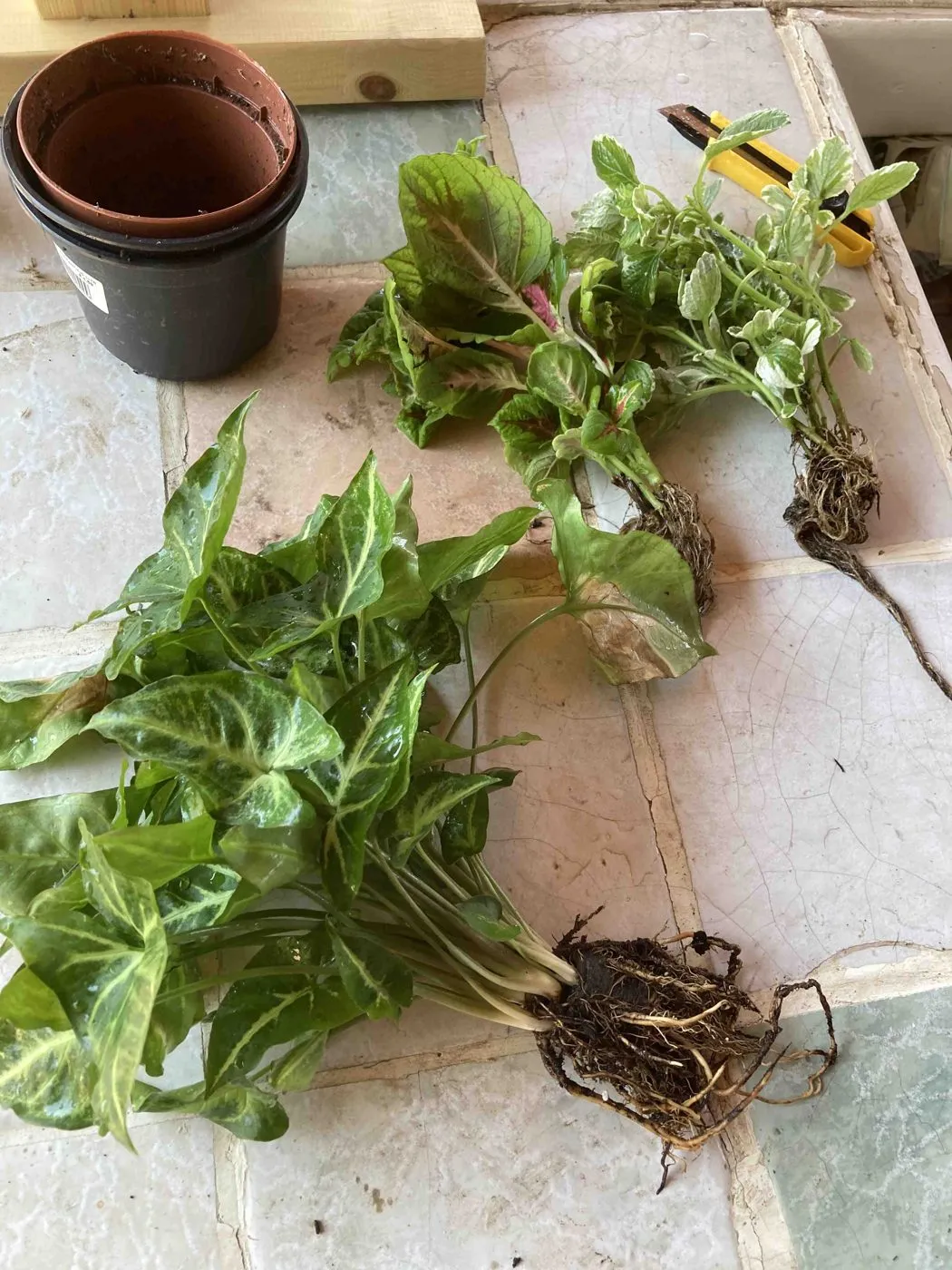
To prepare it, we took the plant out of its pot, washed all the soil off the roots, and trimmed them very lightly.
Day 1 · Aug 17
Planted, against a sunny wall
For the first few days, Frankie stood against a stone wall, fed by a pipe set to a very slow drip. The hourly top-ups came later. The stems leaned outward. With so little depth, the plant wasn’t well anchored yet.
Day 4 · Aug 20
Moved into the shade
We moved Frankie to a covered pergola, where it gets only an hour or two of direct sun a day.
Days 7–11 · Aug 23–27
Clean new leaves
A week in, the plant started pushing new leaves, and they came in clean and well marked. The marks it arrived with stayed where they were, on the old leaves.
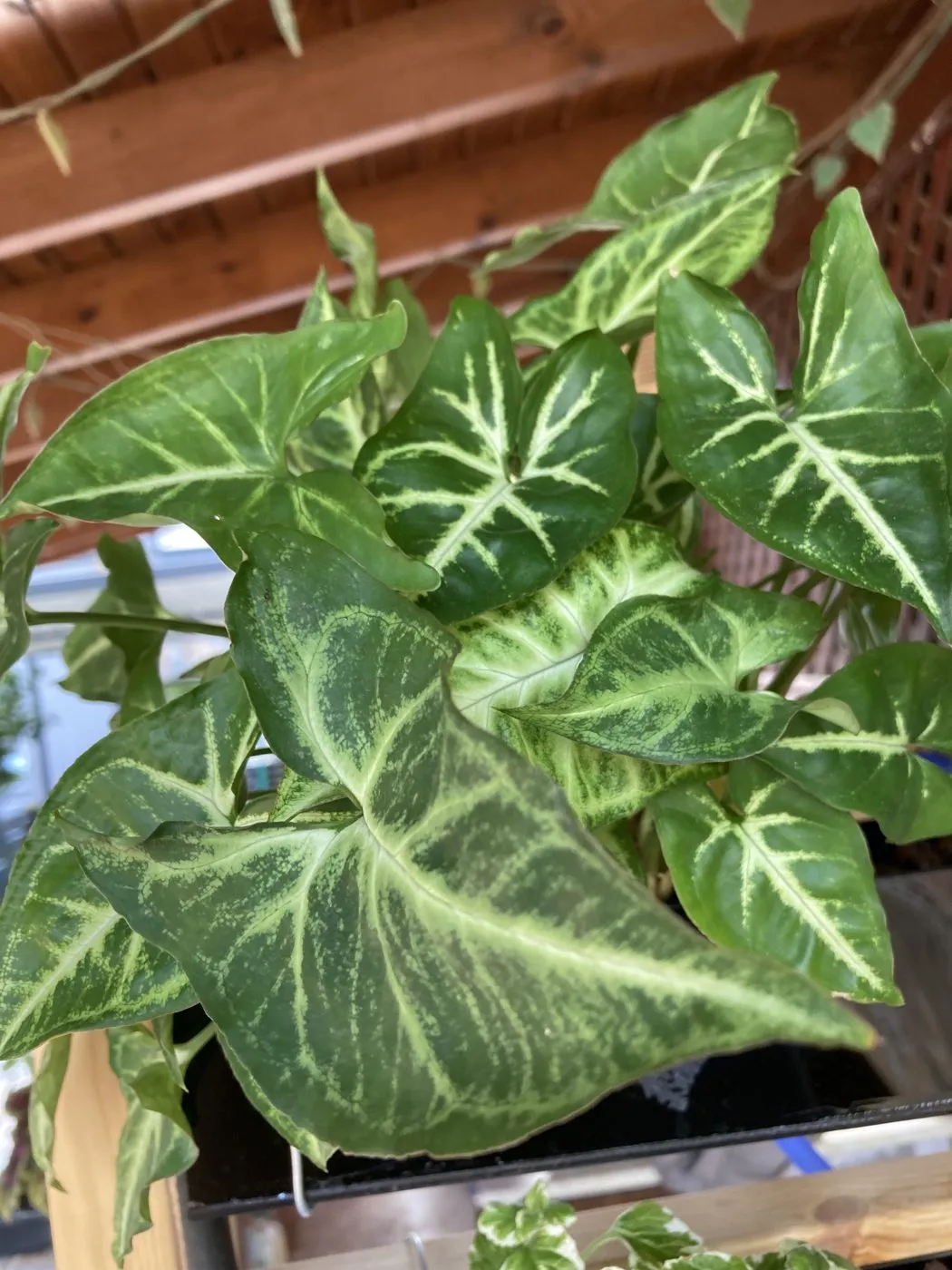
That is the signal worth watching after any move. New growth is the plant’s verdict on its new conditions, and this one was positive within a week.
Days 11–42 · Aug 27 – Sep 27
Hands off (and out of office)
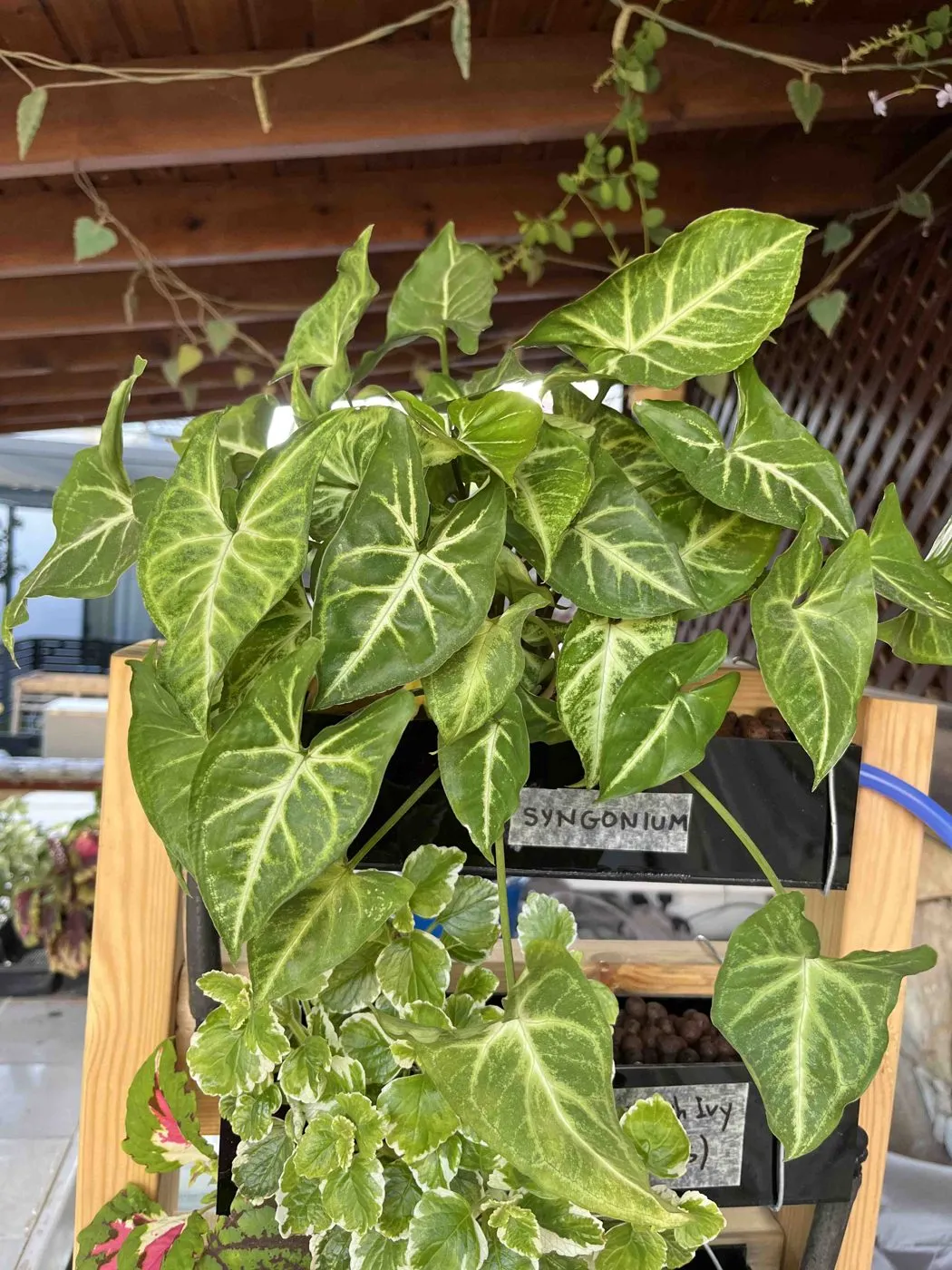
For the next month, our plan was to observe without interfering. This was made easier by the fact that we were on vacation. Frankie was left in charge of itself, on a slow drip, and it coped. Apart from trimming 4–5 withered leaves, we left the plant alone. By day 42 it was fuller than when we planted it.
Days 47–51 · Oct 2–6
Curling edges, and a late first feed
Around day 47, the edges of some leaves began curling inward. Our working theory is hunger. LECA has no nutrients, and until then the plant had been living on plain water and whatever it carried over from the nursery soil. The paler new growth on day 42 fits that theory.
We added nutrients for the first time on day 51 (Oct 6): Canna Hydro Vega for hard water, a two-part feed, with 10 ml each of A and B in our roughly 7-liter reservoir. That works out to about 1.4 ml per liter of each part. It’s a deliberately gentle dose, below the label’s 2–4 ml per liter, which is aimed at fast-growing crops rather than foliage plants.
Day 54 · Oct 9
Yellowing older leaves, and a second trim
Three days after the first feed, the whole plant still had a pale, yellow-green cast. Several of the older leaves had gone fully yellow, and a few had dried and dropped into the LECA.
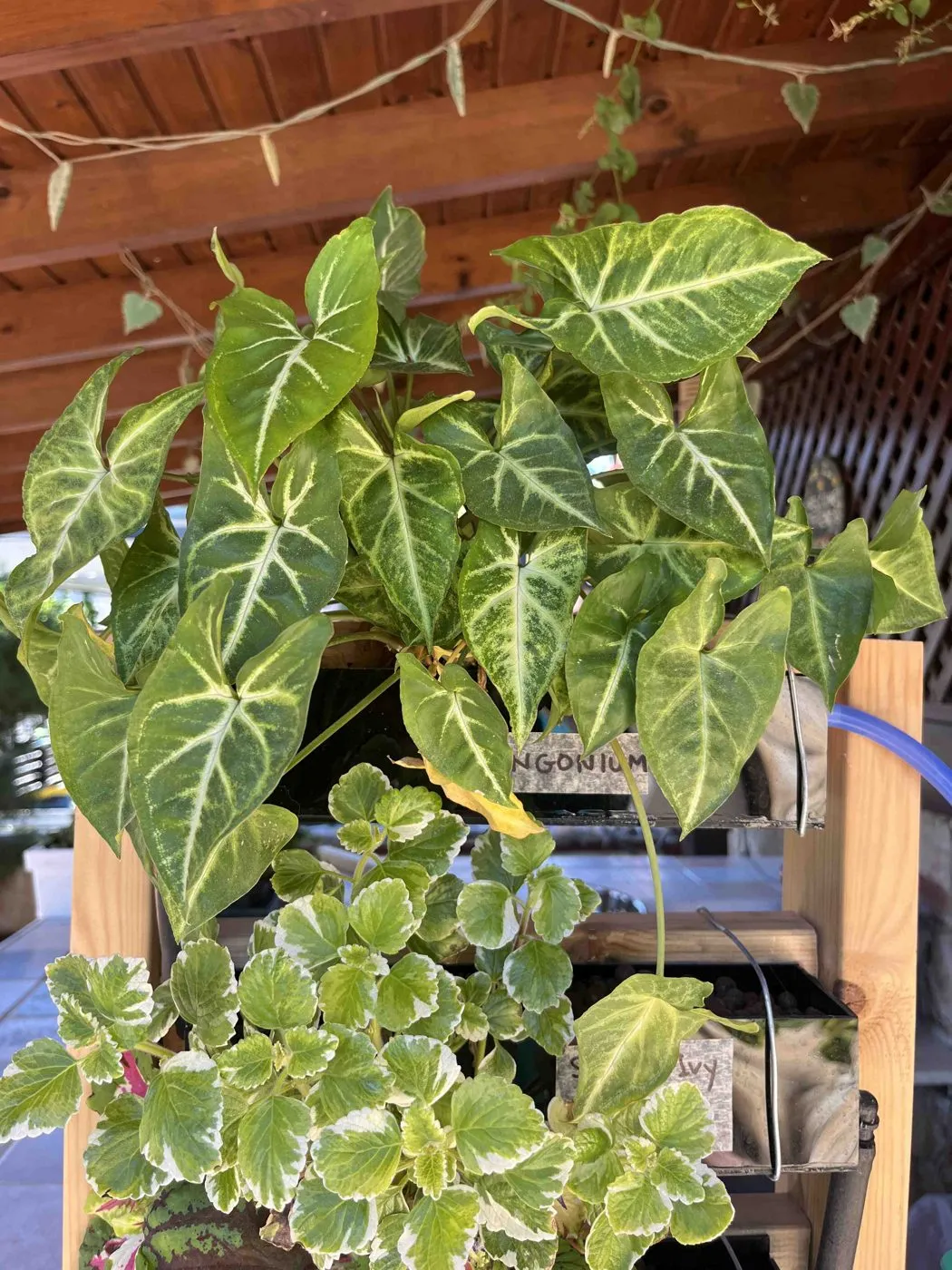
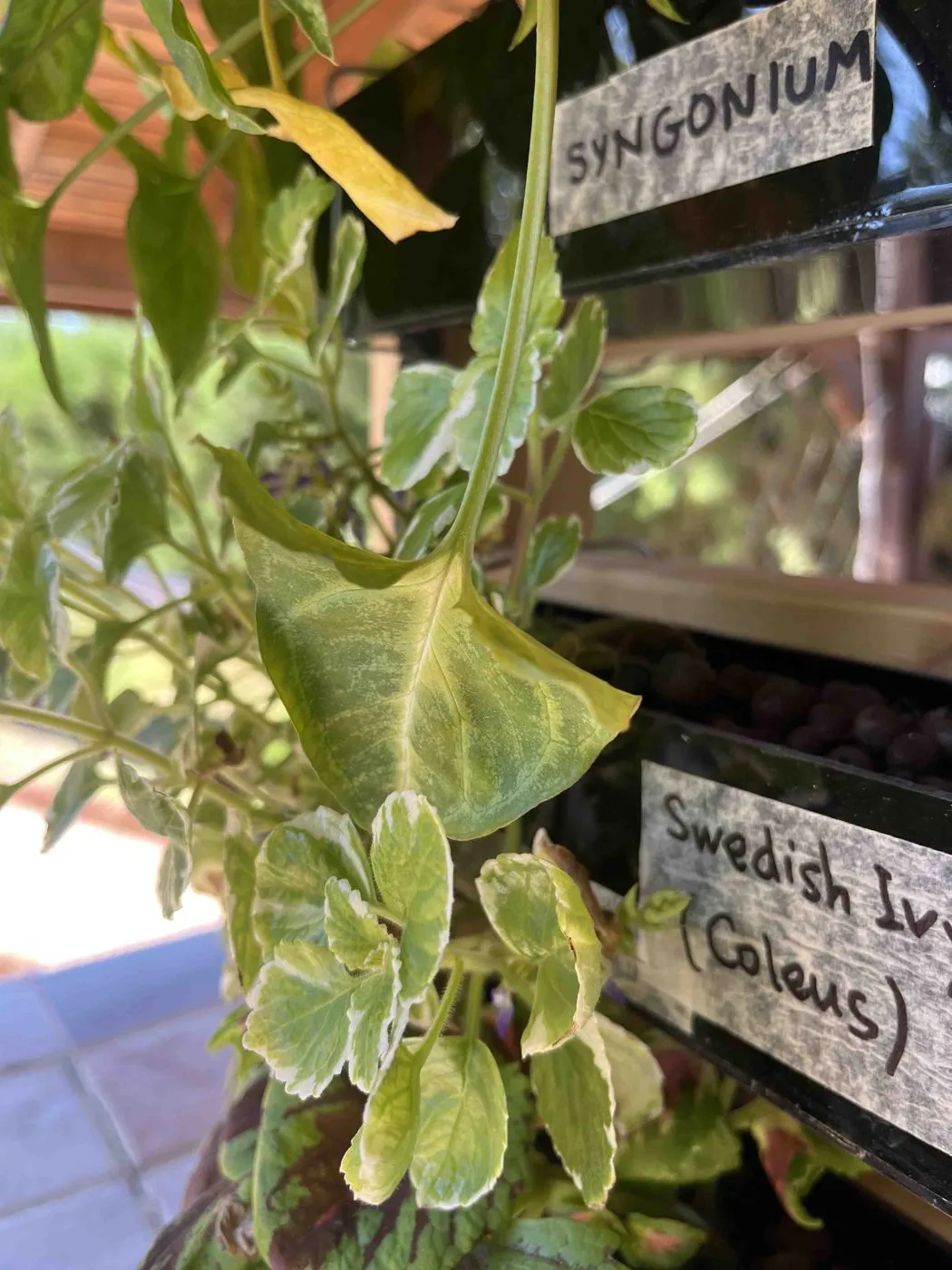
The pattern is the clue. The oldest leaves yellowed first while the newest stayed green. When a plant runs short of nitrogen, it pulls nutrients out of its old leaves to feed new growth, and this is what that looks like. Three days is too soon for the feed to show, so we’re treating this as the “before” picture.
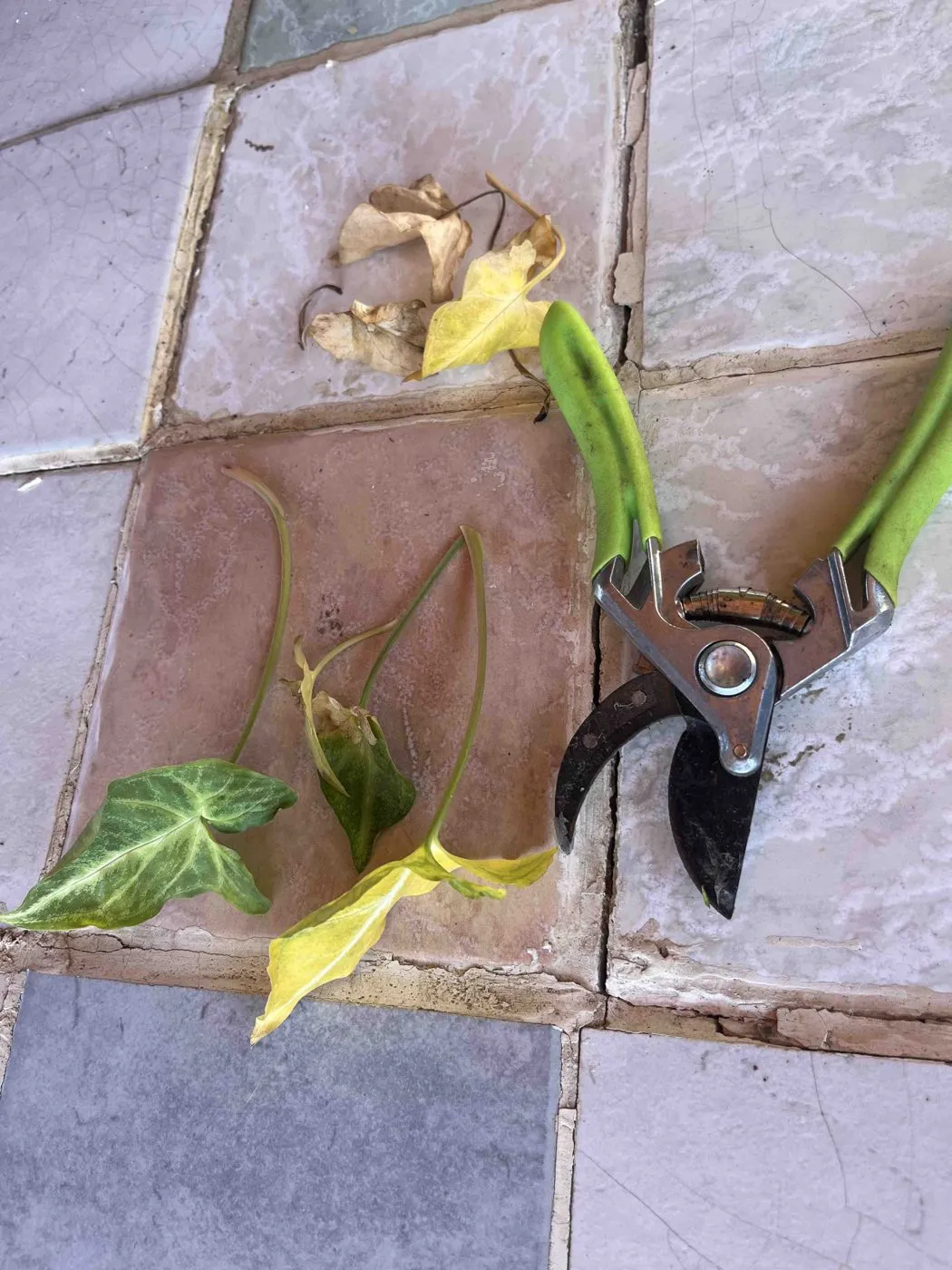
We cut off the yellowing leaves and picked out the dead ones that had already fallen.
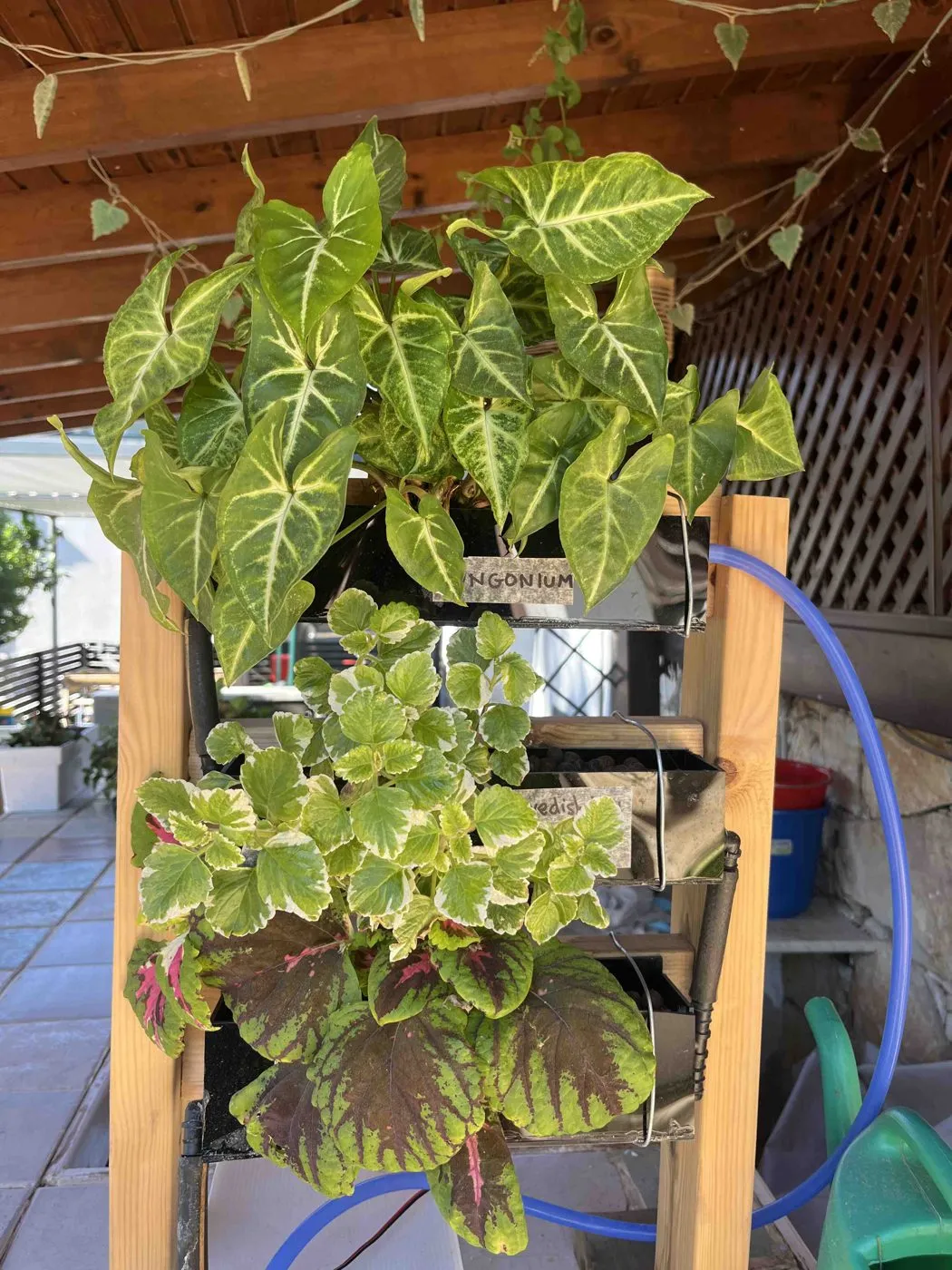
Day 66
Two weeks after its first feed, the arrowhead plant still fills the top planter and keeps putting out new leaves. Whether they come in a deeper green is what we are watching now.
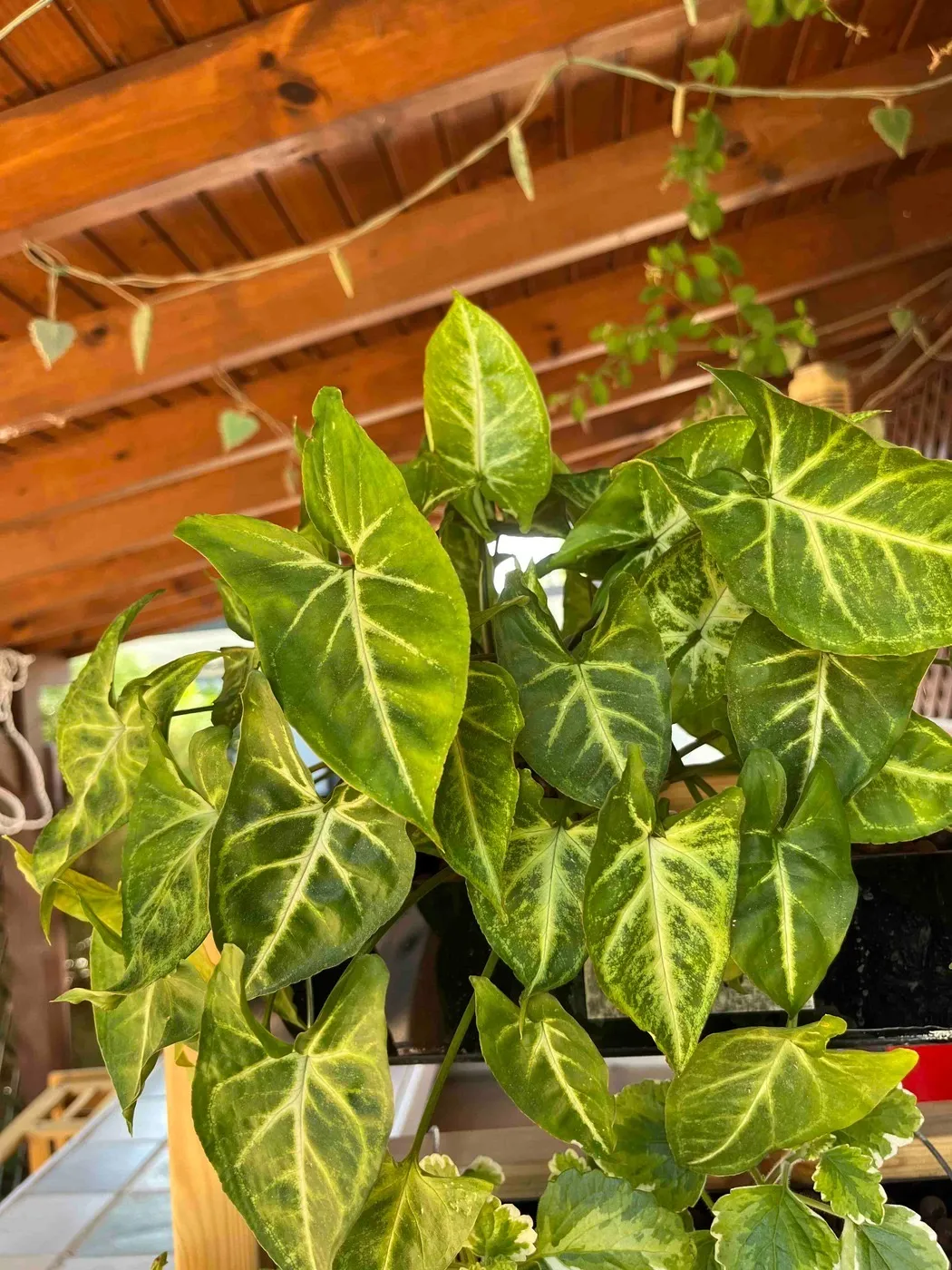
Next check-in: the color of the leaves that open over the coming weeks.
The verdict so far: it’s a fit
For all the curled edges and yellow leaves, the headline is simple: the Syngonium has done well in this setup. After almost two months in 8 cm of LECA on recirculating water, it’s bigger than when it went in. Its leaves cover the whole planter and spill into the space above it.
That spreading, overlapping habit is exactly what you want on a living wall. Planted in a row, Syngonium can grow into a continuous carpet of green, so the planters disappear and you see only leaves. The problems we hit had clear causes and simple fixes. None of them suggested the plant and the system don’t get along.
What went wrong, and what we think caused it
Can a big Syngonium grow in shallow LECA?
Ours did, but we wouldn’t choose one that size again. The thick crown and root ball crowded an 8 cm bed and made the plant hard to settle. Next time we’d plant two smaller Syngoniums side by side. Each one settles into the pebbles more easily, and together they fill the planter just as well. The same applies to most plants in a shallow planter.
Why are the Syngonium leaf edges curling, and the older leaves turning yellow?
In our case, the likely cause is a lack of nutrients after about seven weeks on plain water. Two things point that way: the curl and yellowing showed up on older leaves first, and the newer growth had been getting paler for weeks. Heat and low humidity can also make leaf edges curl, so we’re watching the leaves that grow after feeding before we call it.
If your Syngonium in LECA is yellowing from the bottom up, check whether it’s being fed before you change anything else.
What we’d do differently
- Start with two smaller plants side by side instead of one large one.
- Add a dilute nutrient solution from the first week, not week seven.
- Keep a newly transplanted plant out of direct sun until it settles.
What’s next
This log stays open. We’ll add photos as the plant responds to feeding, and we’ll repeat the experiment indoors. Frankie’s other residents have their own logs: the variegated Swedish ivy and the coleus.