
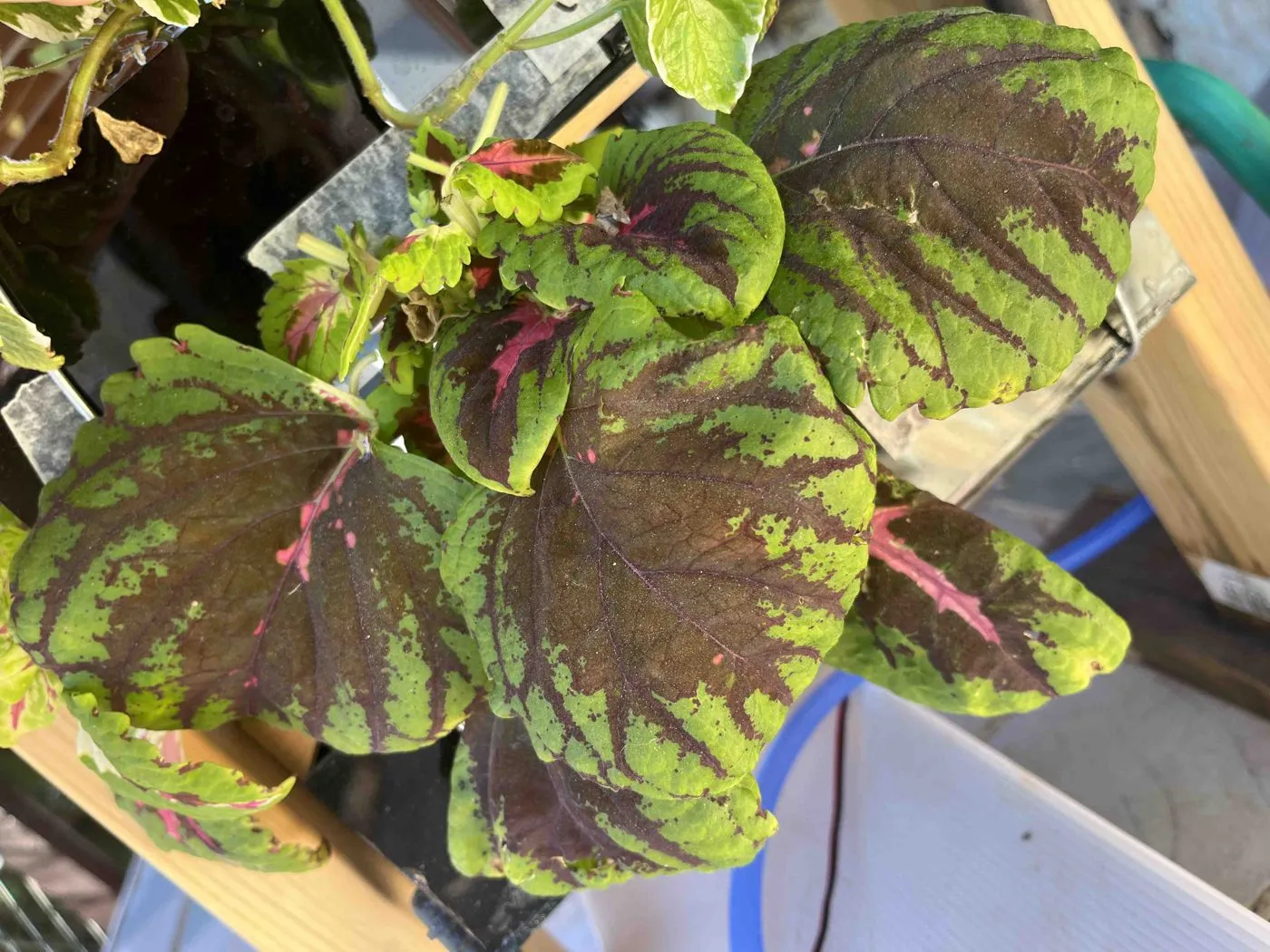
Coleus care basics
The quick version: what coleus generally wants, and what we saw in LECA.
| Light | Bright light. Many modern varieties handle some sun, but strong afternoon sun can fade or scorch the leaves. Ours got 1–2 hours of direct sun a day and kept its color. |
|---|---|
| Water | Evenly moist. Coleus wilts quickly when it dries out, and it bounces back just as quickly. In semi-hydro it never dries out. |
| Temperature | Warm. Coleus is frost-tender and sulks below about 10 °C (50 °F). |
| Flowers | Spikes of small blue-lilac flowers. Once a coleus flowers, it puts its energy into seed rather than leaves, so most growers pinch the spikes off. |
| Feeding | LECA has no nutrients of its own, so the plant relies entirely on what’s in the water. We started late, and that’s covered below. |
| Pets | The ASPCA lists coleus as toxic to cats, dogs and horses. It can cause vomiting and diarrhea. Keep it out of nibbling reach. |
The setup: Frankie
Frankie is our first prototype: a wooden stand with three black planters, one above the other. The coleus has the bottom planter, under a variegated Swedish ivy and an arrowhead plant.
Each planter holds 8 cm of LECA and keeps about 15 mm of water at the bottom, set by the height of its outlet. Once an hour a small pump sends water to the top planter, and it overflows down through the other two and back into a reservoir. The full story of how Frankie works is on its own page.
The log
Planting day · Aug 16
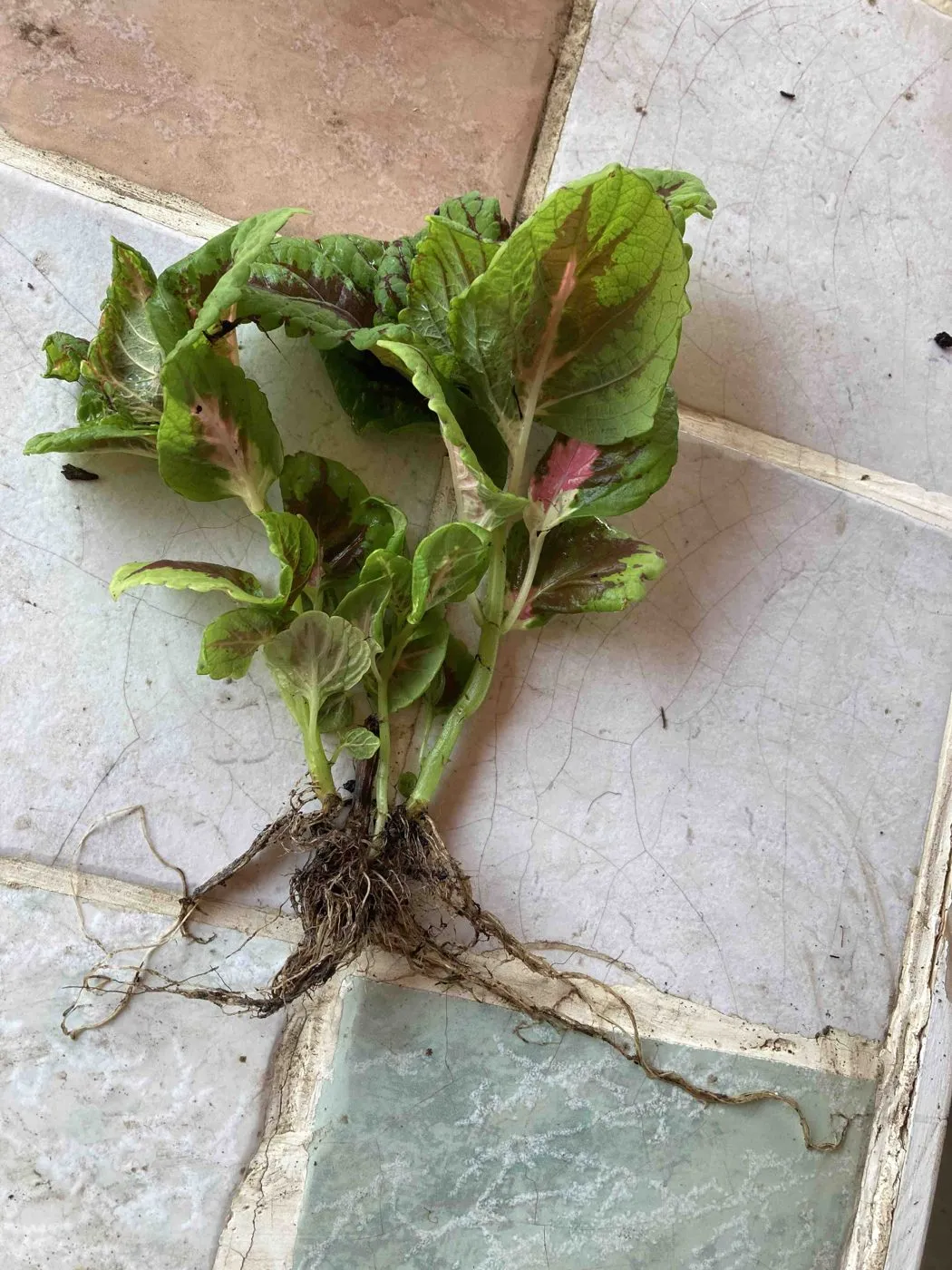
Bare root, soil washed off
We took the coleus out of its nursery pot and washed the soil off its roots before planting. Its root ball was much smaller and looser than the arrowhead plant’s, which made it easy to settle into shallow LECA.
Days 1–4 · Aug 17–20
A slump, and an early flower spike
For its first few days, Frankie stood against a sunny stone wall, fed by a pipe set to a very slow drip. By day 4, when we moved it into the shade, the coleus was drooping. It was also already pushing up a flower spike from its center.
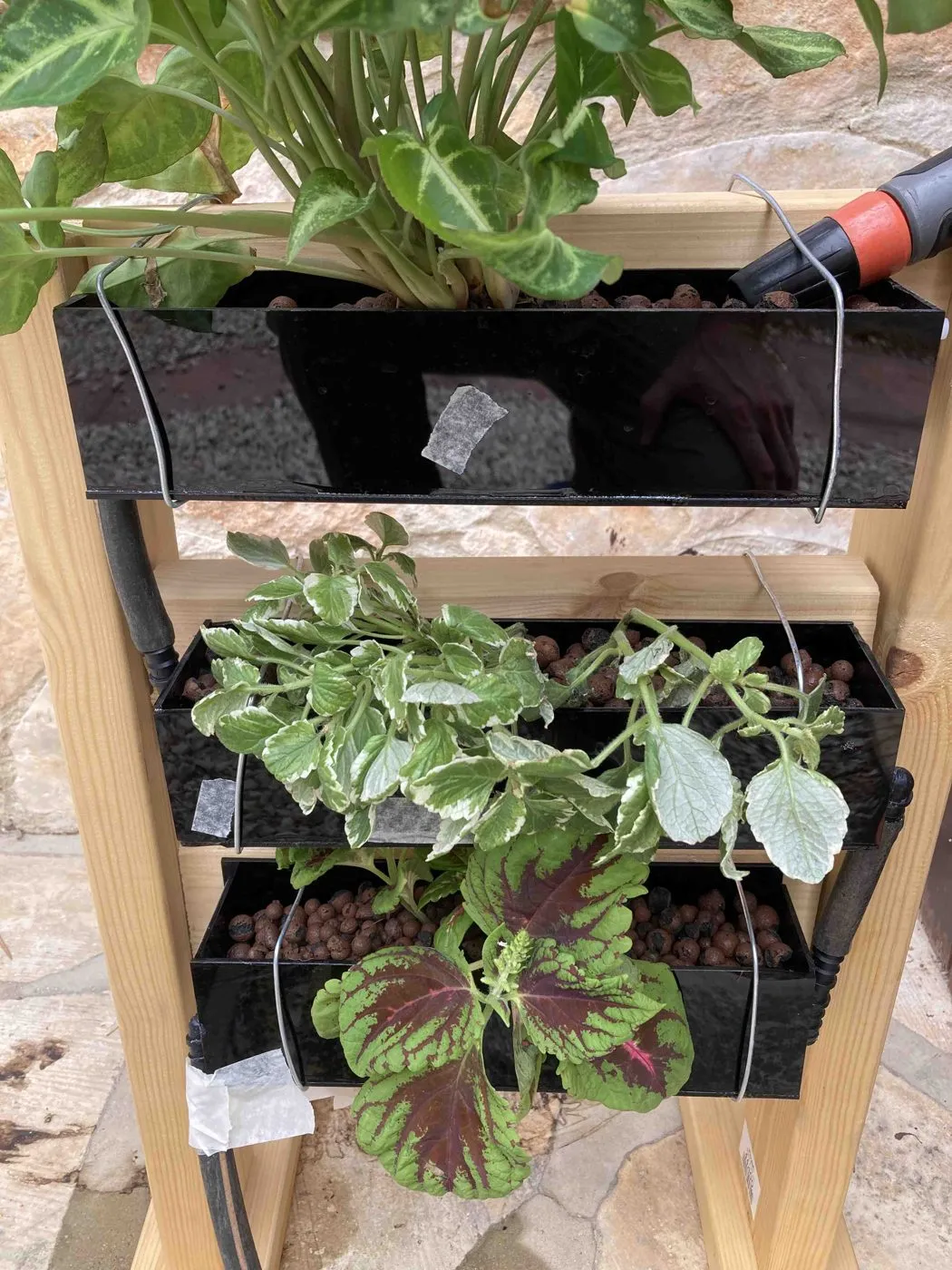
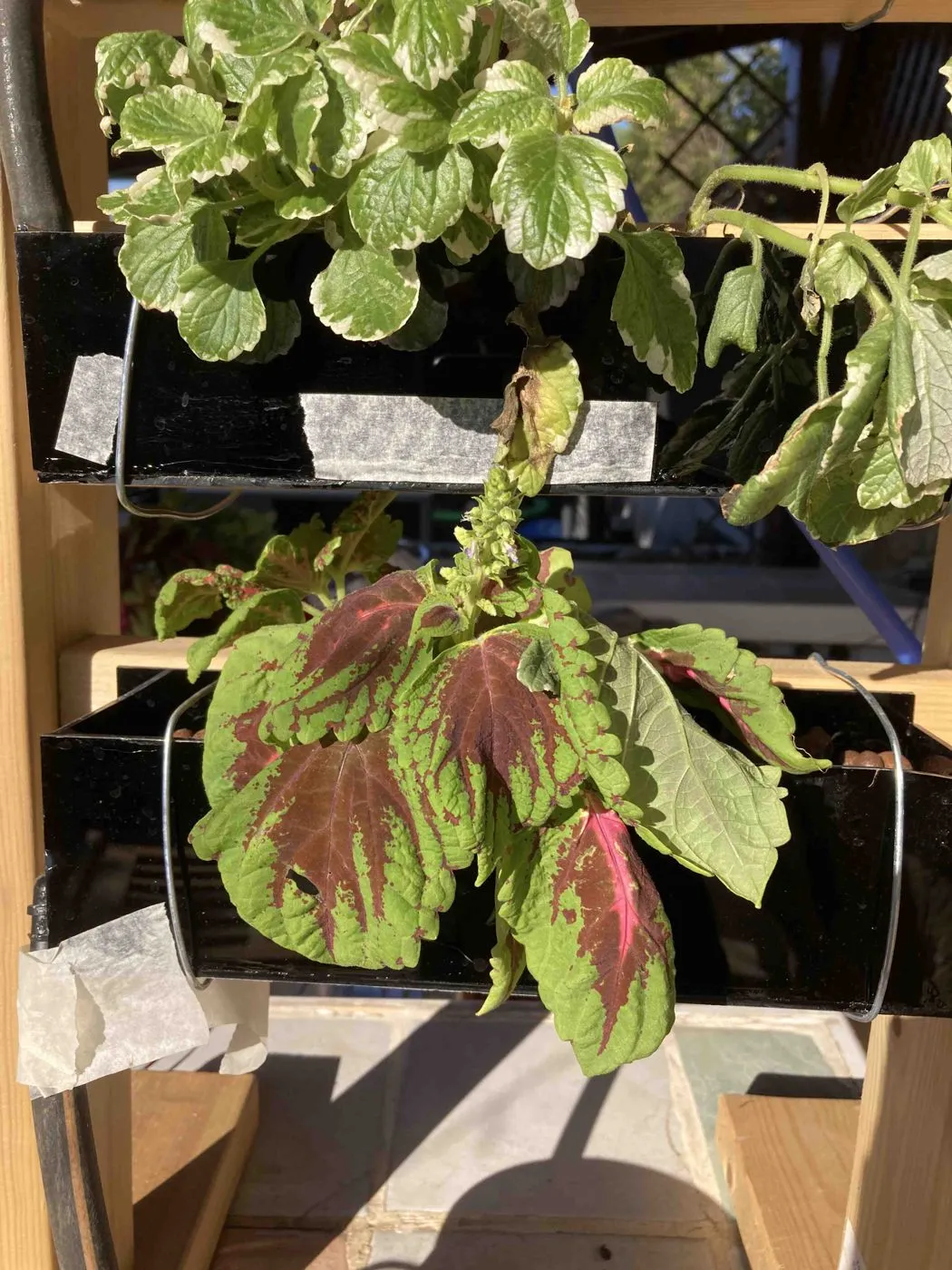
Drooping after a move is normal for coleus. Its soft stems and big leaves lose water fast while the roots settle in. Sun on those first days probably didn’t help.
Days 7–11 · Aug 23–27
In flower, and the first cut
Within a week the coleus had perked up, and the spike opened into small blue-lilac flowers. They’re pretty, but a flowering coleus puts its energy into seed, and the leaves suffer. On day 11 we cut the spike off.
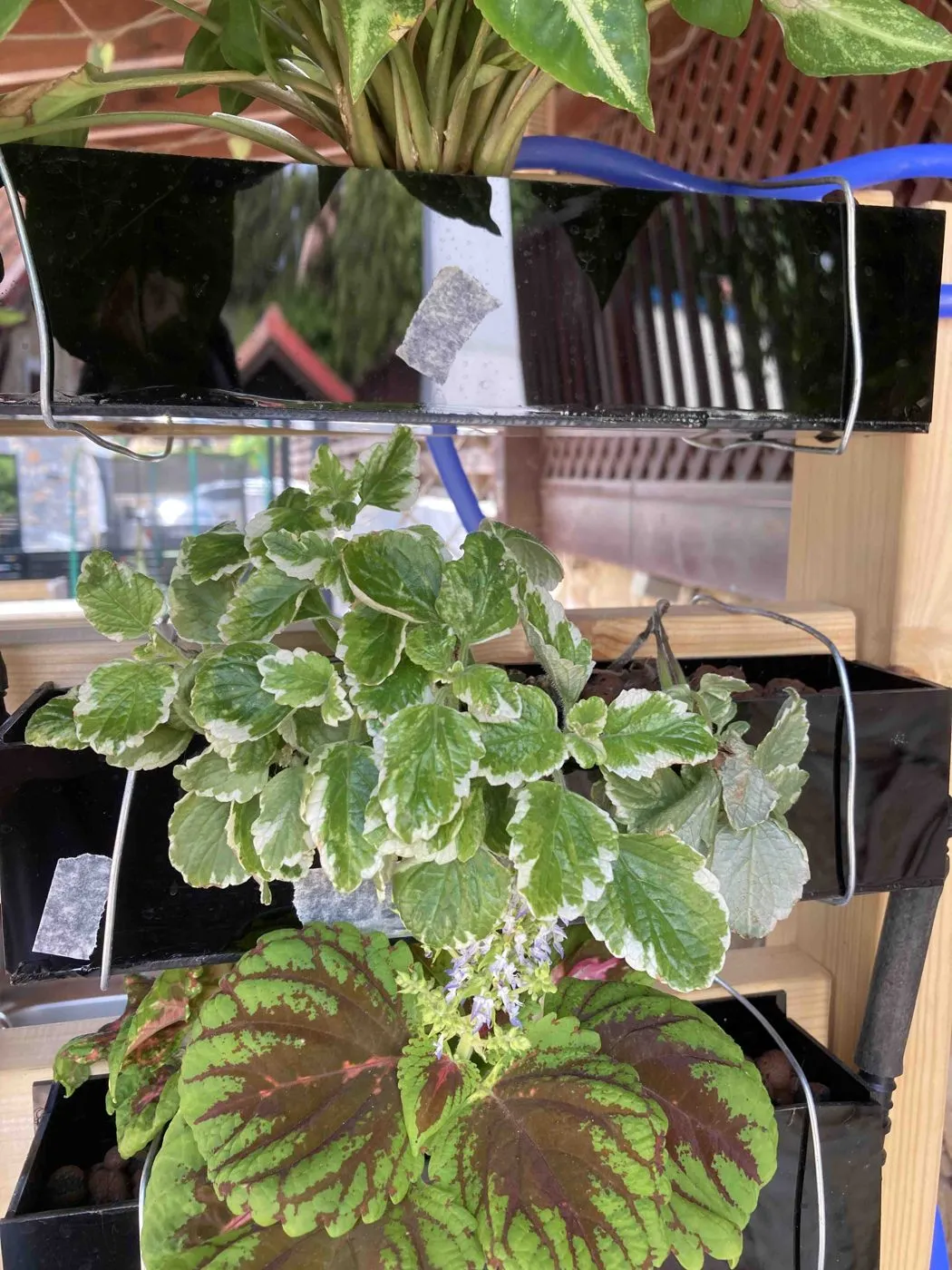
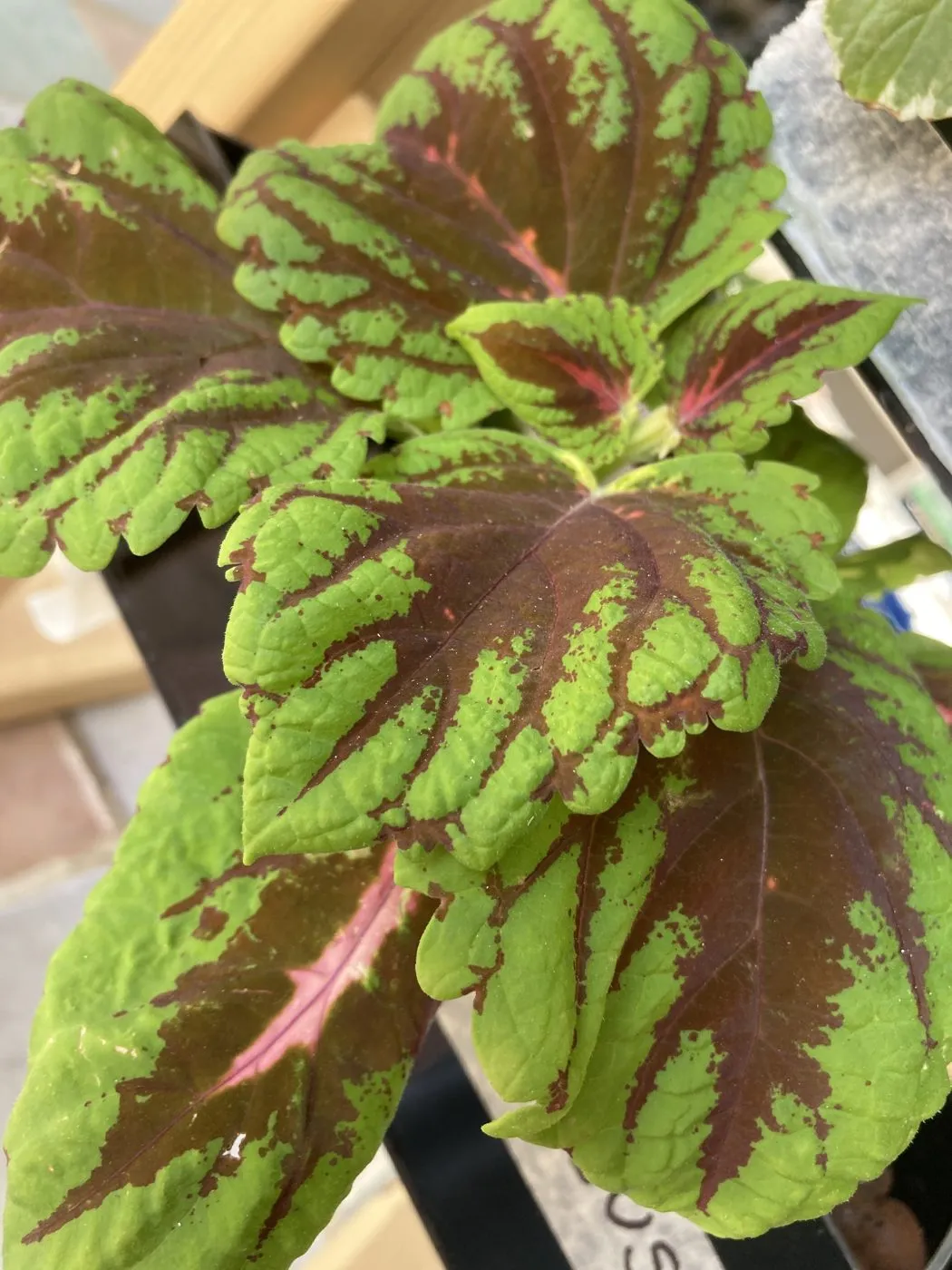
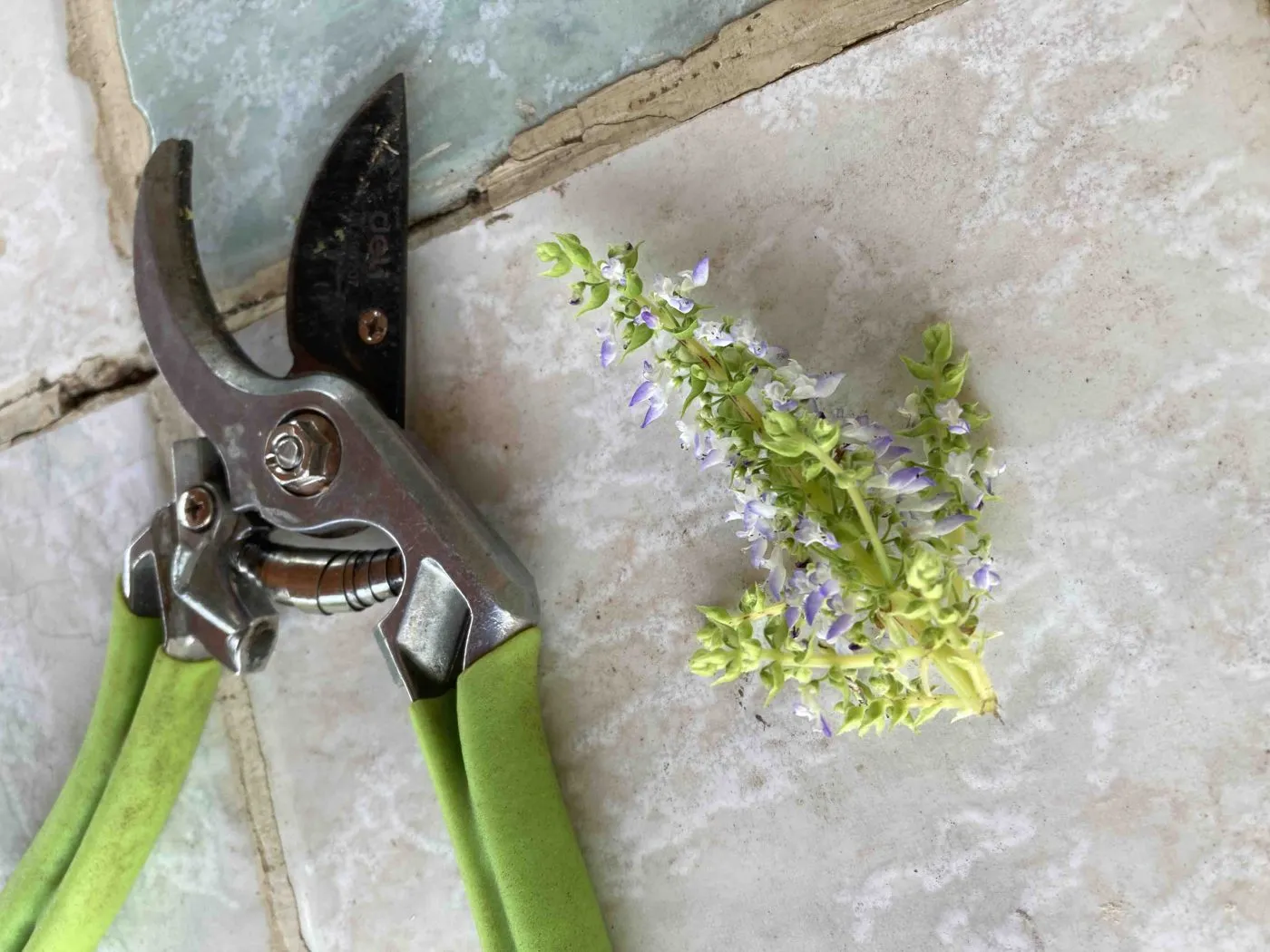
Days 11–42 · Aug 27 – Sep 27
Hands off (and out of office)
For the next month, our plan was to observe without interfering. This was made easier by the fact that we were on vacation. Frankie was left in charge of itself, on a slow drip, and it coped.
We came back to a coleus that had more than doubled. The leaves were as big as a hand, filling the bottom planter and hanging well below it.
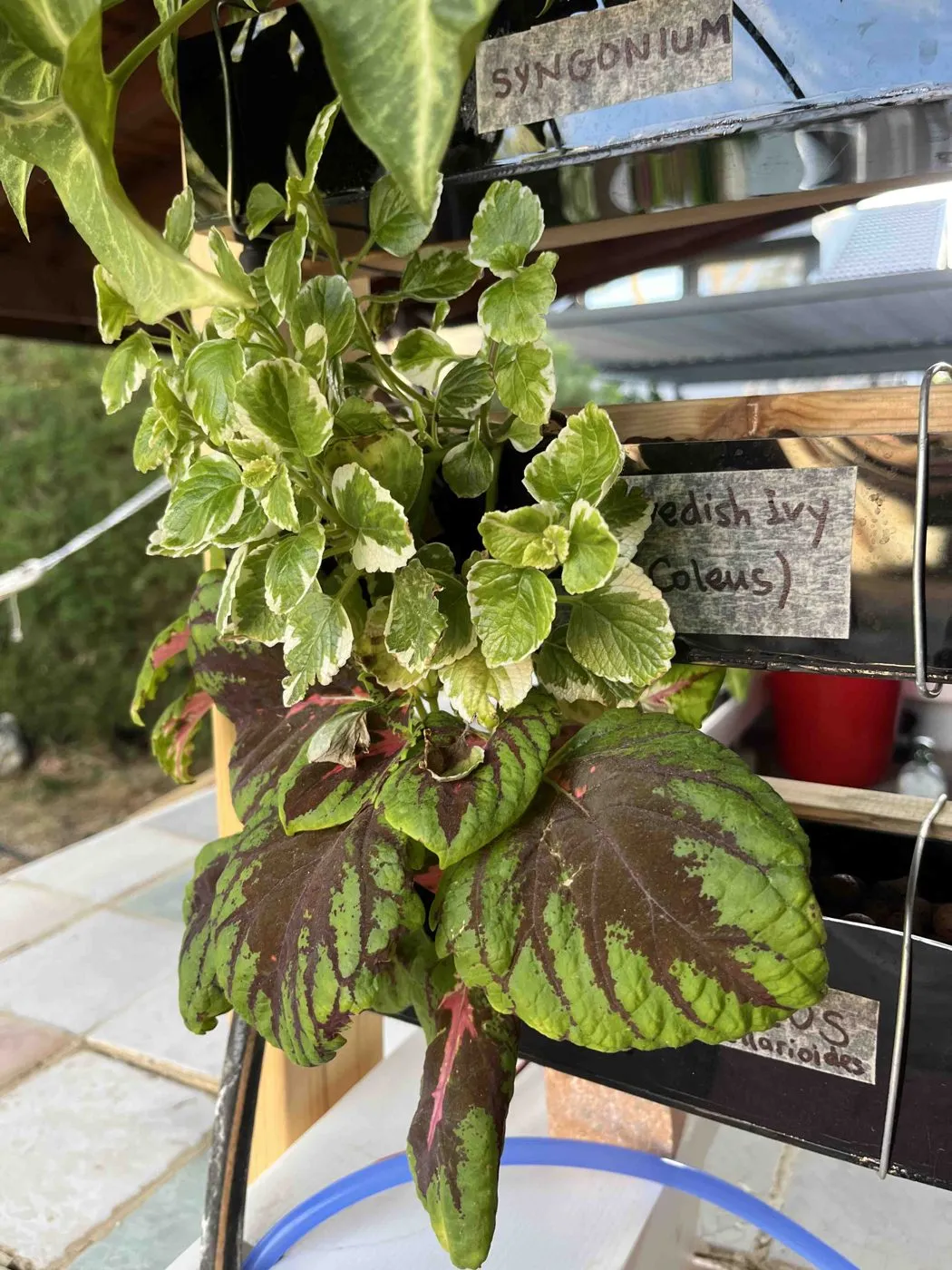
Days 51–54 · Oct 6–9
A first feed, a second flowering, and a few tired leaves
On day 51 we added nutrients for the first time: Canna Hydro Vega for hard water, 10 ml each of parts A and B in our roughly 7-liter reservoir. We explain the dose in the arrowhead plant log.
By day 54 the coleus was flowering again, and some of the older leaves looked limp and lighter in color. The plant hadn’t been fed for its first seven weeks, so hunger is our first suspect. That’s the same pattern we saw on its neighbors.
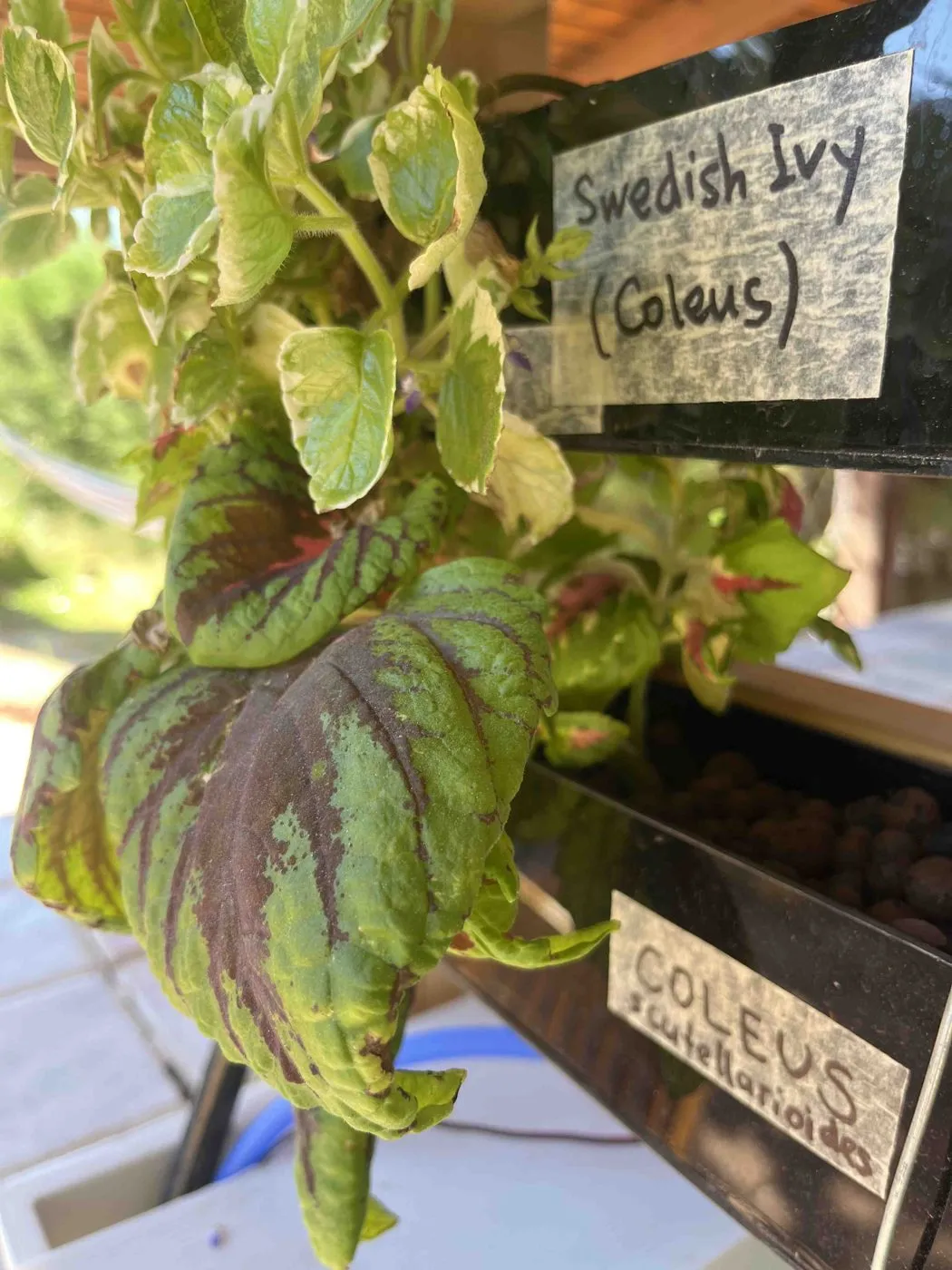
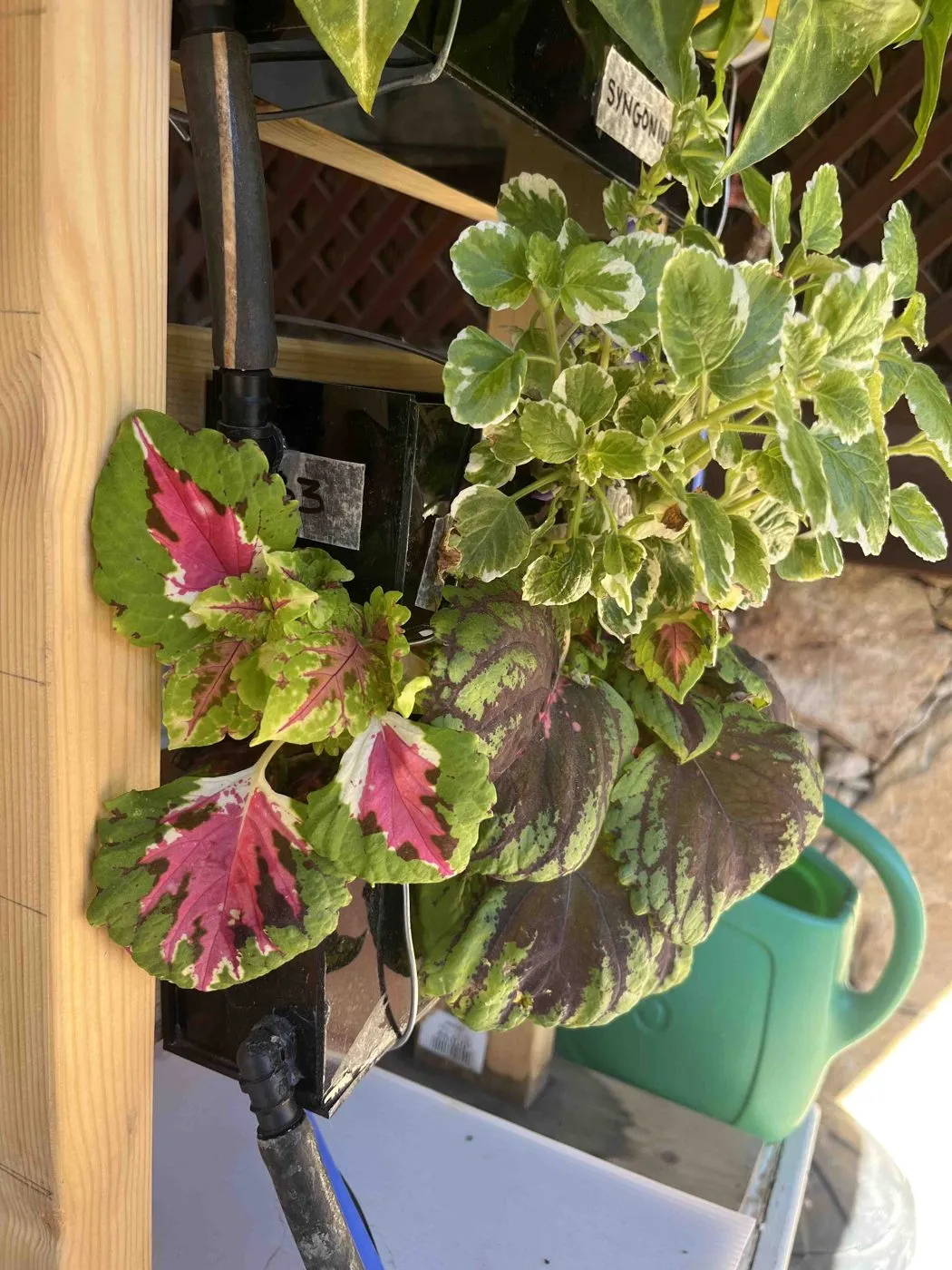
One side shoot came in with completely different colors from the rest of the plant, and it’s all the same plant. Young coleus leaves often color differently from mature ones, and now and then a branch changes pattern for good. We’ll watch whether it keeps these colors as it grows.
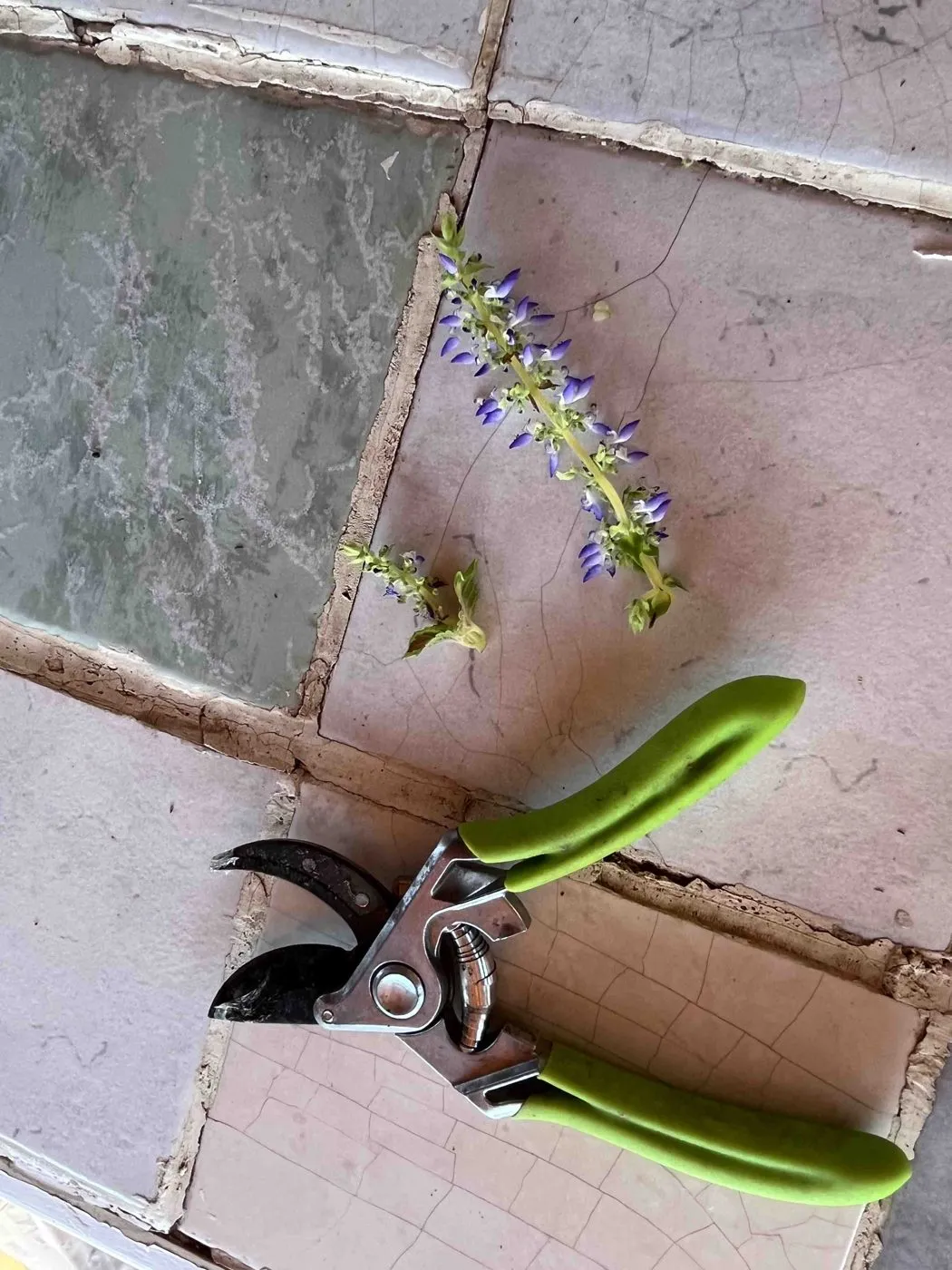
We cut the new flower stems off and left the rest alone.
Day 66
The coleus has turned paler. The pink centers are fading toward yellow-green, and some leaves hang down. We don’t know why yet. We’ll add to this log when we do.
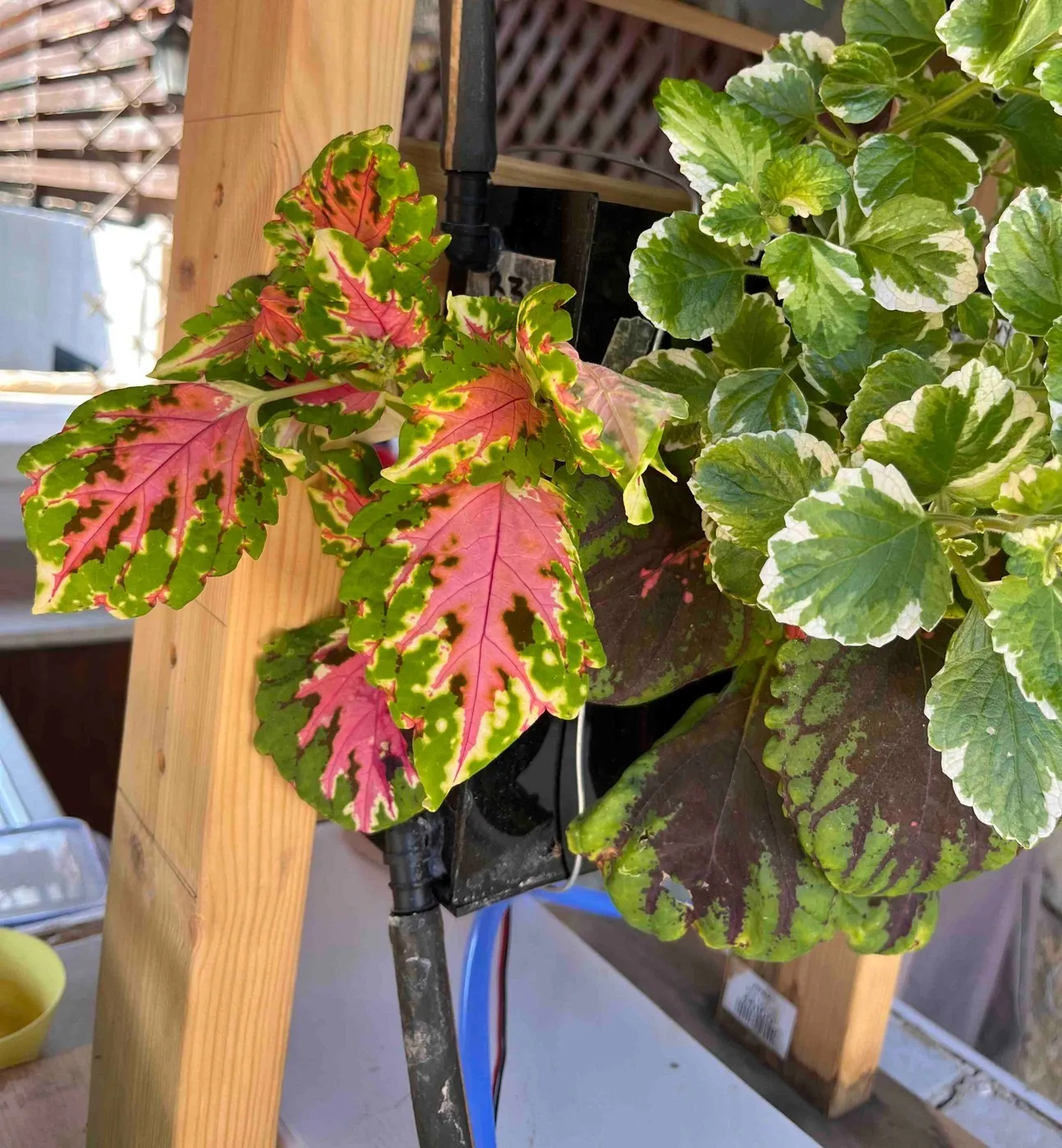
Next check-in: whether the color comes back.
The verdict so far: it’s a fit
Coleus is the most enthusiastic grower on Frankie. After almost two months in 8 cm of LECA on recirculating water, it fills its planter and hangs well below it, with leaves as big as a hand.
On a living wall, that makes it a natural splash of color between greener plants. The only regular chore it asked for was cutting off the flowers.
What we learned
Should you cut coleus flowers?
If you grow coleus for its leaves, yes. Ours flowered within days of planting and again about six weeks later. Each time, we cut the spike off just above a pair of leaves, and the plant went back to making leaves. In a semi-hydro setup it grows fast, so check for spikes every couple of weeks.
Why is my coleus drooping after repotting?
Soft-stemmed plants like coleus lose water faster than new roots can replace it. Ours drooped for a few days after moving from soil to LECA, then recovered on its own once it was in the shade with a steady water supply. If yours droops after a move, give it shade and consistent moisture before trying anything else.
Why are my coleus leaves limp and pale?
In our case, the likely cause is seven weeks without nutrients. Coleus grows a lot of leaf, and LECA gives it nothing to build with. Heat and too much sun can also wash out its color, so we’re watching the leaves that open after feeding before we call it.
What we’d do differently
- Start with two smaller plants side by side instead of one large one.
- Add a dilute nutrient solution from the first week, not week seven.
- Keep a newly moved plant out of direct sun until it settles.
- Check for flower spikes every couple of weeks and pinch them early.
What’s next
This log stays open. We’ll add photos as the coleus responds to feeding, follow that two-tone side shoot, and repeat the experiment indoors. Frankie’s other residents have their own logs: the arrowhead plant and the variegated Swedish ivy.