
Not Swedish, and not an ivy
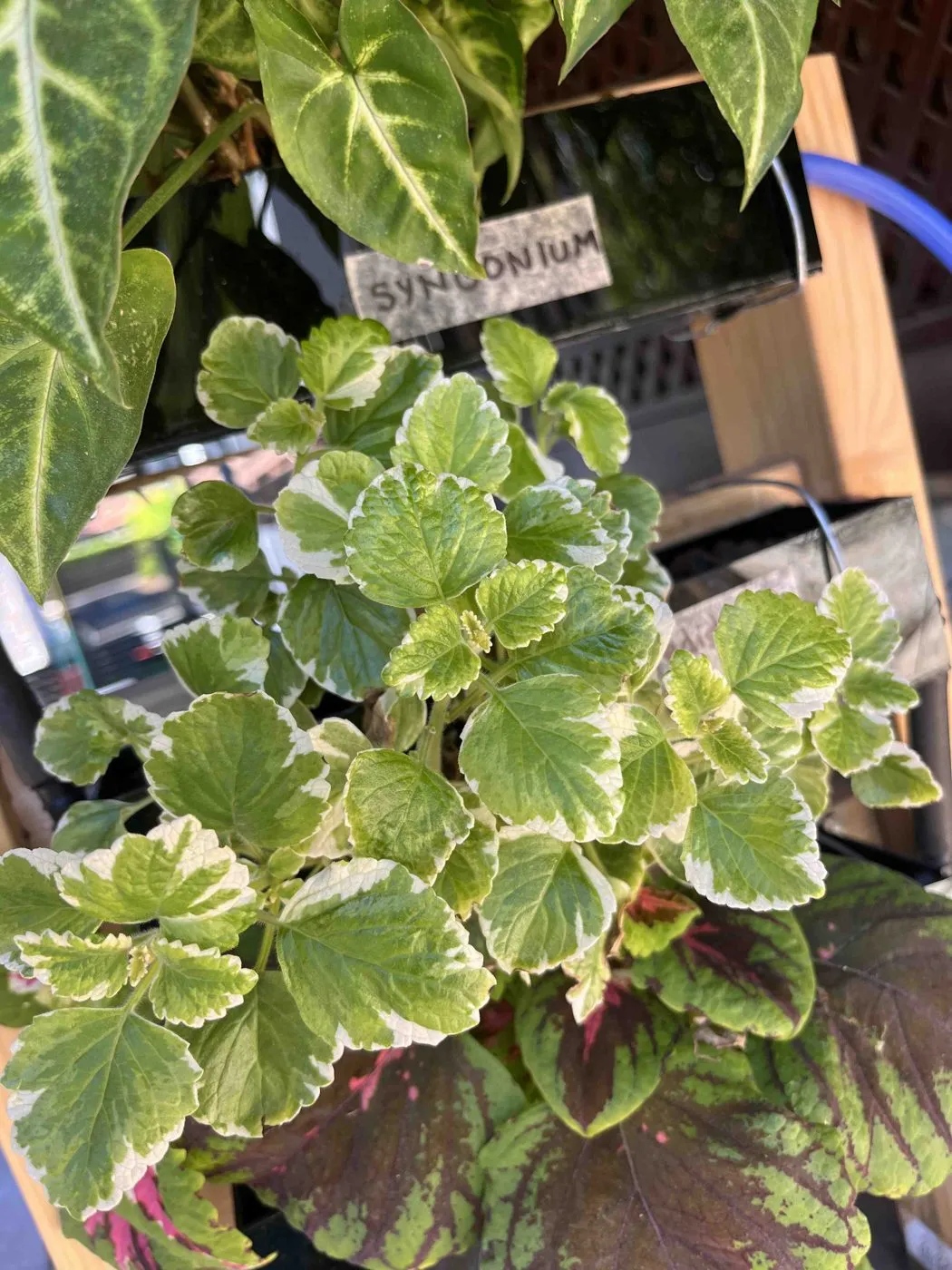
Swedish ivy is a member of the mint family, related to coleus rather than to true ivy. It was long sold as Plectranthus, and in 2019 botanists moved many of those species into the genus Coleus. Ours is Coleus forsteri ‘Marginatus’, the form with the distinct creamy edge to every leaf. That is why our hand-written label reads “Swedish ivy (Coleus)” — it is a relative of the coleus in the planter below it.
Variegated Swedish ivy is sold under several names, and similar-looking cream-edged plants are sometimes labeled loosely, so the old Plectranthus name is still common in shops.
Swedish ivy care basics
The quick version: what Swedish ivy generally wants, and what we saw in LECA.
| Light | Bright, indirect light. Some gentle sun is fine, but strong afternoon sun can scorch it. Ours got 1–2 hours of direct sun a day. |
|---|---|
| Water | Evenly moist. Its soft stems wilt when it’s dry, or when roots are disturbed. In semi-hydro it never dries out. |
| Temperature | Ordinary room temperatures. Keep it away from frost and cold drafts. |
| Habit | Bushy to trailing. Pinching the tips keeps it full. |
| Flowers | Small spikes of pale blue-lilac flowers, usually in autumn. |
| Feeding | LECA has no nutrients of its own, so the plant relies entirely on what’s in the water. We started late, and that’s covered below. |
| Pets | The ASPCA lists white-edged Swedish ivy as non-toxic to cats and dogs. Luna agrees with the ASPCA. Even so, don’t let pets graze on houseplants. |
The setup: Frankie
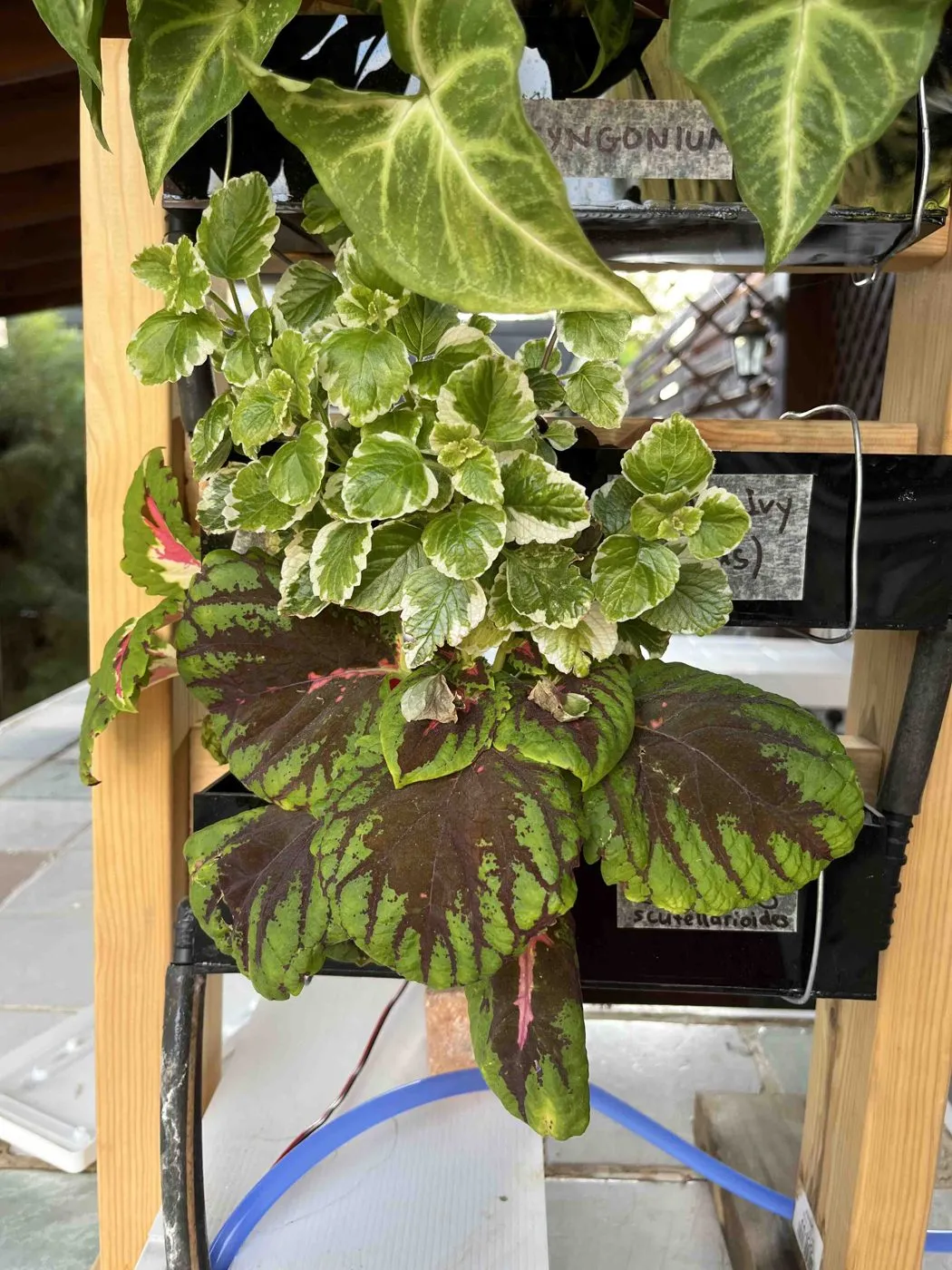
Frankie is our first prototype: a wooden stand with three black planters, one above the other. The Swedish ivy has the middle planter, between an arrowhead plant above and a coleus below.
Each planter holds 8 cm of LECA and keeps about 15 mm of water at the bottom, set by the height of its outlet. Once an hour a small pump sends water to the top planter, and it overflows down through the other two and back into a reservoir. The full story of how Frankie works is on its own page.
The log
Planting day · Aug 16
Inspected, approved, washed
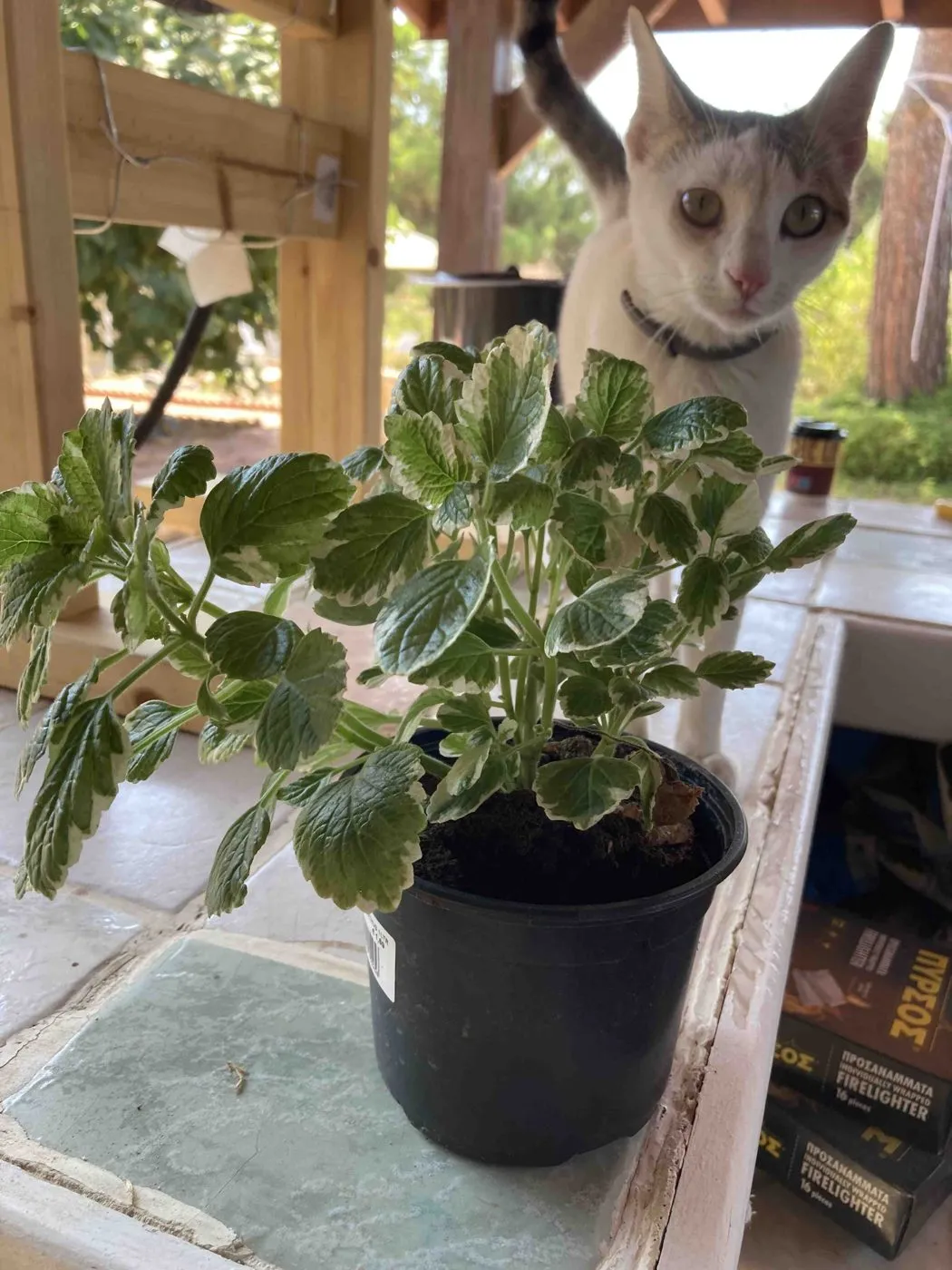
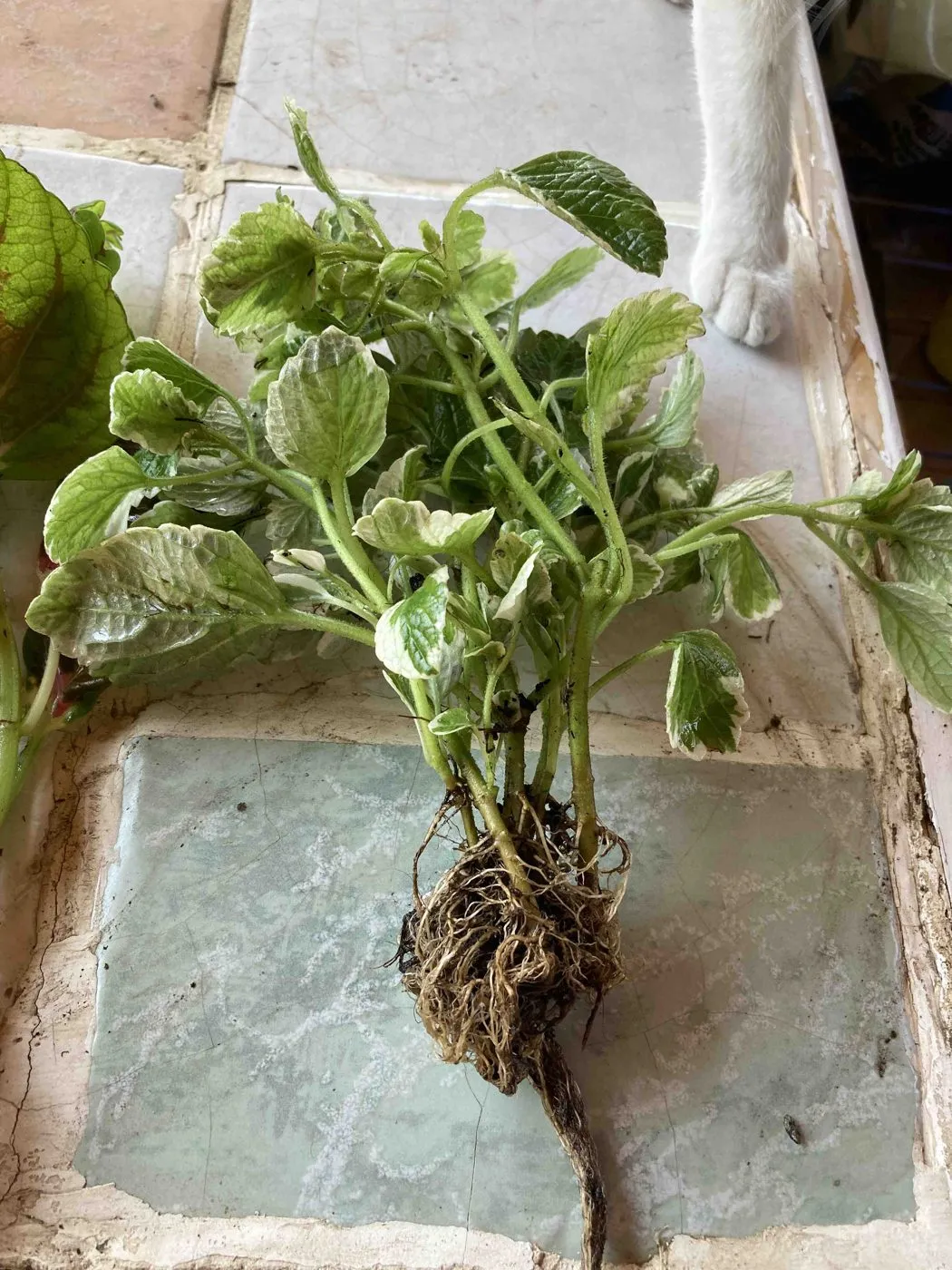
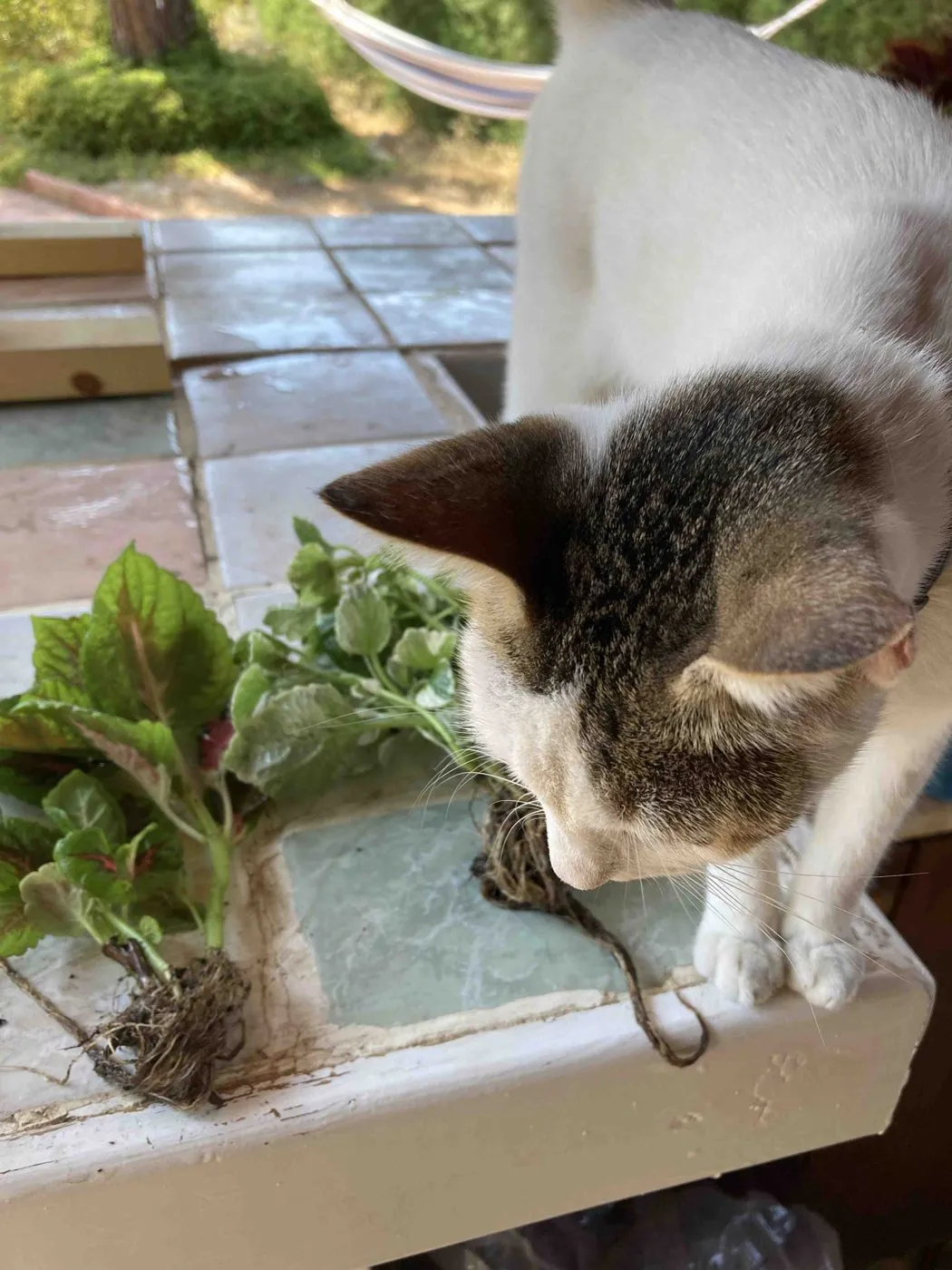
The Swedish ivy came home in a nursery pot, and Luna, our cat, showed up to inspect it straight away. We took it out of the pot, washed the soil off its roots, and planted it bare-root in LECA.
Days 1–7 · Aug 17–23
One section gives up
For its first few days, Frankie stood against a sunny stone wall, fed by a pipe set to a very slow drip. From day 1, the shoots on one side of the Swedish ivy looked pale and limp. By day 4, when we moved Frankie into the shade, that section was wilting badly. By day 7 its leaves had gone brown and dry.
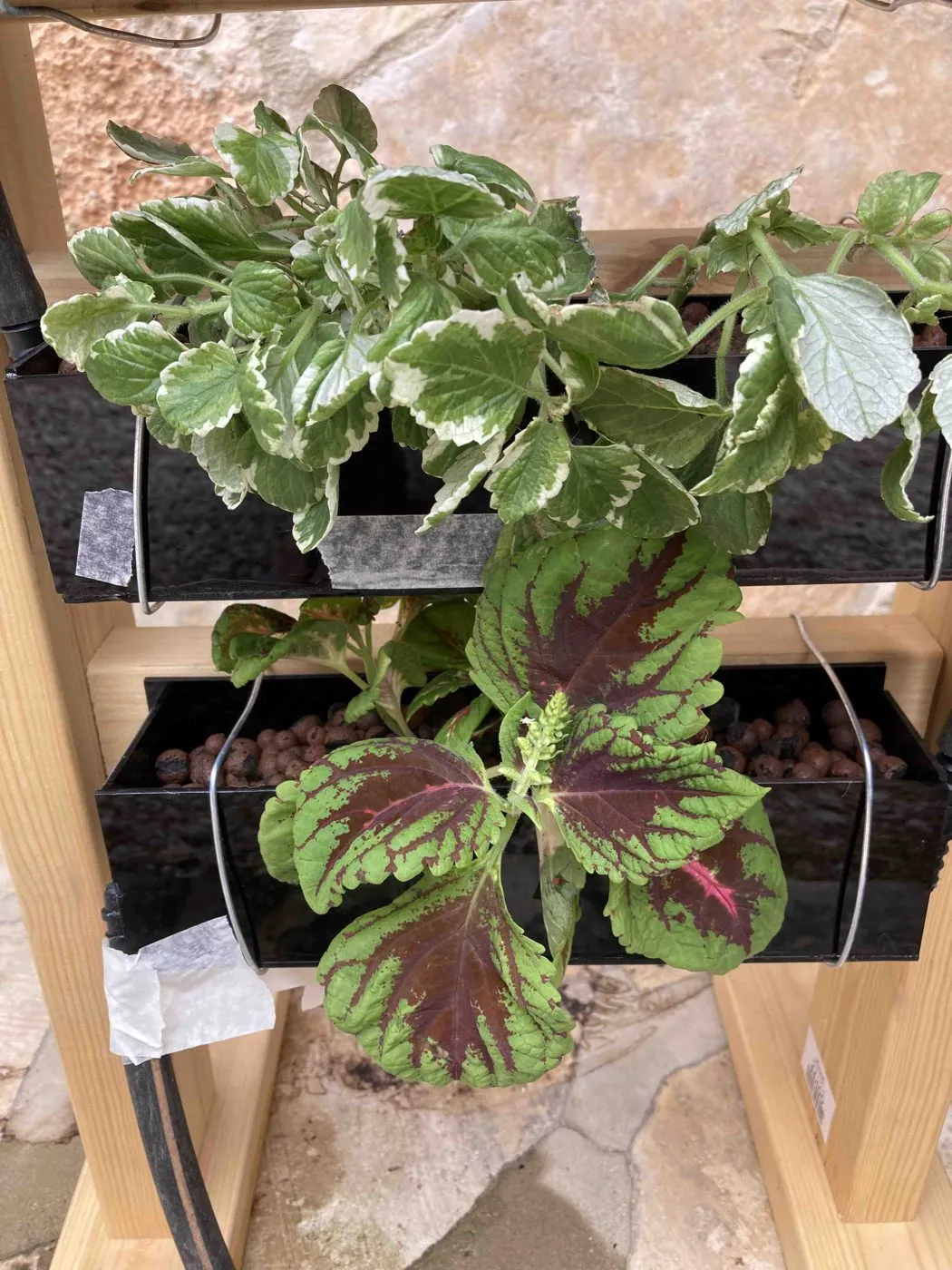
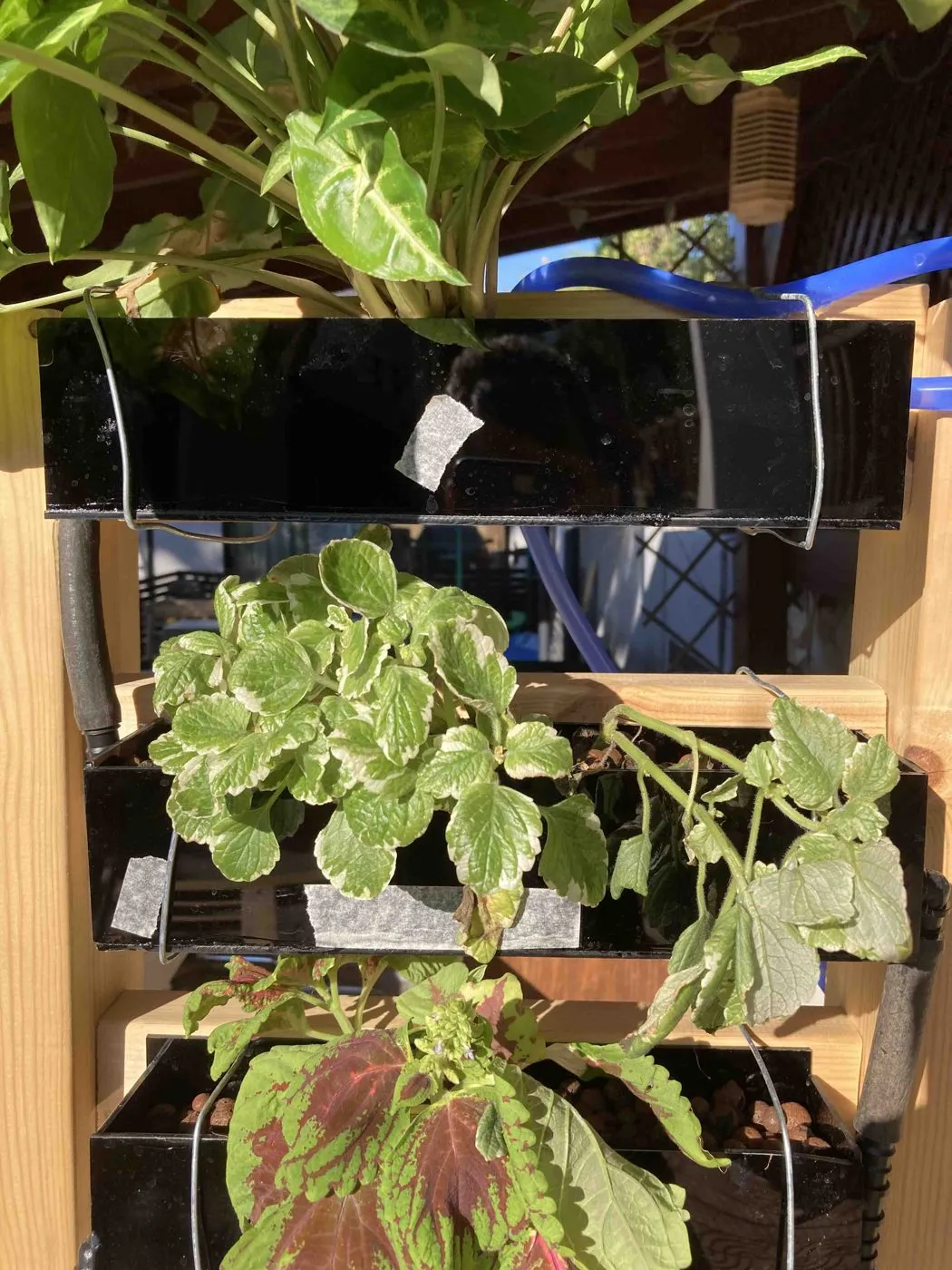
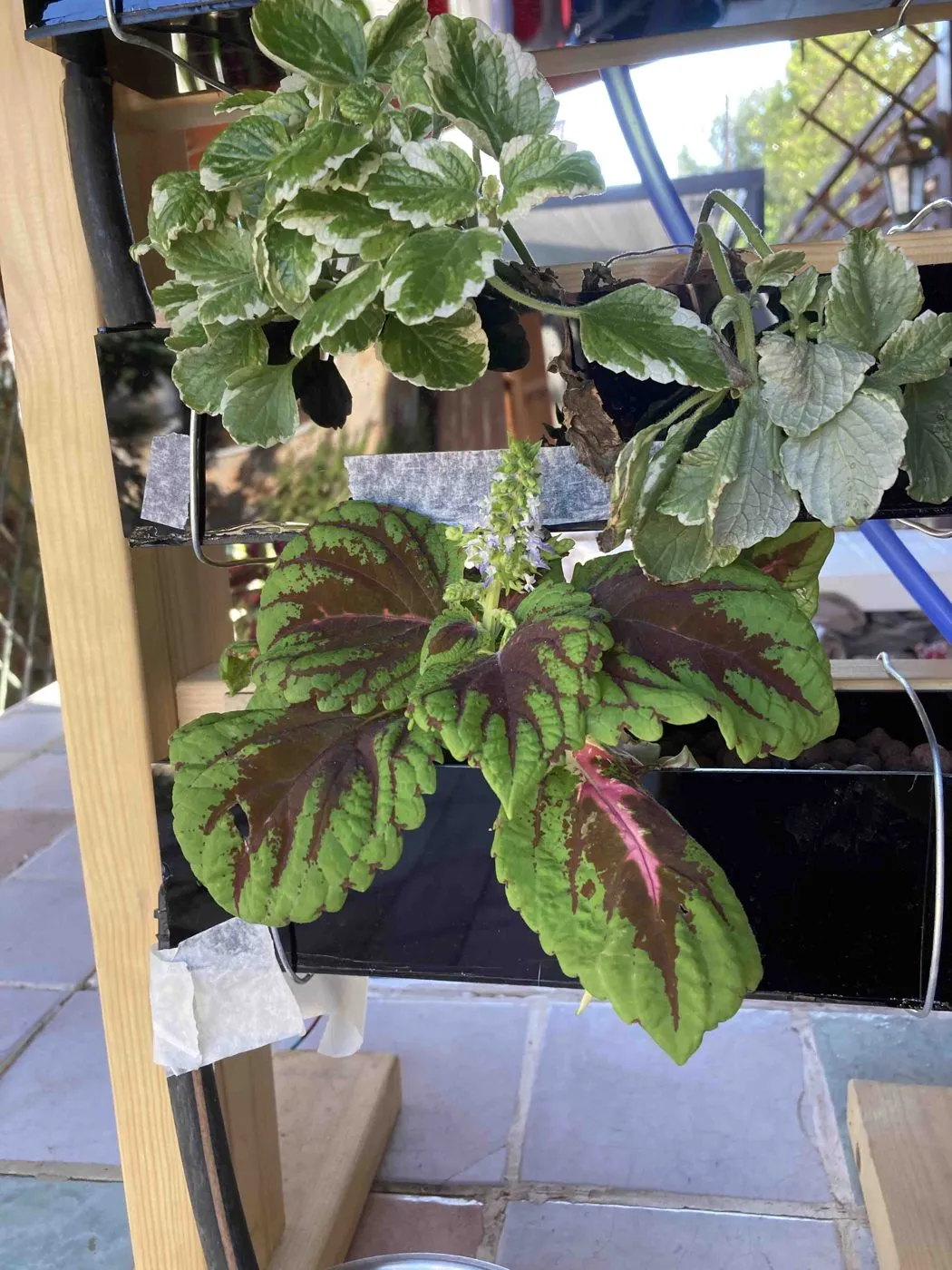
We can’t say for sure why only that part died. Likely causes are roots damaged when the soil was washed off, sun in the first days, and the shock of switching from soil to LECA. What matters is that it stopped there. The rest of the plant kept going.
Day 11 · Aug 27
Rebounding
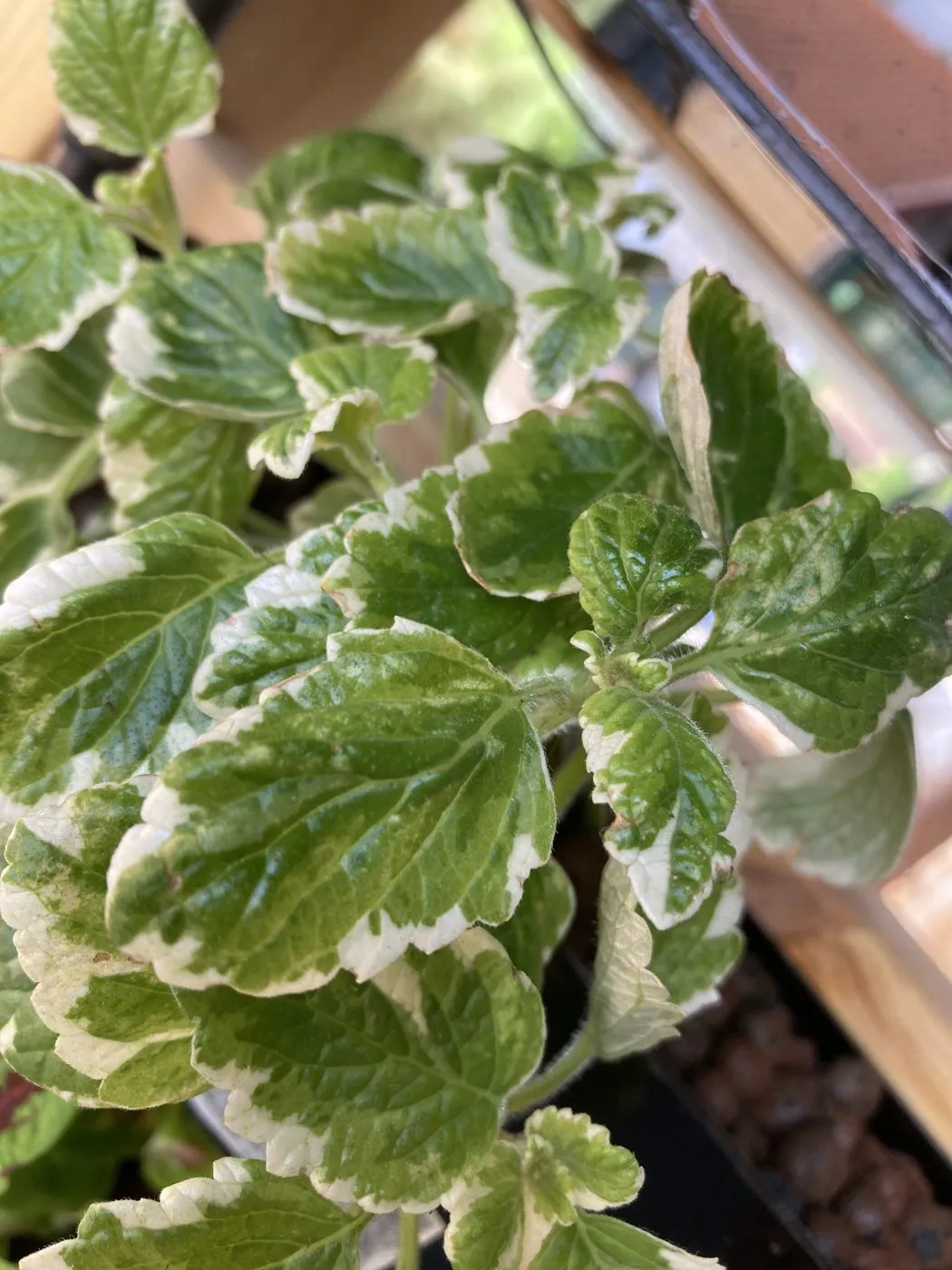
By day 11, the surviving stems had firmed up and the leaves were fresh and clean.
Days 11–42 · Aug 27 – Sep 27
Hands off (and out of office)
For the next month, our plan was to observe without interfering. This was made easier by the fact that we were on vacation. Frankie was left in charge of itself, on a slow drip, and it coped.
We came back to a Swedish ivy that had filled the gap left by the dead section and was trailing over the edge of its planter.
Days 51–54 · Oct 6–9
A first feed, first flowers, and a light tidy-up
On day 51 we added nutrients for the first time: Canna Hydro Vega for hard water, 10 ml each of parts A and B in our roughly 7-liter reservoir. We explain the dose in the arrowhead plant log.
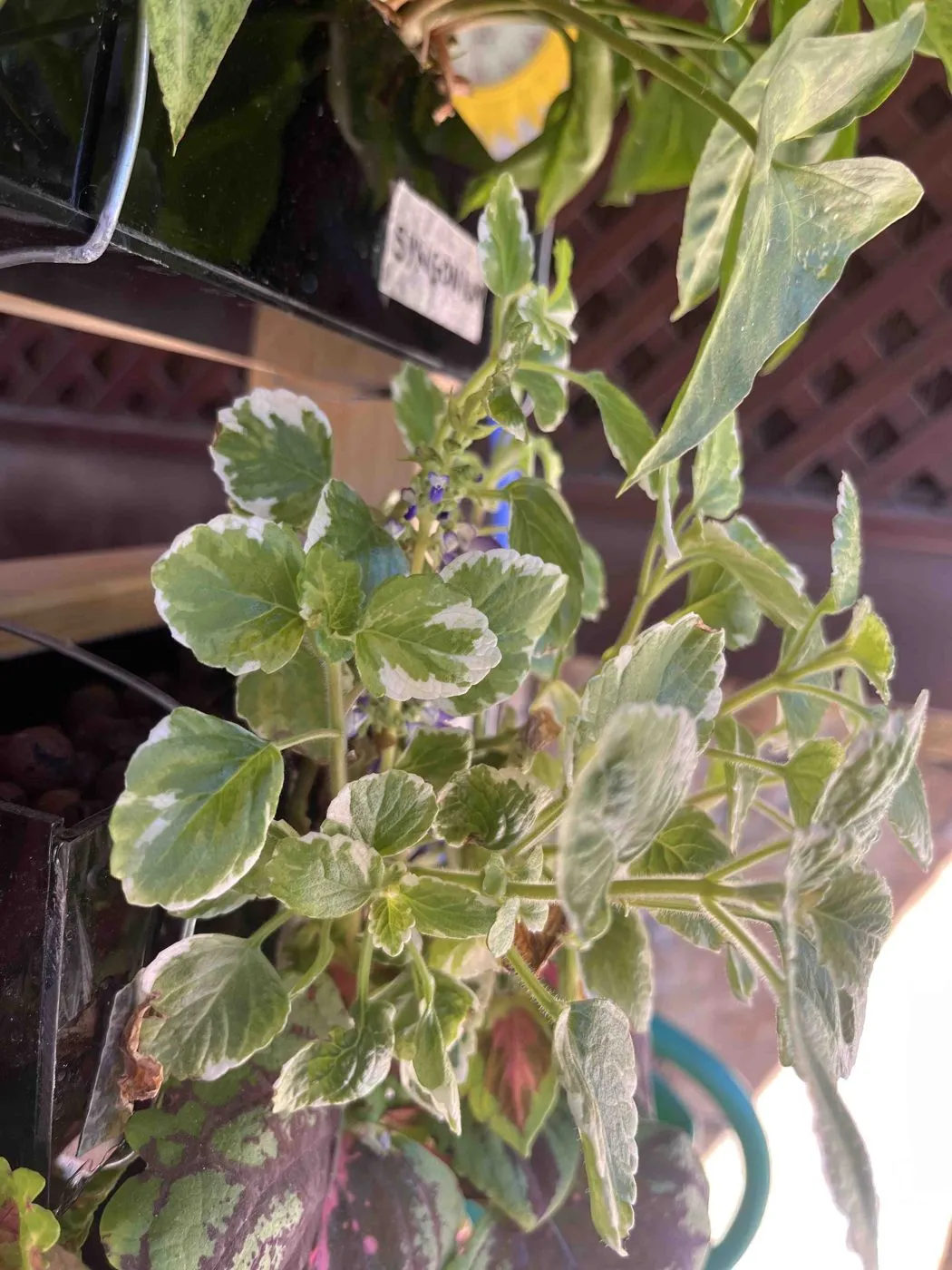
By day 54 the Swedish ivy was flowering, with small spikes of blue-lilac flowers among the leaves. The foliage had also turned a little yellow-green overall. That’s the same paleness we saw on its unfed neighbors, and probably for the same reason.
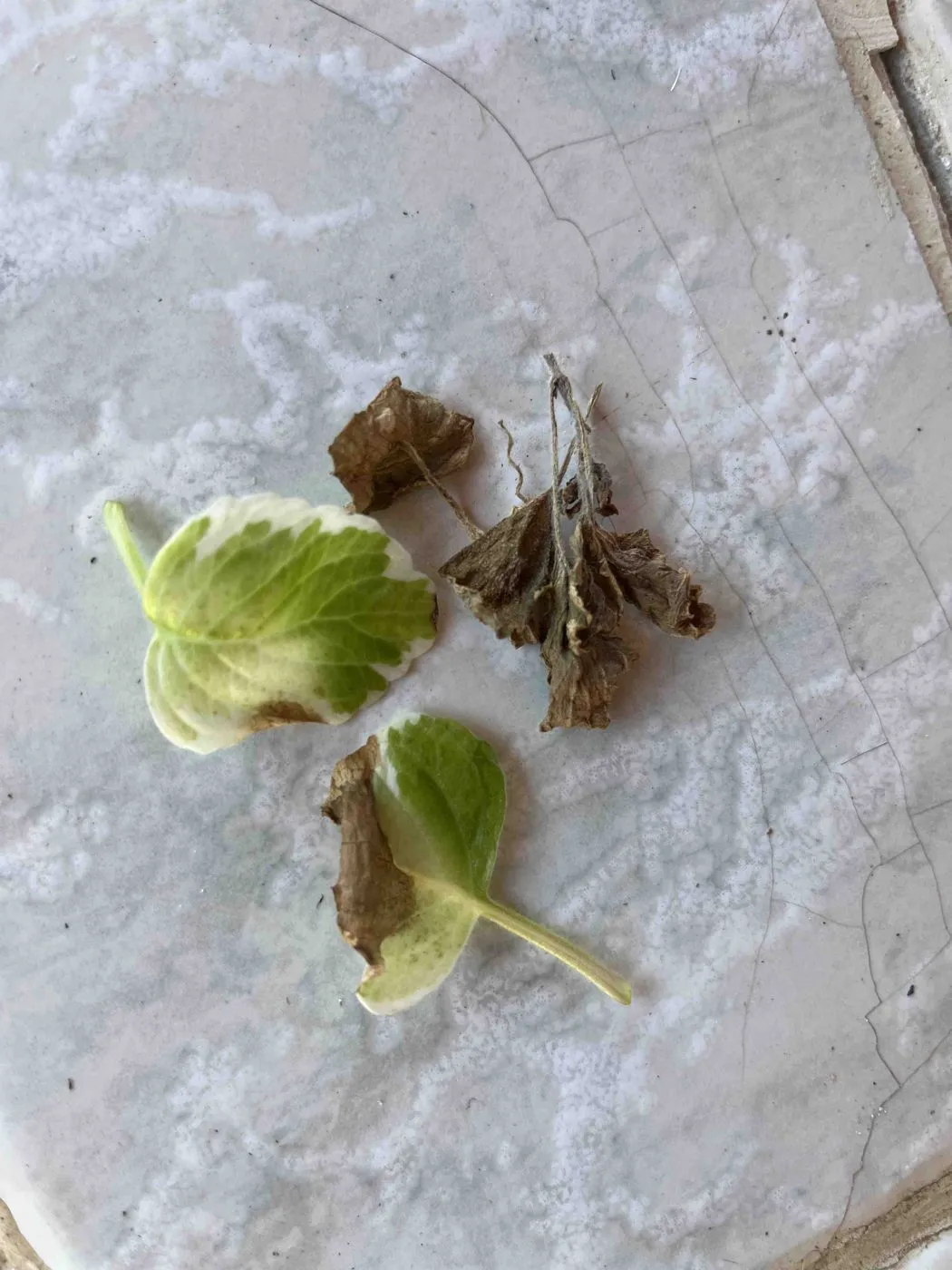
Maintenance was minimal: we cut two leaves and picked out a few dead ones.
Day 66
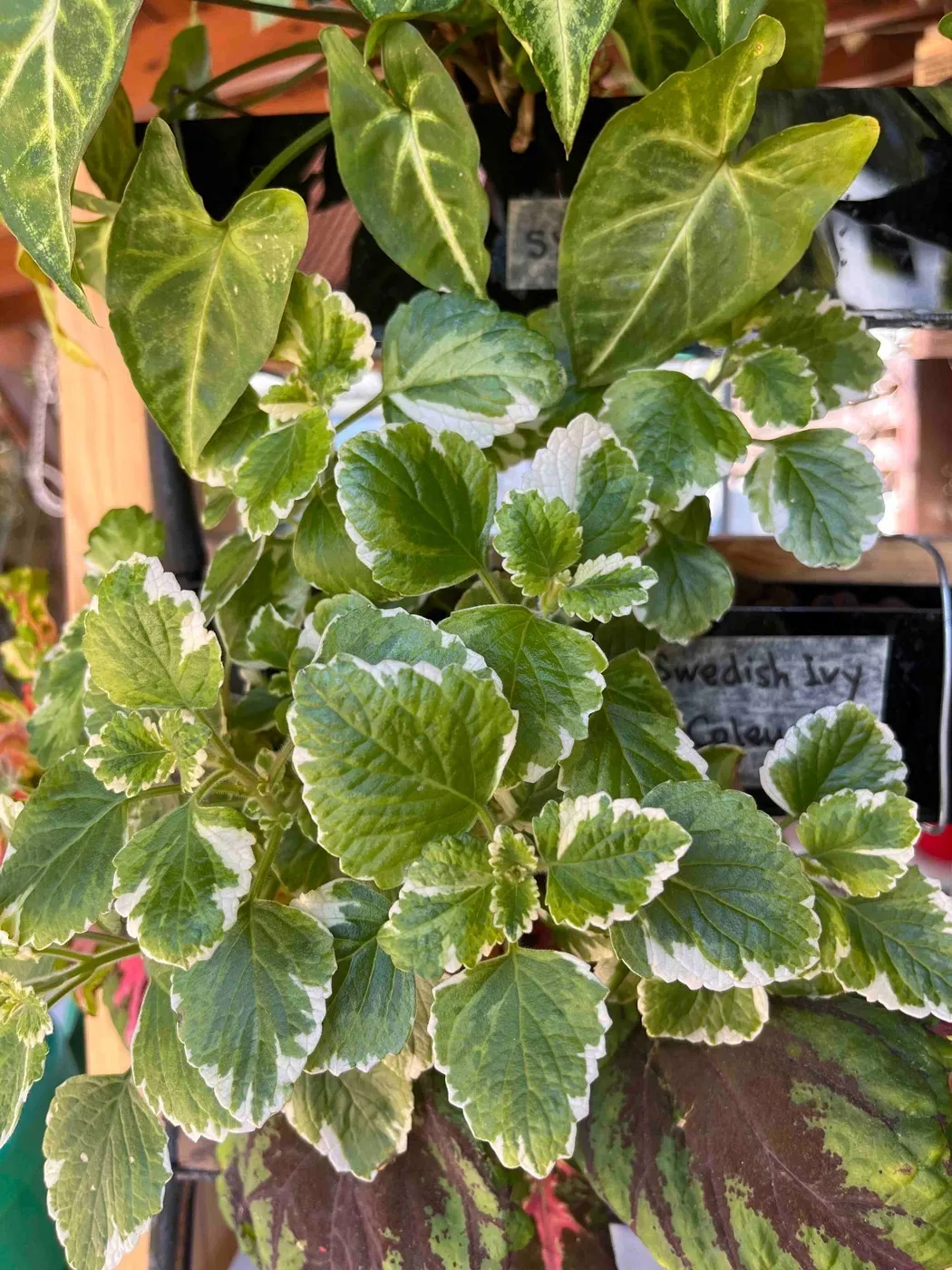
A dense mound of cream-edged leaves, filling the middle planter and spilling over the coleus below.
Next check-in: whether it flowers again.
The verdict so far: it’s a fit
Losing a section in week one looked bad at the time. Seven weeks later you can’t tell it happened. After almost two months in 8 cm of LECA on recirculating water, the Swedish ivy fills its planter, trails over the edge and is flowering.
On a living wall, its small, cream-edged leaves make a soft, light layer that blends the bolder plants around it together. It also needed less maintenance than anything else on Frankie.
What we learned
Why is part of my Swedish ivy dying after repotting?
When a soft-stemmed plant is moved, some stems can lose more roots than others, and those stems may not make it. Ours lost one section in the first week, and the rest of the plant was fine. If yours does the same, cut away the dead stems, keep the plant out of strong sun and keep it evenly moist. Give it a couple of weeks before you judge it.
Does Swedish ivy grow in LECA?
Ours does. It went into semi-hydro bare-root, straight from soil, and it’s now dense, trailing and flowering. Its fine, fibrous roots suit LECA well.
Why is my Swedish ivy flowering?
Swedish ivy often flowers as the days shorten in autumn. The flowers are harmless, and you can leave them or pinch them off to keep the plant focused on leaves.
What we’d do differently
- Start with two smaller plants side by side instead of one large one.
- Add a dilute nutrient solution from the first week, not week seven.
- Keep a newly moved plant out of direct sun until it settles.
What’s next
This log stays open. We’ll add photos as the Swedish ivy responds to feeding, and we’ll repeat the experiment indoors. Frankie’s other residents have their own logs: the arrowhead plant and the coleus.