
Tradescantia care basics
The quick version: what tradescantia generally wants, and what we saw in LECA.
| Light | Bright, indirect light. Ours gets limited light indoors at this time of year. |
|---|---|
| Water | Prefers consistent moisture. In our semi-hydro setup, the LECA holds moisture between waterings. |
| Temperature | Ordinary room temperatures. Keep it away from frost. |
| Habit | Trailing. Pinching the tips keeps it full. |
| Handling | The stems snap easily at the nodes. Plant with care. |
| Feeding | LECA has no nutrients of its own, so the plant relies entirely on what’s in the water. Sam’s plants get Canna Hydro Vega, a two-part A and B feed, from day one. |
| Pets | Some Tradescantia species can irritate pets’ skin. The ASPCA doesn’t list Tradescantia zebrina by name, but it lists a close relative, the inch plant (Tradescantia fluminensis), as toxic to cats and dogs, causing skin irritation. As a precaution, we keep ours out of reach. |
The setup: Sam
Sam is our second prototype: six planters, in three rows of two, inside a gold picture frame. The tradescantia (Tradescantia zebrina) has the middle row, between Swedish ivy above and golden pothos below. Its job in the picture is color: purple between two greens.
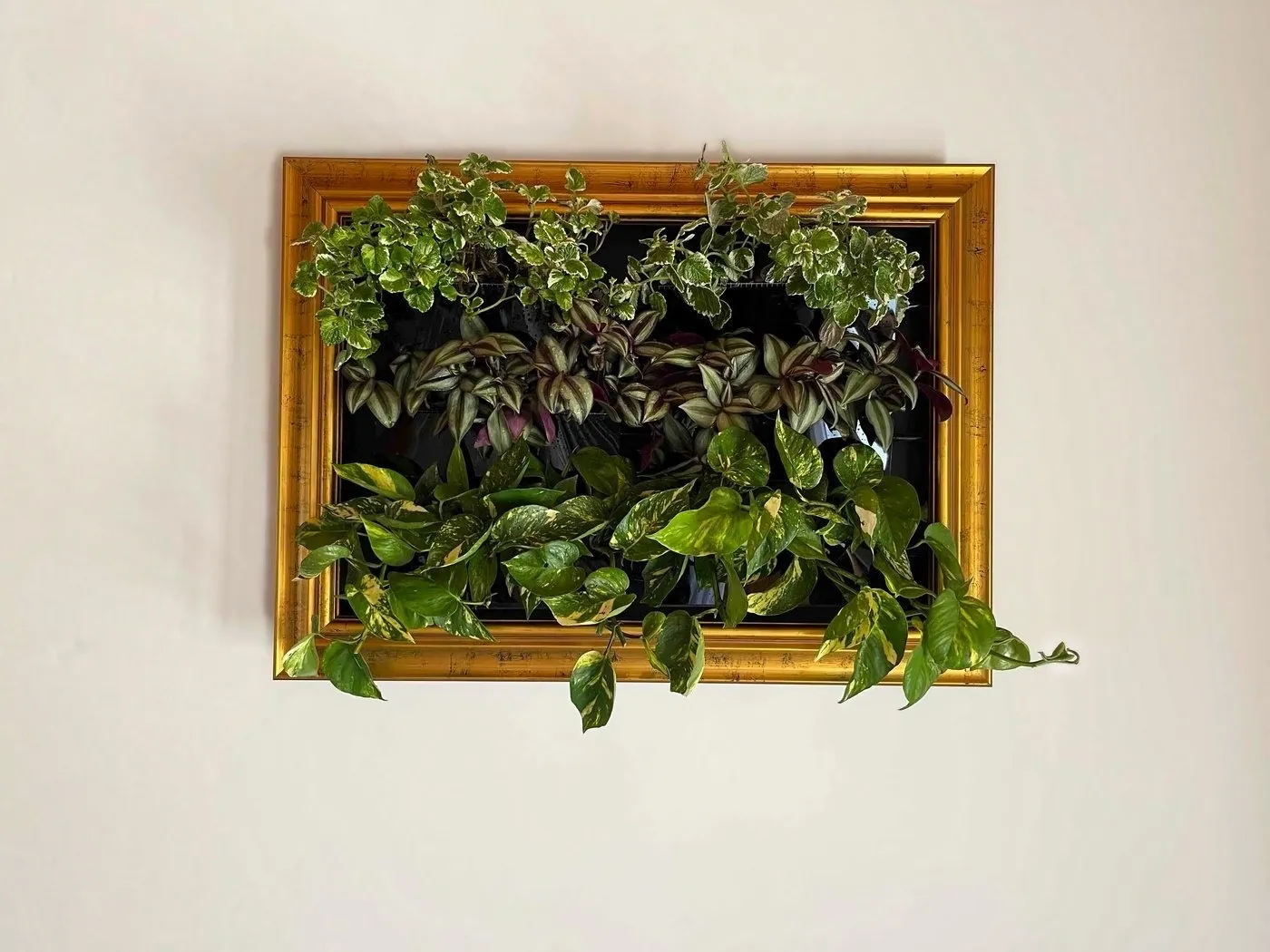
Each planter holds a wire-mesh cup of LECA: small pebbles of fired clay that hold the roots in place of soil, with water and nutrients brought to them. Sam’s automatic irrigation is still being assembled, so for now we water it by hand. The water carries nutrients from day one: Canna Hydro Vega, the same two-part A and B feed we use on Frankie. Indoors, floor-to-ceiling windows stand just to the right of the frame. At this time of year the light is limited: mostly gentle sun in the morning and early afternoon. The full story of the build is on Sam’s page.
The log
Planting day
Four small plants, many single stems
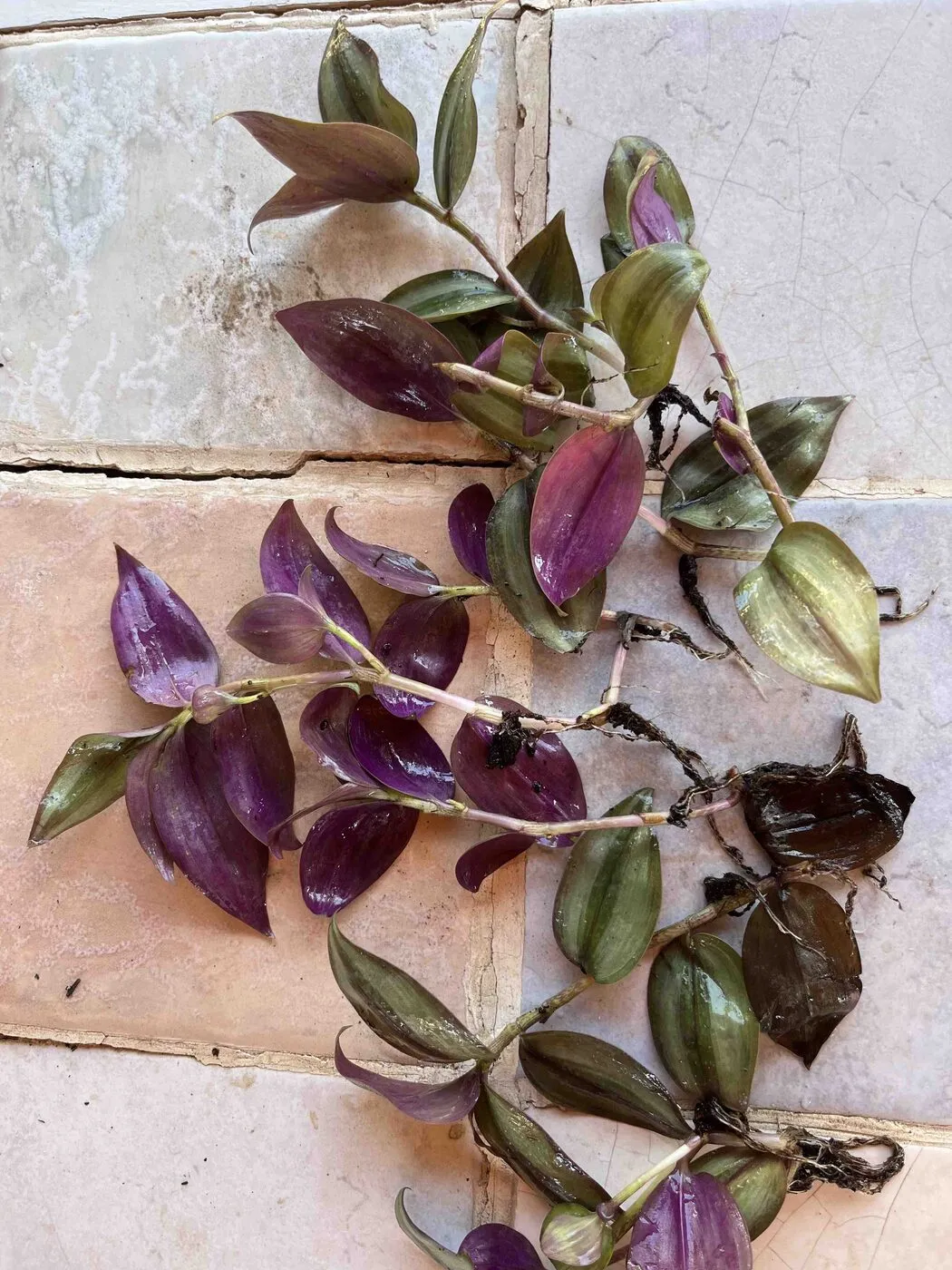
We bought four small tradescantias, two for each planter in the middle row. Small plants turned out to be ideal here: they’re easy to handle, and their roots wash clean. They came out cleaner than any plant on Sam with a bigger root ball.
Once the soil was off, the plants split into individual stems, each with its own roots. That made planting surprisingly easy: we could place every stem exactly where we wanted it in the row. The stems are fragile, though. They snap at the nodes, and some broke off during planting.
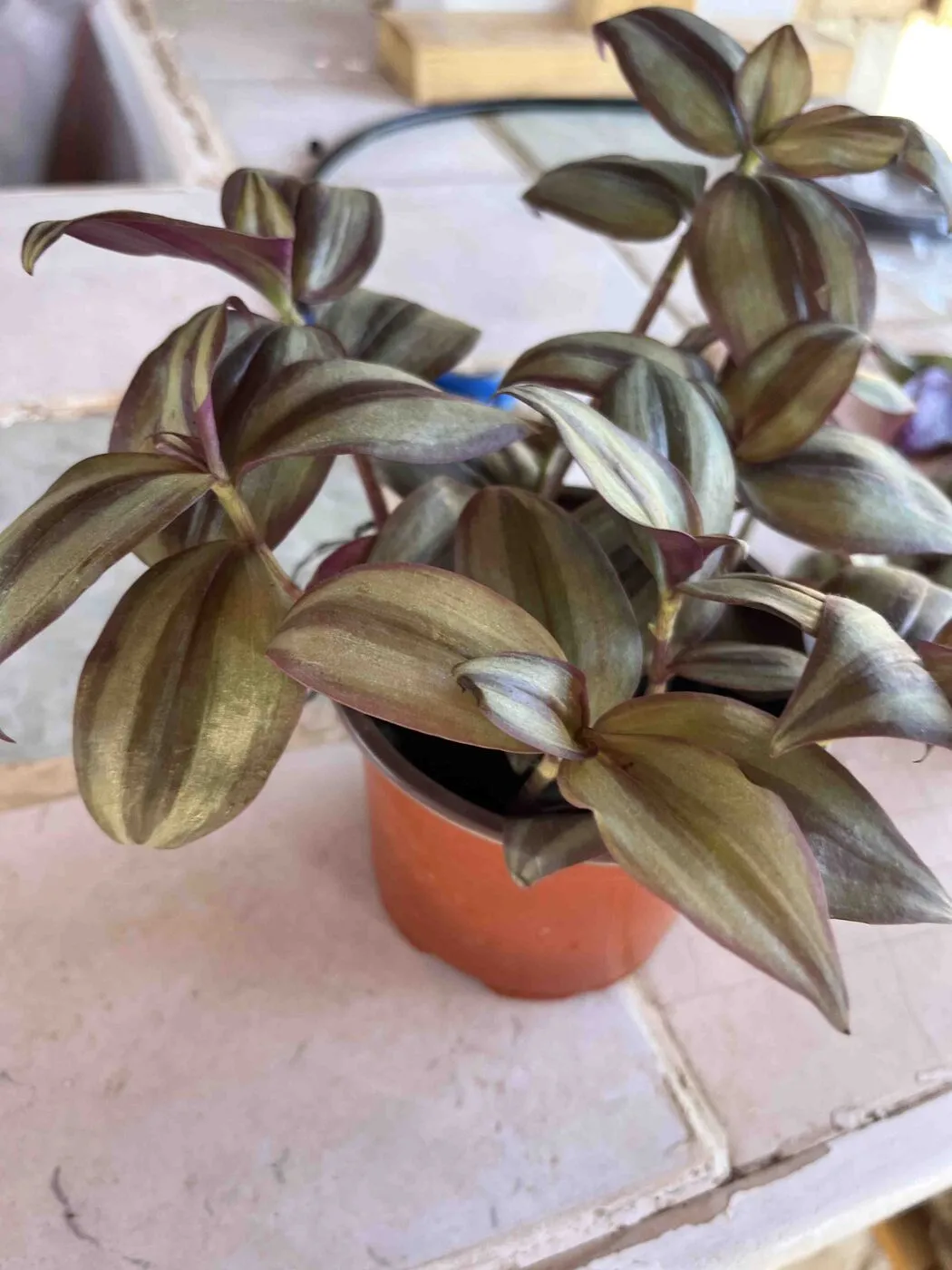
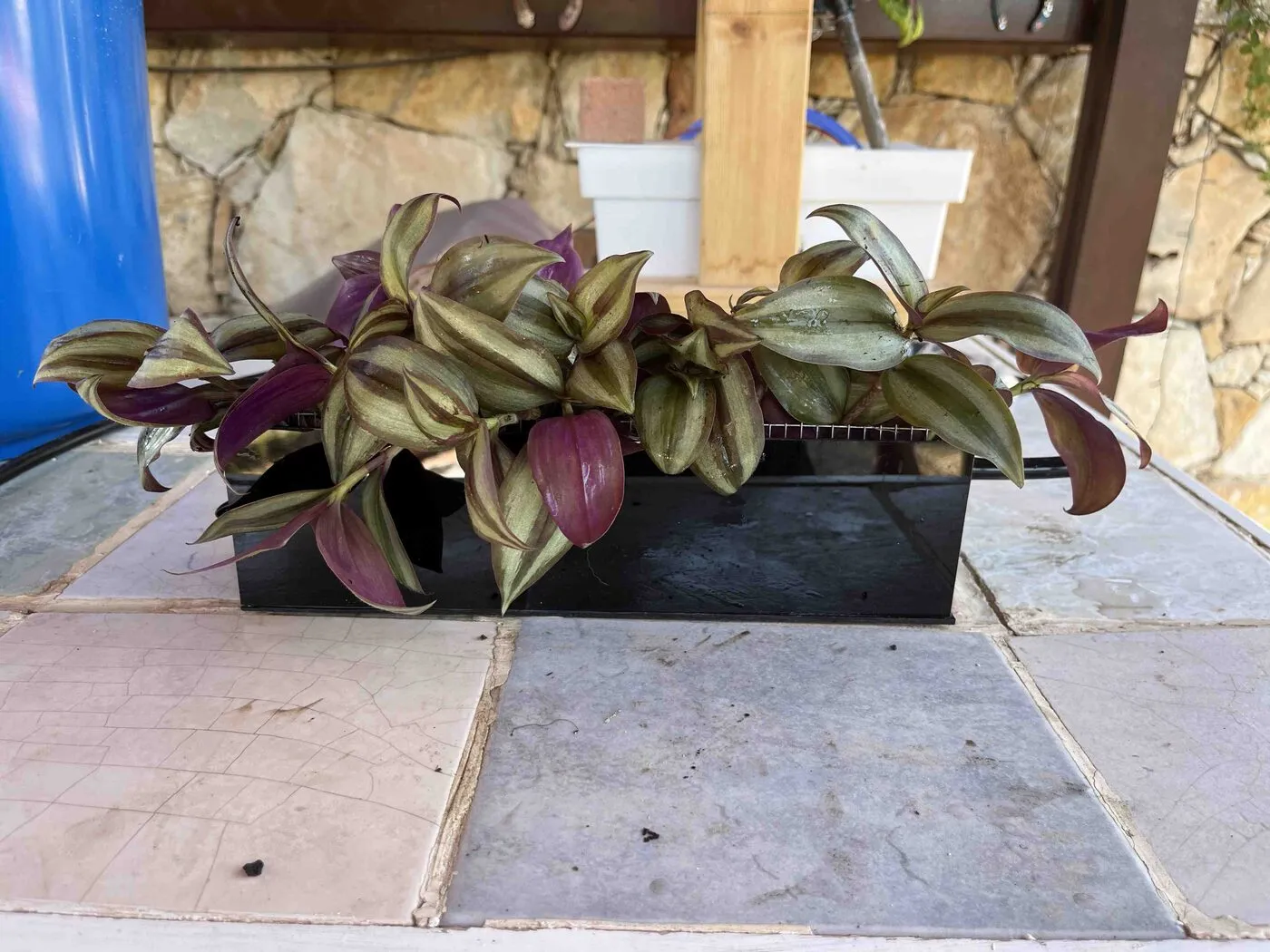
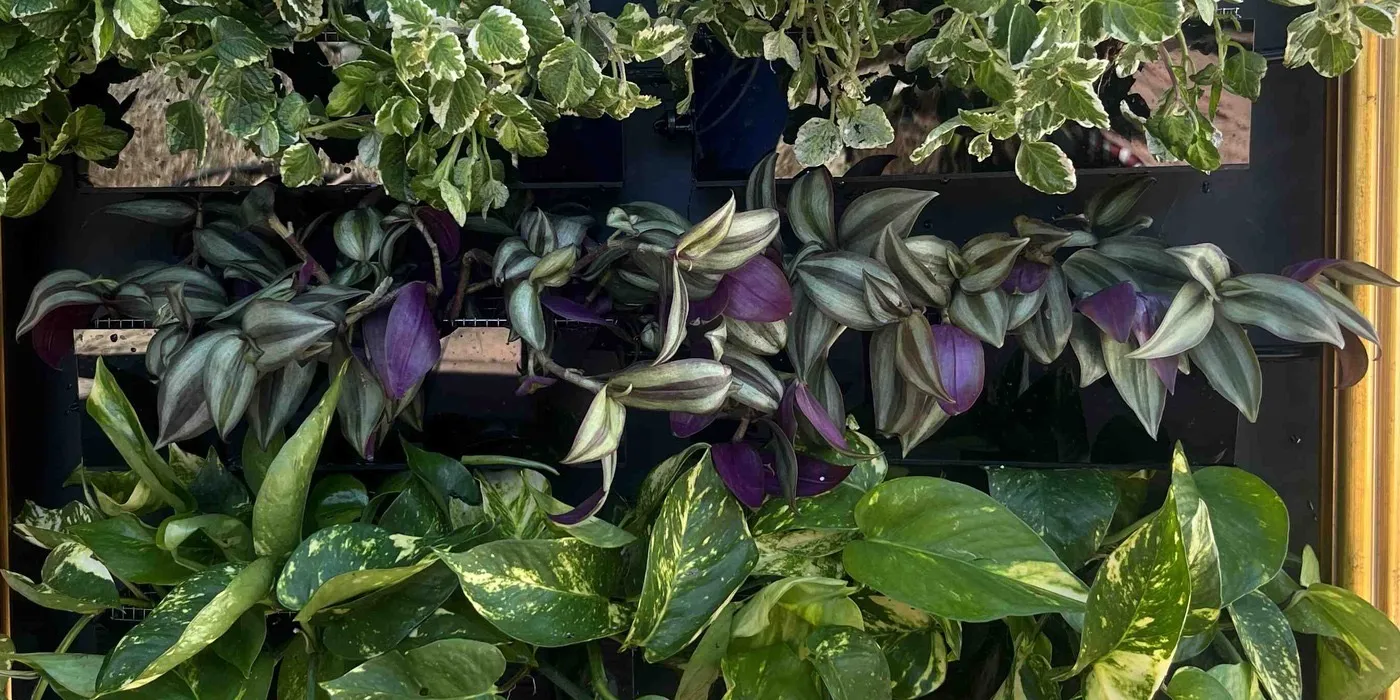
On the wall, the row looked thin. The leaves hung loose, many with their purple undersides turned out, and the black panel showed between the stems.
Days 1–9
A growth spurt
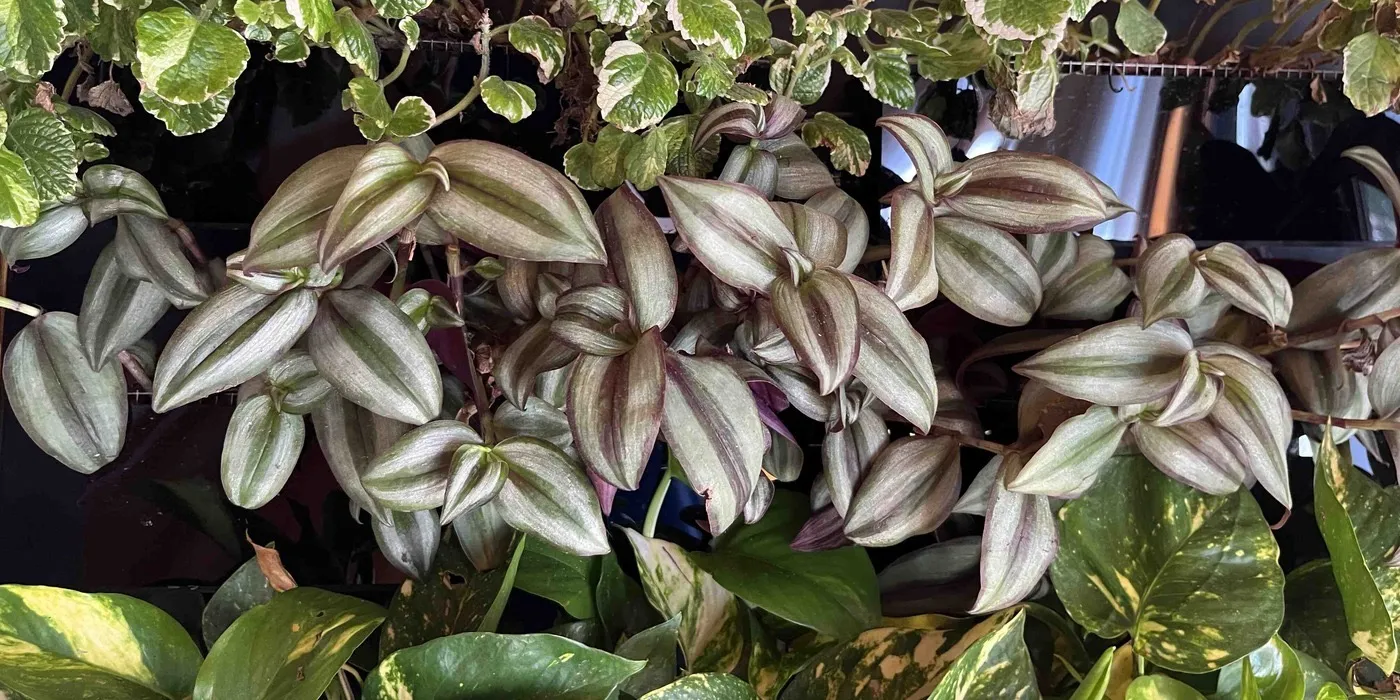
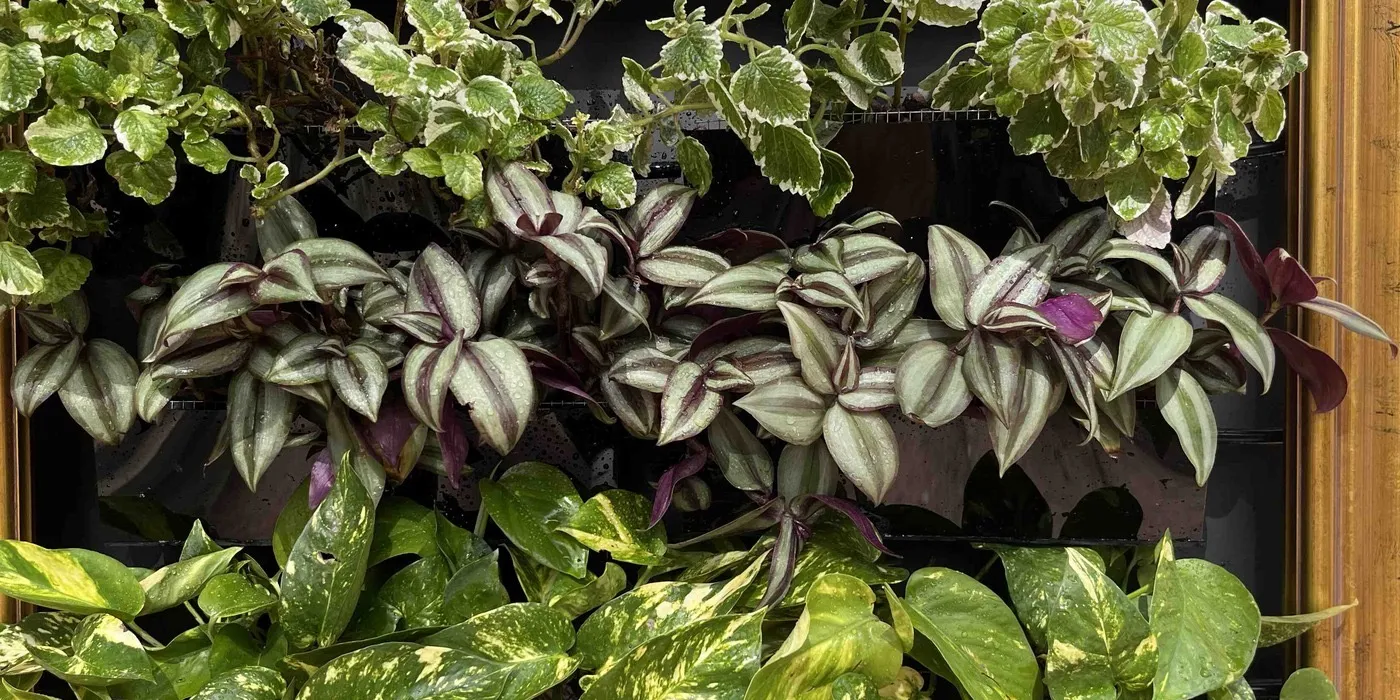
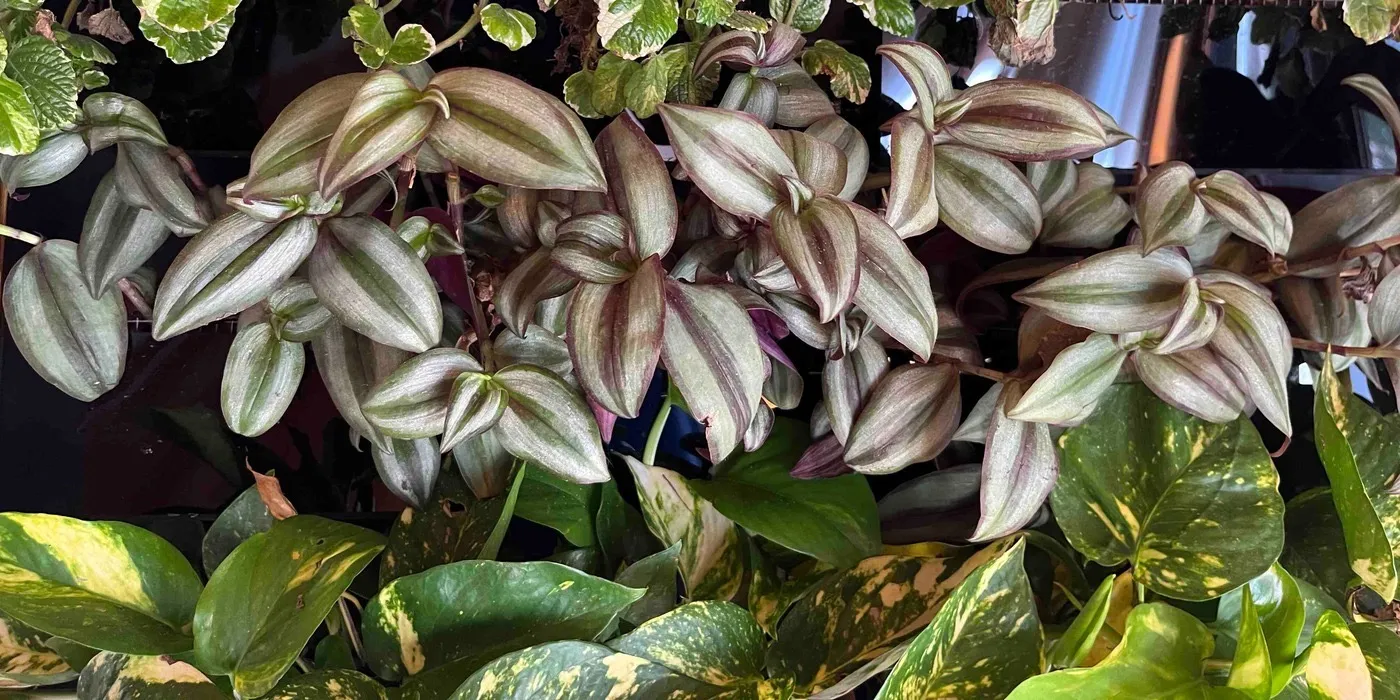
Once it was planted and fed, the tradescantia took off. By day 9, the morning Sam came inside, the gaps were gone. The leaves had turned to face outward, so the row read silver and green rather than purple.
Day 16
Up, more than out
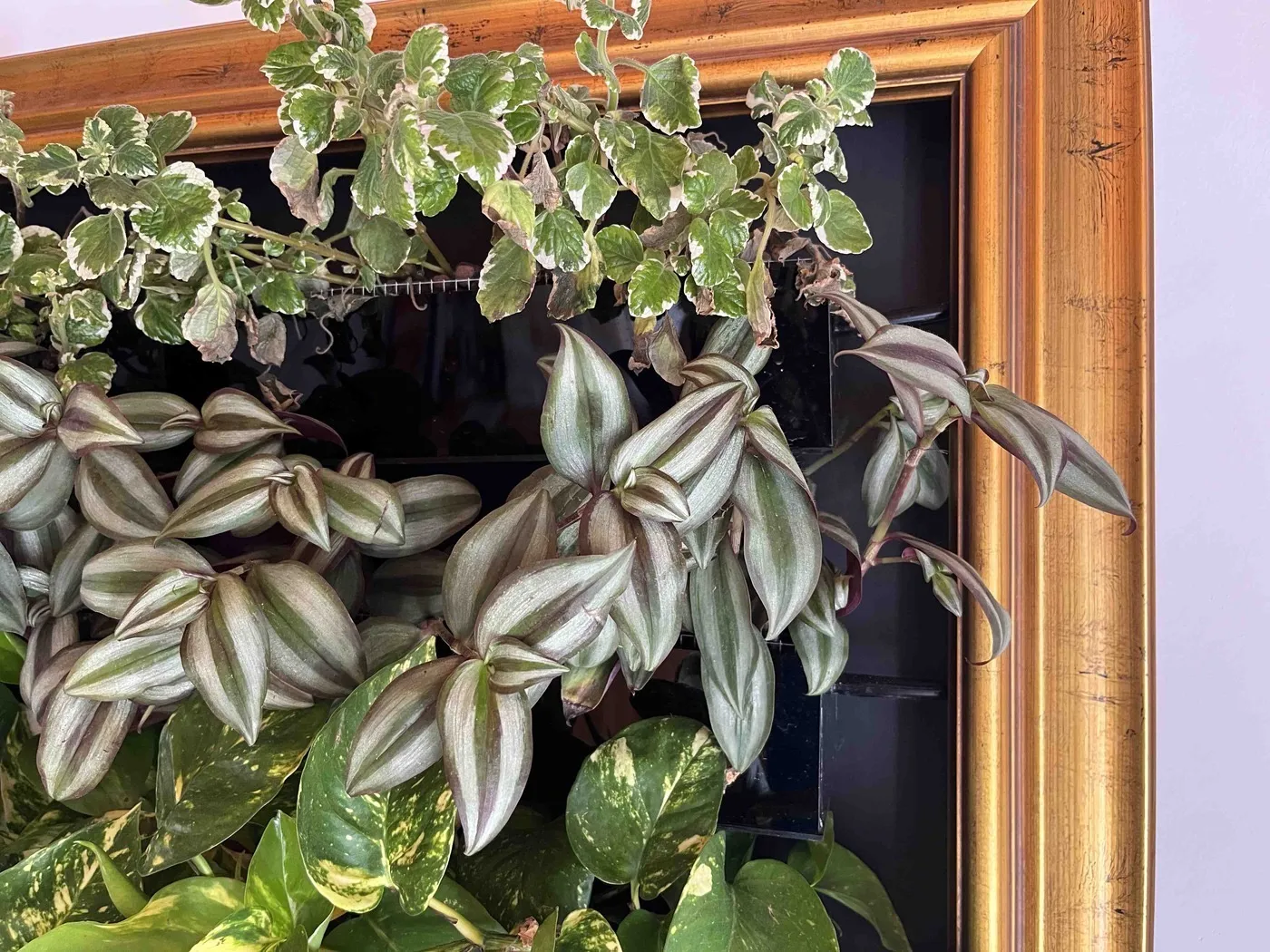
A week indoors, the row was dense from edge to edge. But the new growth wasn’t going where we wanted it. Instead of trailing forward and down, the stems were growing upward, reaching into the Swedish ivy above and past the edge of the frame.
For Meadori, we want the plants to form one continuous layer of foliage, with each row keeping roughly to its own space. Tradescantia has the density and color we’re after, but it may need regular trimming to hold that shape.
Day 22
Waiting a few more days to trim
The plan is a first trim soon, to keep the row low and even. We’re giving the plants a few more days to settle into the LECA first. Apart from the stems lost at planting, the remaining stems are growing vigorously, and the plant drops almost nothing.
The verdict so far: a fit, with a catch
After 22 days, tradescantia is one of the fastest-growing plants on Sam. It filled the middle row within nine days. Its silver-striped leaves and purple undersides are something no other plant on Sam gives, and a color we want in the Meadori palette: with it, a wall reads less like a block of green and more like a colorful bouquet.
The catch is its growth habit. Instead of forming a low, trailing layer, the stems keep reaching upward. Can regular trimming keep it full without letting it take over the rows around it? That’s what we’ll test next. The early growth is encouraging, but it will take longer to see how the roots establish themselves in the LECA.
What we learned
Does tradescantia grow in LECA?
So far, yes. Ours went in as single stems, straight from soil, and was growing hard within days of its first feed. How well its roots establish will take longer to tell.
How do you plant tradescantia without breaking it?
Hold each stem near the roots and settle it gently into the LECA. Don’t push on the stems: they snap easily at the nodes.
Why is my tradescantia growing tall instead of full?
We don’t know yet why ours grows upward. Trimming is the usual answer: cutting a stem back makes it branch lower down. Our first trim is next, and we’ll show what it does.
What’s next
The first trim, then photos of how the row responds. This log stays open. Sam’s golden pothos has its own log, and the Swedish ivy’s covers its first round, on Frankie.