
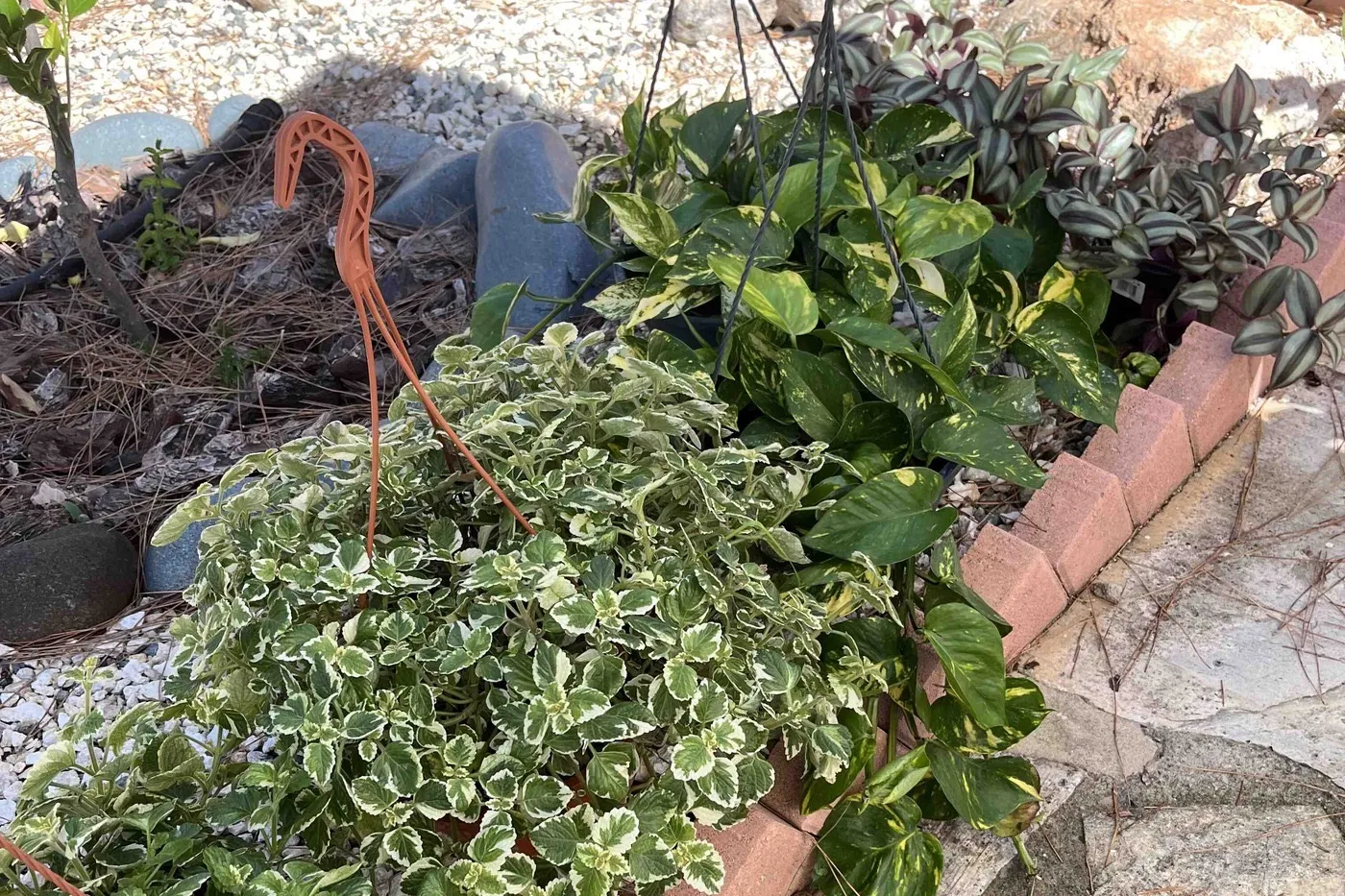
Golden pothos care basics
The quick version: what golden pothos generally wants, and what we saw in LECA.
| Light | Medium to bright, indirect light. Ours gets limited light indoors at this time of year. |
|---|---|
| Water | In soil, let it dry a little between waterings. |
| Temperature | Ordinary room temperatures. Keep it away from frost and cold drafts. |
| Habit | Trailing vines that grow long. Trim them to keep the plant where you want it. |
| Feeding | LECA has no nutrients of its own, so the plant relies entirely on what’s in the water. Sam’s plants were fed from day one. |
| Pets | The ASPCA lists golden pothos as toxic to cats and dogs. Its leaves and stems hold calcium oxalate crystals, which irritate the mouth if chewed and can cause drooling and vomiting. Keep it out of reach. |
The setup: Sam
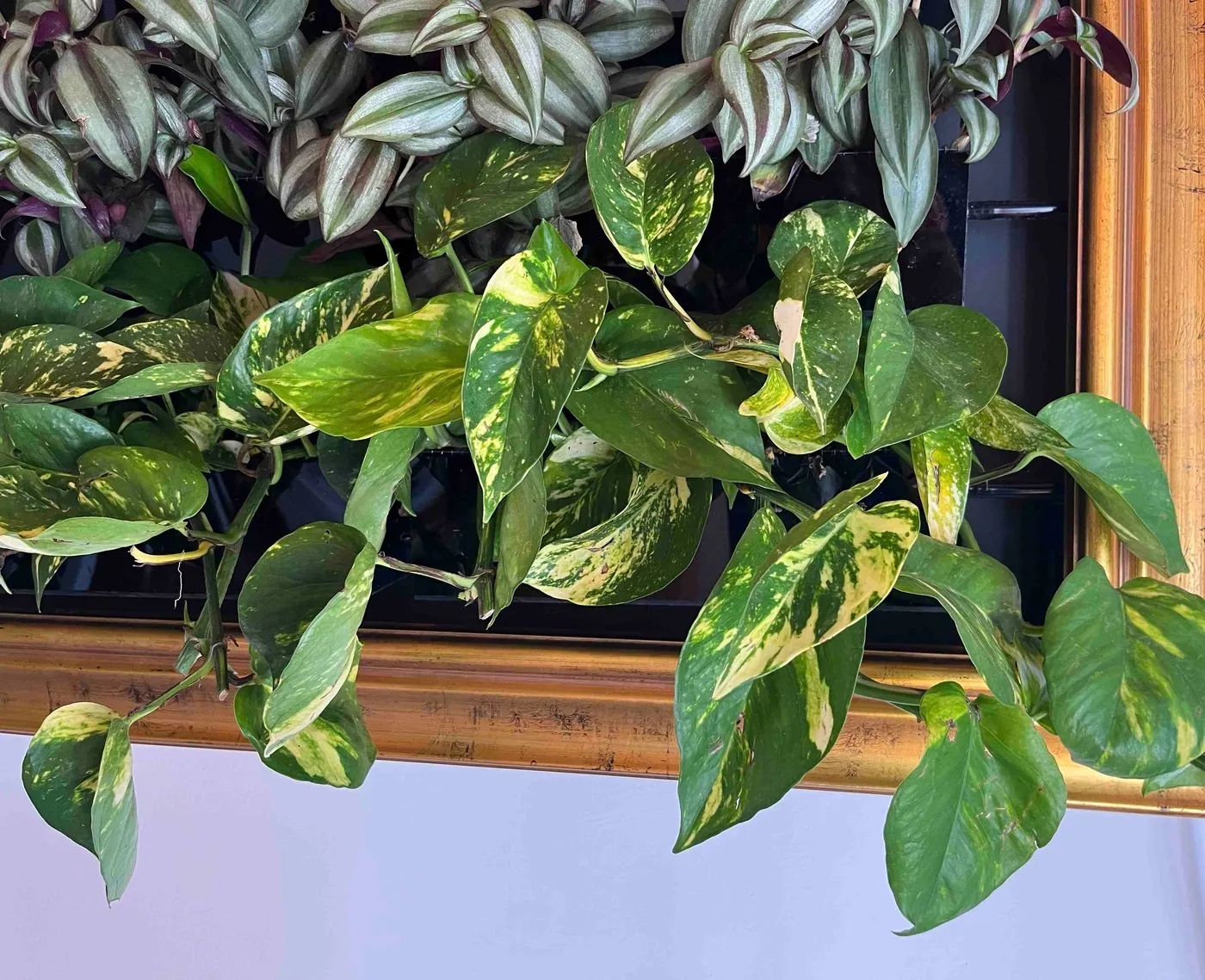
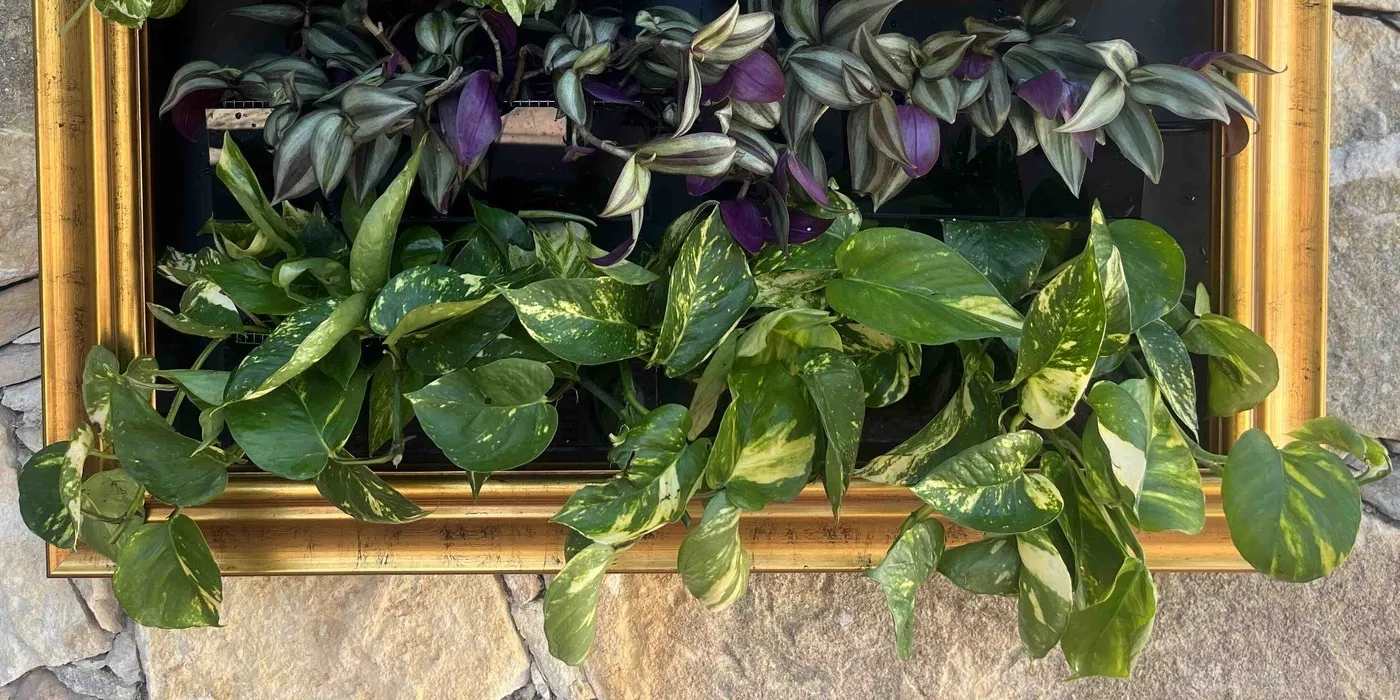
Sam is our second prototype: six planters, in three rows of two, inside a gold picture frame. The pothos (Epipremnum aureum) has the bottom row, below the tradescantia. Its job in the picture is to trail over the bottom edge of the frame and soften it.
Each planter holds a wire-mesh cup of LECA: small pebbles of fired clay that hold the roots in place of soil, with water and nutrients brought to them. Sam’s automatic irrigation is still being assembled, so for now we water it by hand. Indoors, floor-to-ceiling windows stand just to the right of the frame. At this time of year the light is limited: mostly gentle sun in the morning and early afternoon. The full story of the build is on Sam’s page.
The log
Planting day
Two big plants, one tangle of roots
We chose two large plants, one for each planter in the bottom row. That was the wrong call for Meadori.
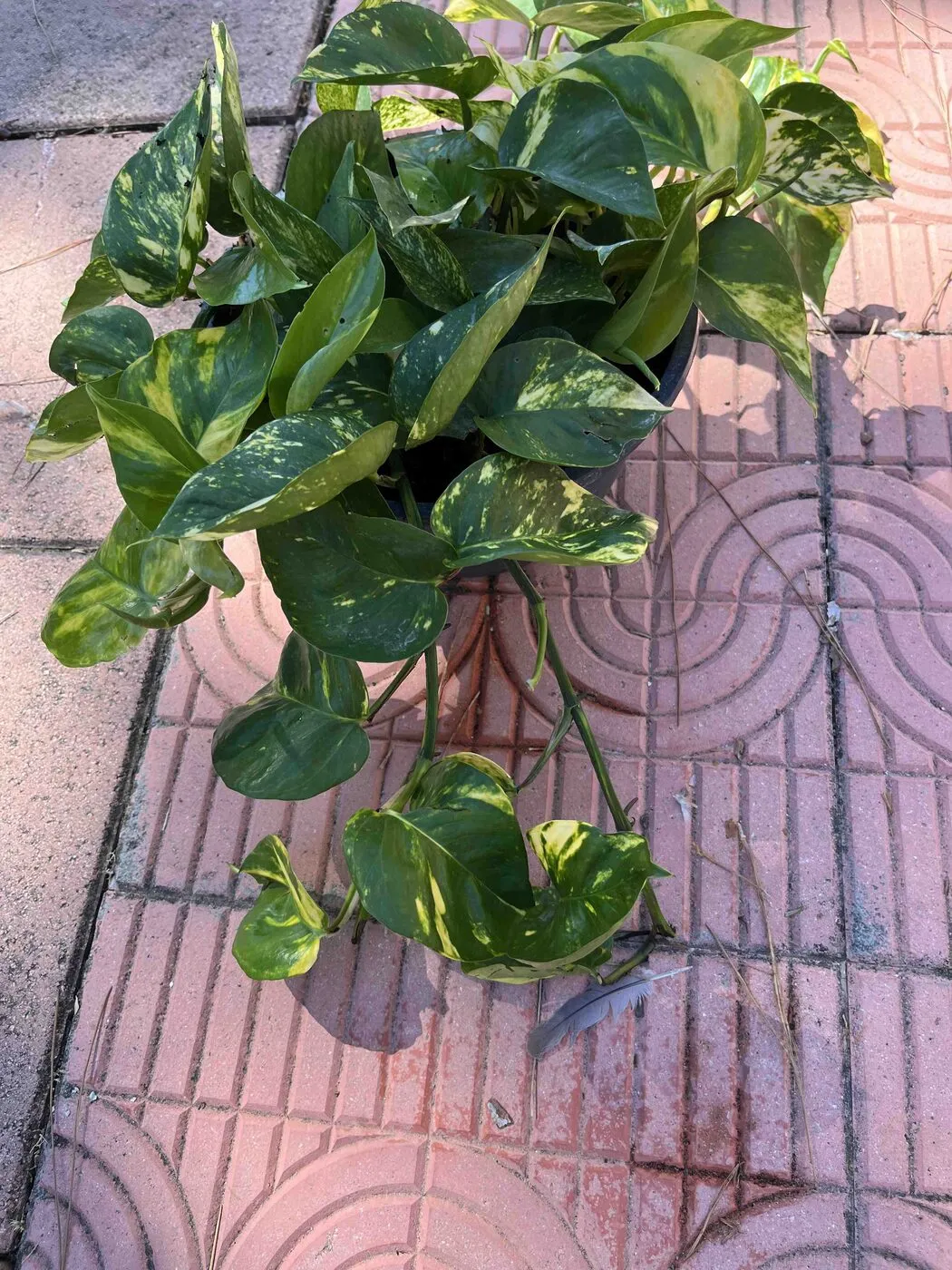
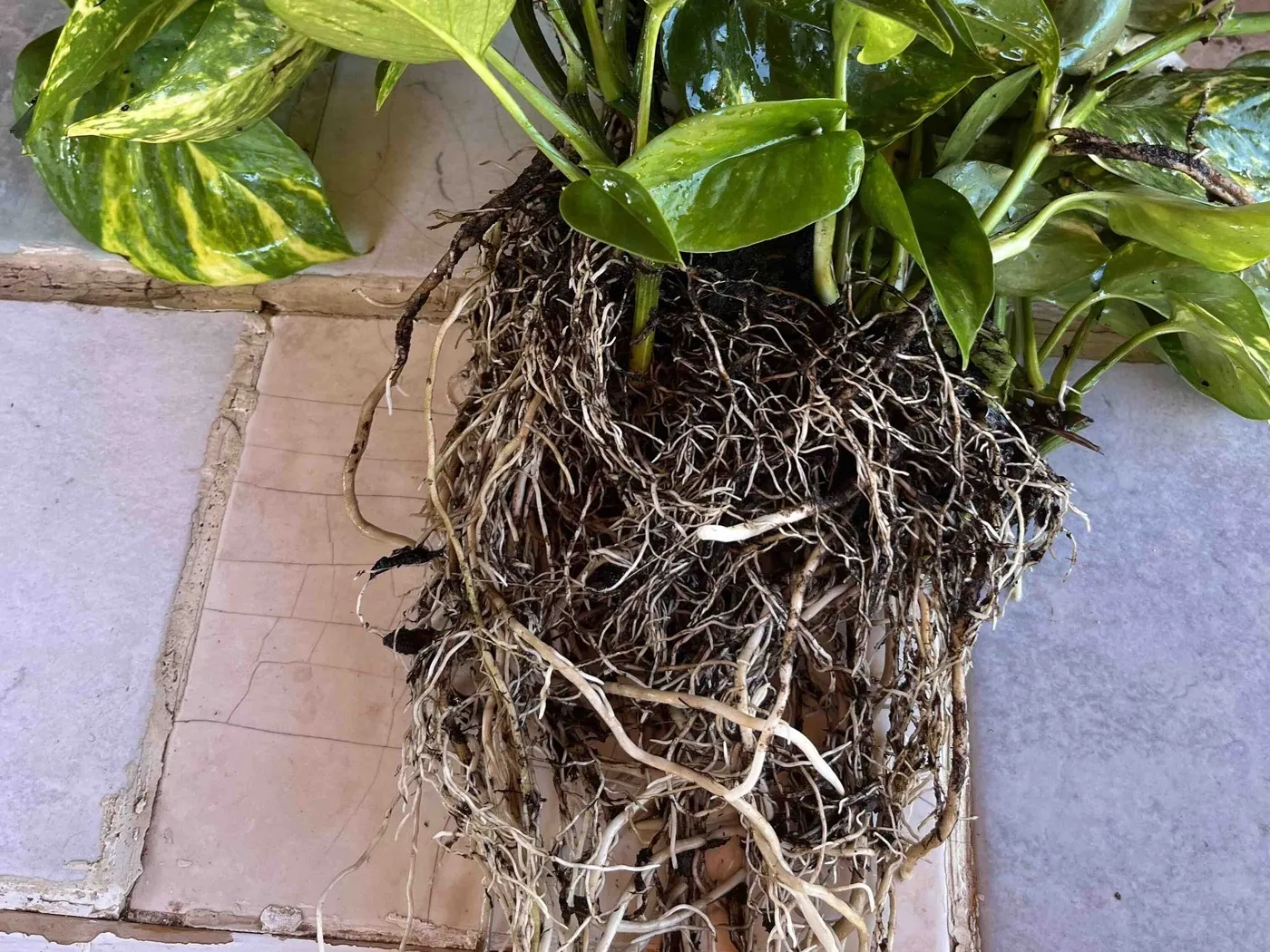
Their root balls were deep, dense and thoroughly tangled. Getting the soil out took a lot of work, and even clean, the roots were too long and too many for Sam’s cups. We cut back both their length and their volume. In the end, the two plants came apart into four root balls of different sizes.
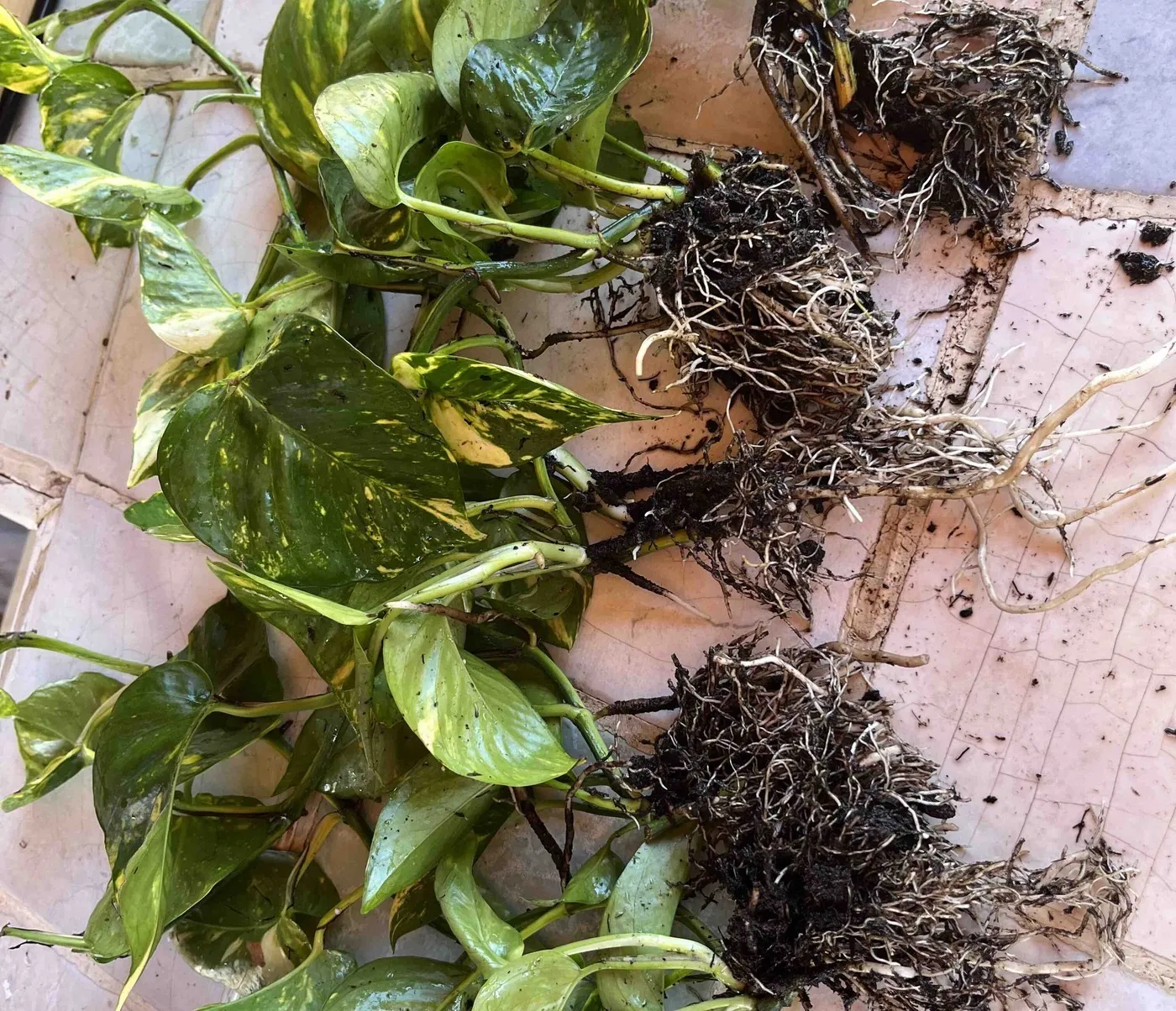
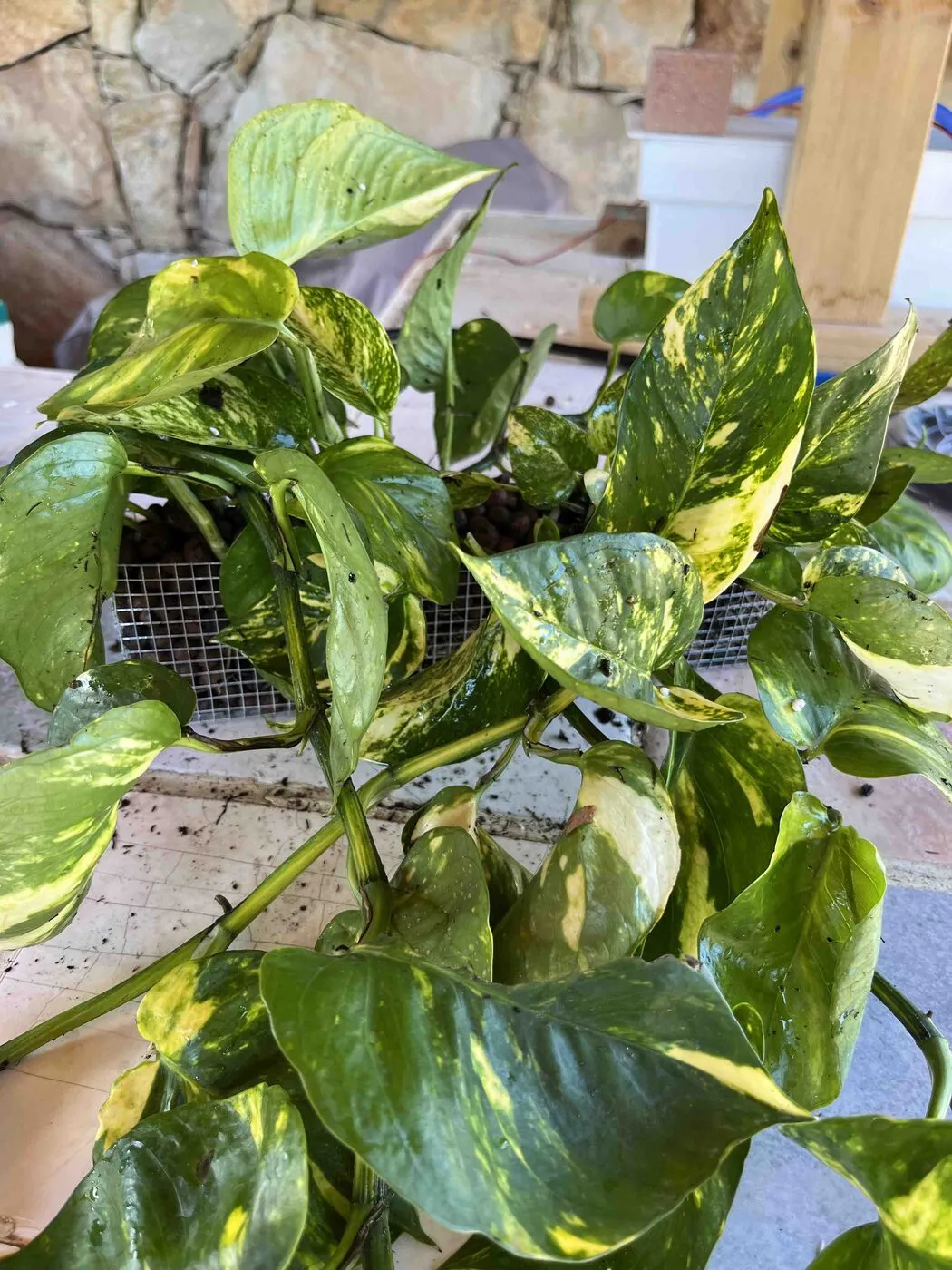
Even then, the LECA couldn’t cover all the roots, something we hadn’t run into with any other plant on Frankie or Sam. We also trimmed two or three branches to keep the foliage within the frame, with a little overlap here and there.
Day 9
A light cleanup before moving in
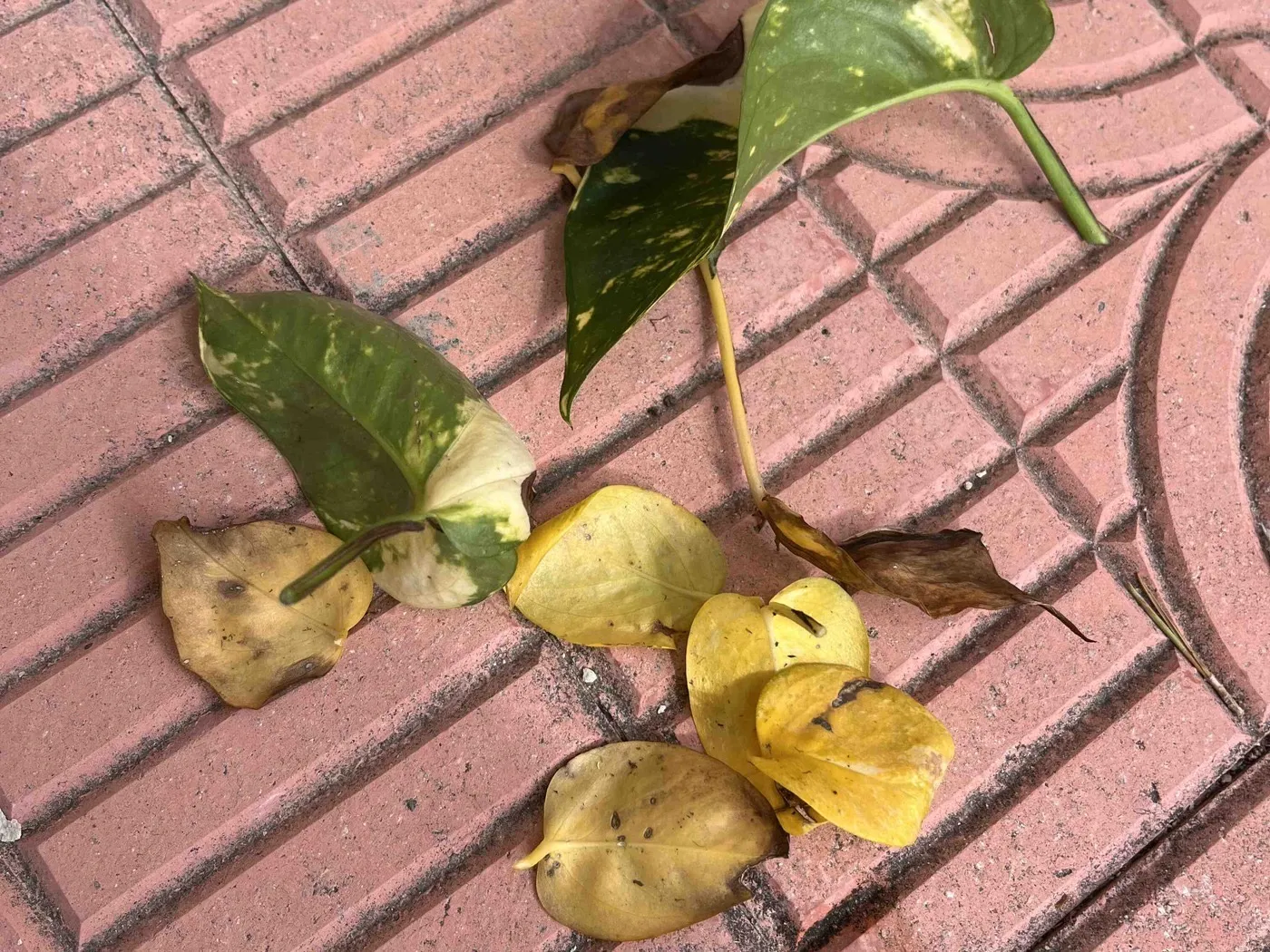
Before Sam came inside, we tidied the whole wall. From the pothos, that meant a few yellowed and spotted leaves.
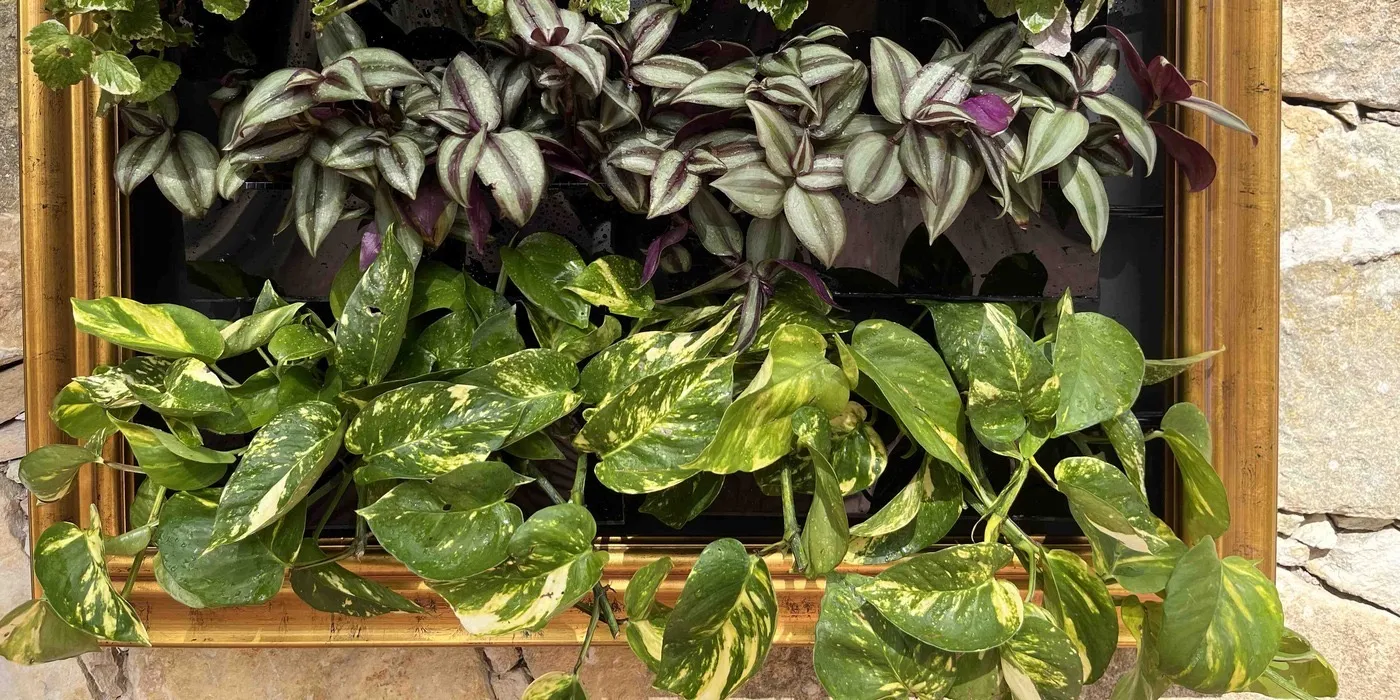
Days 9–22
Stable, and not much else
Indoors, the pothos has barely changed. Five or six small leaves dried out over two weeks, and we removed them. The plants look stable, but we haven’t seen clear signs of new growth yet.
The verdict so far: too early
The pothos already looks the part. Its vines spill over the bottom edge of the frame, exactly as we hoped.
But looking good isn’t the same as growing well. After 22 days we’ve seen little change, and no clear new growth. The plants survived a rough transplant, and it’s too early to say whether they’ve adapted to LECA. For now, we’re watching for new leaves.
What we learned
Can a big pothos go into LECA?
Yes, but a large root ball is hard to clean and hard to fit into a shallow planter. Several small plants are easier to transplant, with less root damage.
Did our pothos drop leaves after moving to LECA?
Very few: a few yellowed leaves before the move, then five or six small dried ones in two weeks indoors.
What we’d do differently
- Plant several small pothos instead of two big ones.
- Make sure the LECA covers the whole root ball.
What’s next
Watching for the first new leaves. This log stays open. Sam’s tradescantia has its own log, and the Swedish ivy’s covers its first round, on Frankie.